

Finding easy family friendly dinner recipes for picky eaters requires solving a problem that most recipe development ignores entirely: the meal has to simultaneously satisfy a six-year-old who has decided that foods cannot touch, a ten-year-old who has entered a no-vegetables phase, and two adults who would genuinely prefer to eat something with flavor complexity beyond buttered noodles. I cooked through years of this specific challenge, and what I learned is that the recipes that work are almost never the ones that try to hide vegetables or trick children into eating things. They are the ones built around flavors and textures that children genuinely like, constructed in ways that allow customization without requiring the cook to produce multiple separate meals, and satisfying enough that adults do not finish dinner feeling shortchanged.
Understanding Why Picky Eating Happens and What It Means for Recipe Choice
Picky eating in children is not primarily a behavioral problem or a failure of parenting. It is a developmental reality with neurological and sensory roots that understanding changes how you approach meal planning more usefully than any individual recipe tip.
Neophobia, the fear of new foods, peaks between ages two and six and represents a biologically programmed caution that protected early humans from consuming unfamiliar plants that might be toxic. A child who refuses to try a new vegetable is not being deliberately difficult. They are expressing a deeply wired risk-aversion response that no amount of reasoning or cajoling reliably overrides and that typically diminishes with age and repeated low-pressure exposure. The practical implication for weeknight cooking is that meals built around familiar flavor profiles with optional exposure to new elements produce less dinner-table conflict than meals that require children to eat things they are not yet ready for.
Sensory sensitivity affects how children experience food texture, temperature, and smell in ways that differ significantly from adult sensory processing. A child who gags on mushrooms is not being dramatic. The texture triggers a genuine sensory response that is as real as the adult discomfort of nails on a chalkboard. Building recipes around textures that children commonly accept, smooth, soft, crispy, and uniformly textured rather than mixed-texture combinations, reduces sensory barriers before they produce conflict.
The control dimension of picky eating is the one that recipes can most directly address: children who have some element of control over what they eat, even within a healthy framework, consistently eat more variety and more volume than those presented with a fixed plate they are expected to consume entirely. Recipes built around component serving, where each ingredient is available separately for self-assembly, give children the control dimension without requiring the cook to prepare separate meals.
1. DIY Taco Bar
The taco bar is the single most reliably successful picky eater dinner format available, and it works because it is not a trick. It genuinely gives everyone at the table complete autonomy over their own plate while requiring the cook to prepare only one set of ingredients that serves the full range of preferences simultaneously.
Ingredients for four to six servings:
- 1.5 lbs ground beef or turkey
- 2 packets taco seasoning or homemade with cumin, chili powder, garlic powder, paprika, salt
- 12 to 16 small flour or corn tortillas
- 1 cup shredded Mexican blend cheese
- 1 cup shredded lettuce
- 2 Roma tomatoes diced
- Half cup sour cream
- Half cup salsa or mild pico de gallo
- 1 can black beans drained and warmed, optional
- Guacamole or sliced avocado, optional
Brown ground meat in a large skillet over medium-high heat, breaking it apart as it cooks. Drain excess fat. Add taco seasoning and a third cup of water. Stir and simmer three minutes until the sauce thickens and coats the meat. Set all toppings in individual small bowls across the table. Warm tortillas by wrapping a stack in a damp paper towel and microwaving for sixty seconds. The individual topping bowls arrangement is the functional element that makes the taco bar work for picky eaters: the child who will only eat meat and cheese builds that taco without drama while the adult who wants everything builds theirs from the same preparation. No separate meals, no negotiation, no one going to bed hungry or resentful. The assembly format also produces a genuinely fun dinner interaction that children engage with enthusiastically regardless of how narrow their actual consumption choices are.
2. Homemade Pizza With Individual Sections
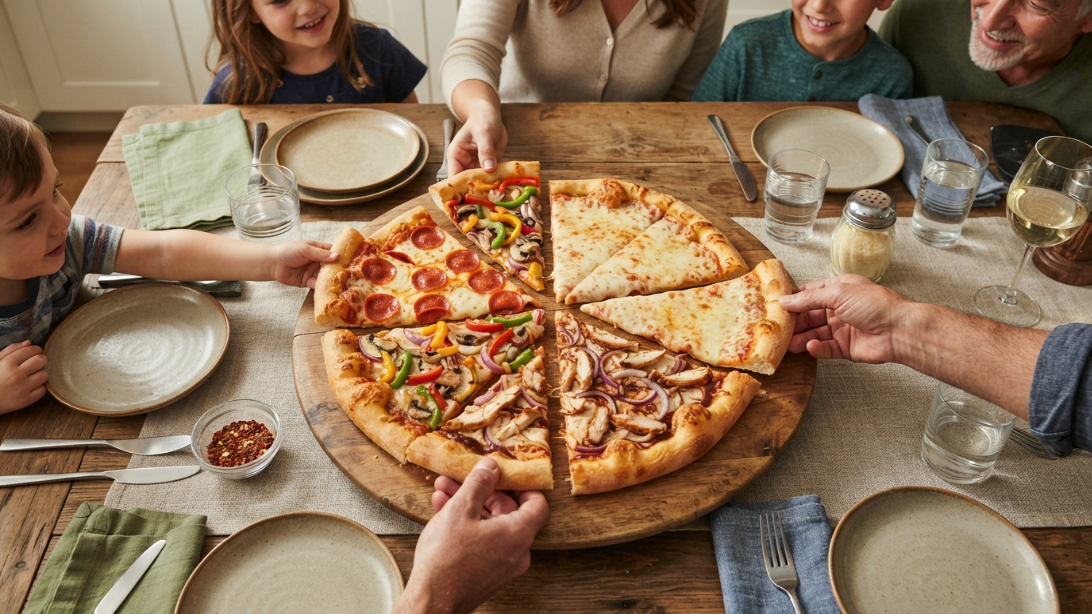
Homemade pizza with sections designated for different topping preferences eliminates the single biggest pizza dinner conflict in households with picky eaters: the child who does not want mushrooms contaminating their slice getting a mushroom that rolled from the adjacent section.
Dough ingredients for one large pizza serving four:
- 2 and quarter teaspoons instant yeast one packet
- 1 cup warm water
- 3 cups all-purpose flour
- 1 teaspoon salt
- 2 tablespoons olive oil
- 1 teaspoon sugar
Topping base:
- Half cup pizza sauce or crushed tomatoes seasoned with garlic and oregano
- 1 and half cups shredded mozzarella
Topping options divided by family preference:
- Classic: pepperoni, olives
- Plain cheese for the most selective eater
- Veggie: bell pepper, mushrooms, onion for adults
- BBQ chicken section: rotisserie chicken, BBQ sauce, red onion
Mix yeast, warm water, and sugar. Let sit five minutes until foamy. Add flour, salt, and olive oil. Knead on a floured surface for five minutes until smooth. Place in an oiled bowl, cover, and let rise one hour until doubled. Preheat oven to 475°F. Stretch dough on an oiled sheet pan or pizza stone. Spread sauce across the full surface. Add mozzarella. Before adding toppings, use a light impression with the back of a spoon or a piece of parchment to create visible section boundaries that family members can identify. Add different toppings to each section. Bake twelve to fifteen minutes until crust is golden and cheese is bubbling. Cut along the section boundaries. The section boundary system sounds more elaborate than it is in practice: a mental division of the pizza into quadrants with different toppings per quadrant solves the contamination complaint that derails pizza dinner for families with both picky and adventurous eaters.
3. Chicken Tenders With Dipping Sauces
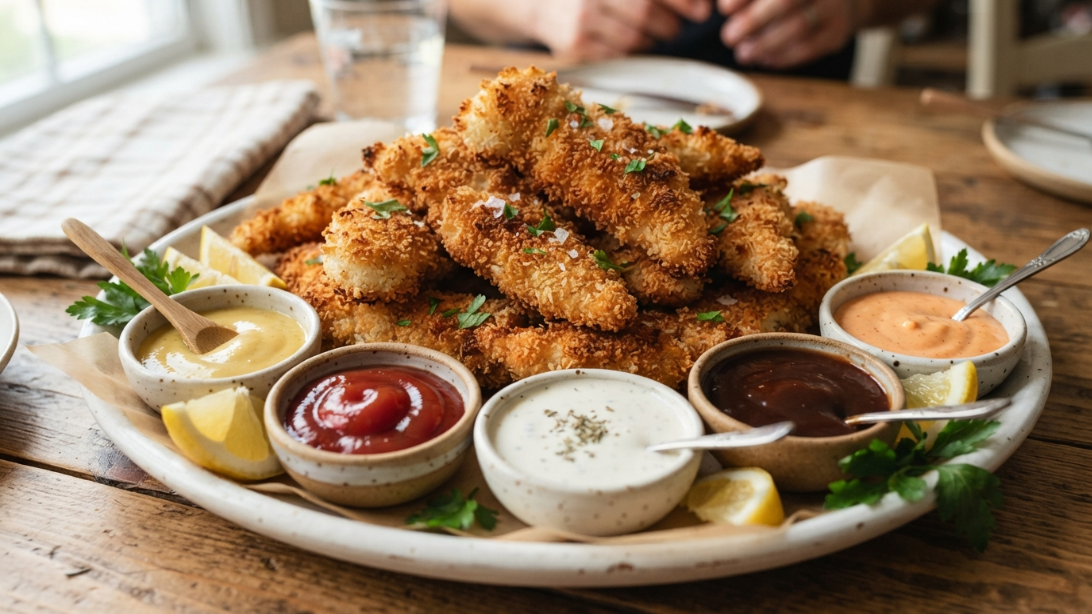
Homemade chicken tenders produce a result significantly better than any frozen alternative while taking thirty minutes and providing the familiar flavor and texture that picky eaters across age groups accept most consistently. The dipping sauce variety table extends the meal’s appeal for adventurous adults and older children without changing anything about the base recipe.
Ingredients for four servings:
- 1.5 lbs boneless skinless chicken breast or tenders cut into strips
- 1 cup all-purpose flour
- 2 large eggs beaten
- 1 and half cups panko breadcrumbs
- Half cup regular breadcrumbs
- 1 teaspoon garlic powder
- 1 teaspoon paprika
- Half teaspoon onion powder
- Salt and pepper
- Cooking spray or neutral oil for baking
Dipping sauces:
- Honey mustard: equal parts honey and Dijon mustard
- Classic ketchup
- Ranch dressing
- BBQ sauce for older children and adults
- Sriracha mayo for adults: half sriracha and half mayonnaise
Preheat oven to 425°F. Set up three shallow bowls: flour seasoned with salt and pepper in the first, beaten eggs in the second, and panko mixed with regular breadcrumbs, garlic powder, paprika, and onion powder in the third. Dip each chicken strip in flour, then egg, then breadcrumb mixture, pressing the breadcrumbs firmly onto the surface. Place on a wire rack set over a baking sheet. Spray generously with cooking spray. Bake twenty to twenty-two minutes until golden and the internal temperature reaches 165°F. The wire rack over baking sheet setup allows hot air to circulate under the tenders during baking, producing a genuinely crispy bottom surface rather than a soggy underside that baking directly on a sheet pan creates. Serve with all sauce options available for self-selection.
Easy Family Friendly Dinner Recipes for Picky Eaters That Hide Vegetables Successfully
The philosophical debate about hiding vegetables in children’s food is real, and reasonable people disagree about whether it is a legitimate feeding strategy or a short-term solution that prevents children from developing genuine food acceptance. What is not debatable is that these recipes exist, that they work nutritionally, and that they reduce weeknight dinner conflict for families where vegetable refusal is a significant daily challenge.
Sneaky Veggie Pasta Sauce
A pasta sauce with pureed vegetables incorporated invisibly into the tomato base provides servings of vegetables in a form that the most committed vegetable refusers accept without complaint, because the smooth texture and dominant tomato flavor mask both the presence and the taste of the vegetables entirely.
Ingredients for four to six servings:
- 1 lb pasta of choice, spaghetti, penne, or any shape the family accepts
- 1 can crushed tomatoes
- 1 can diced tomatoes
- Half cup carrots roughly chopped
- Half cup zucchini roughly chopped
- Half cup butternut squash cubed, fresh or frozen
- 1 small onion quartered
- 4 garlic cloves
- 1 lb ground beef or Italian sausage, optional
- 2 tablespoons olive oil
- 1 teaspoon each dried basil and oregano
- Salt, pepper, pinch of sugar
- Parmesan for serving
Roast carrots, zucchini, squash, onion, and garlic on a sheet pan with olive oil at 400°F for twenty-five minutes until completely soft. Transfer roasted vegetables and all their juice to a blender with both cans of tomatoes. Blend completely smooth until no vegetable texture remains visible. The sauce should look like standard tomato sauce. If using meat, brown it in a large pot over medium-high heat. Add the blended sauce. Add herbs, sugar, salt, and pepper. Simmer fifteen minutes. Cook pasta separately and combine. The roasting before blending is the specific technique that produces a sauce with depth rather than the flat, raw vegetable taste that blending uncooked vegetables into tomato sauce creates. Roasting caramelizes the natural sugars in the vegetables and produces a sweetness that integrates seamlessly with the tomato base.
Hidden Veggie Mac and Cheese
Mac and cheese with pureed butternut squash or cauliflower incorporated into the cheese sauce produces the orange-colored sauce that children associate with boxed mac and cheese while delivering a meaningful serving of vegetables in every portion.
Ingredients for four servings:
- 12 oz elbow macaroni or any small pasta shape
- 2 tablespoons butter
- 2 tablespoons all-purpose flour
- 2 cups whole milk
- 2 cups shredded sharp cheddar
- 1 cup cooked and pureed butternut squash or steamed and pureed cauliflower
- Half teaspoon garlic powder
- Half teaspoon dry mustard powder
- Salt and white pepper
Cook pasta in heavily salted water until al dente. Drain and set aside. Melt butter in a medium saucepan over medium heat. Add flour and whisk for ninety seconds. Add milk gradually, whisking constantly to prevent lumps. Cook stirring continuously for five minutes until the sauce thickens. Remove from heat. Add cheese in three additions, stirring each until fully melted. Add vegetable puree, garlic powder, and mustard powder. Stir until completely smooth and uniform. The dry mustard powder is the flavor element that makes this taste like a genuine cheese sauce rather than something nutritionally motivated: it adds a subtle sharpness that mimics the complexity of aged cheese and prevents the sauce from tasting one-dimensionally sweet from the squash.
4. Build Your Own Burrito Bowls
Burrito bowls with all components served separately apply the taco bar logic to a bowl format that older children and adults find more satisfying than tacos and that the youngest family members can reduce to rice and cheese without anyone feeling that a separate meal was required.
Ingredients for four to six servings:
- 1.5 lbs ground beef or chicken thighs seasoned with cumin, chili powder, garlic powder, salt
- 2 cups white or brown rice cooked
- 1 can black beans drained, warmed with cumin and salt
- 1 cup corn, canned or frozen thawed
- 1 cup shredded cheese
- Half cup sour cream
- Half cup salsa or pico de gallo
- 1 avocado diced or guacamole
- Shredded romaine lettuce
- Lime wedges
Cook rice using the package instructions. Brown and season the protein in a skillet. Warm the beans with a pinch of cumin and salt. Set all components in separate bowls across the table. Each family member builds their own bowl from the components they accept, which for a picky eater might be rice, chicken, and cheese, and for an adult might be all components in proper burrito bowl proportion. The lime wedges on the table are the finishing detail that adults consistently cite as the element that makes a homemade burrito bowl taste like a restaurant version: the fresh acid from a squeezed lime wedge brightens the entire bowl in a way that no amount of seasoning during cooking fully replicates.
5. Baked Meatballs With Pasta and Sauce
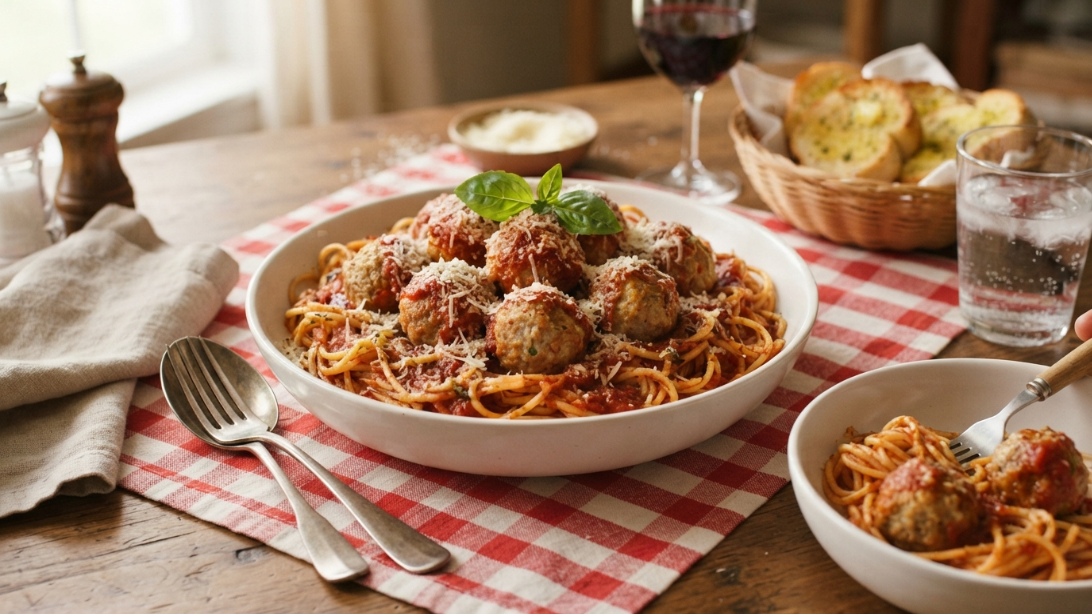
Meatballs are one of the most consistently accepted proteins among picky eaters across age groups, probably because their uniform texture and familiar seasoning profile avoid most of the sensory triggers that cause food refusal. Baked rather than pan-fried meatballs produce a juicy interior with a lightly browned exterior without requiring constant stovetop attention.
Meatball ingredients for four servings:
- 1 lb ground beef
- Half lb ground pork or additional beef
- Half cup panko breadcrumbs
- Quarter cup parmesan grated
- 1 egg
- 3 garlic cloves minced
- 2 tablespoons milk
- 1 teaspoon each dried basil and oregano
- Half teaspoon garlic powder
- Salt and pepper
For serving:
- 1 lb pasta, spaghetti is traditional but penne or rigatoni work
- 1 jar good quality marinara sauce or homemade
- Additional parmesan
Preheat oven to 400°F. Combine all meatball ingredients in a large bowl. Mix with your hands until just combined, stopping before the mixture becomes dense and tough from overmixing. Roll into balls slightly larger than a golf ball, approximately one and a half inches in diameter. Place on a baking sheet lined with foil. Bake eighteen to twenty minutes until browned and cooked through. While meatballs bake, cook pasta and heat sauce. The foil-lined baking sheet is the cleanup detail that makes baked meatballs practical as a weeknight option rather than a weekend project: cleanup after baking is removing the foil rather than scrubbing baked-on fat from the pan.
6. Sheet Pan Sausage With Roasted Potatoes and Broccoli
Sheet pan dinners require the least active cooking attention of any weeknight format and produce the specific combination of crispy potatoes and caramelized broccoli edges that children who refuse steamed or raw broccoli often accept because the roasting process converts the texture and concentrates the flavor into a sweeter, less bitter result.
Ingredients for four servings:
- 1 lb smoked sausage or kielbasa sliced into rounds
- 1.5 lbs baby potatoes halved
- 2 cups broccoli florets cut small
- 3 tablespoons olive oil
- 1 teaspoon garlic powder
- 1 teaspoon smoked paprika
- Half teaspoon onion powder
- Salt and pepper
Preheat oven to 425°F. Toss potatoes with two tablespoons olive oil, garlic powder, paprika, salt, and pepper on a large sheet pan. Roast for fifteen minutes. Remove from oven. Add sausage rounds and broccoli to the pan. Drizzle remaining olive oil over broccoli. Toss everything together and spread back into a single layer. Return to oven for fifteen to eighteen more minutes until potatoes are golden and crispy, sausage is caramelized at the edges, and broccoli has crispy dark edges. The staggered addition of broccoli and sausage after the potatoes have had fifteen minutes of head start is the timing detail that produces all three components finishing simultaneously: potatoes need thirty minutes total, sausage and broccoli need fifteen to eighteen, and adding them at the midpoint produces a sheet pan where everything is done at the same moment.
7. Teriyaki Chicken With Rice and Edamame
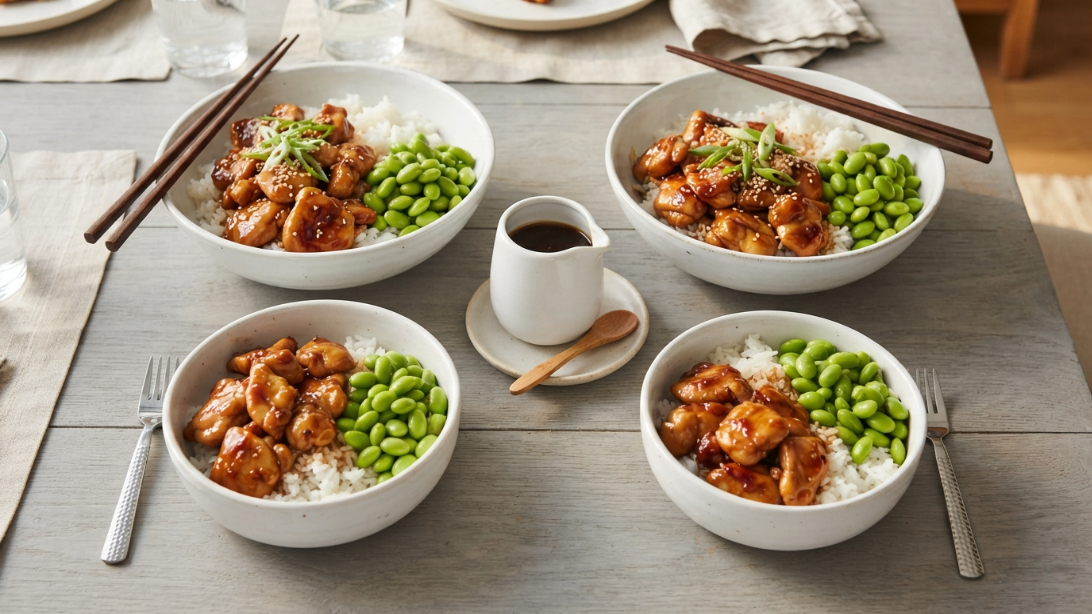
Teriyaki chicken is the protein that picky eaters who refuse other flavored chicken almost universally accept, because the sweet-savory balance of teriyaki sauce occupies a flavor profile close enough to familiar sweetness to register as safe rather than challenging.
Ingredients for four servings:
- 1.5 lbs boneless skinless chicken thighs or breasts
- Quarter cup soy sauce
- 3 tablespoons honey
- 2 tablespoons rice vinegar
- 1 tablespoon sesame oil
- 2 garlic cloves minced
- 1 teaspoon fresh ginger grated or quarter teaspoon ginger powder
- 1 tablespoon cornstarch mixed with 1 tablespoon water
- 2 cups white rice cooked
- 1 cup edamame shelled, frozen and thawed
- Sesame seeds for serving
- Green onion sliced for adults
Whisk soy sauce, honey, rice vinegar, sesame oil, garlic, and ginger in a small bowl. Heat a large skillet over medium-high heat with a splash of neutral oil. Add chicken and cook four minutes per side until golden and cooked through. Remove chicken and set aside. Add the teriyaki sauce mixture to the same pan and bring to a simmer. Add cornstarch mixture and stir until the sauce thickens to a glossy, coating consistency, approximately ninety seconds. Return chicken to the pan and coat in the sauce. Serve over rice with edamame alongside. The cornstarch thickening step produces the glossy, restaurant-quality teriyaki coating that thin, watery teriyaki sauce never achieves and that makes the dish visually appealing to children who associate the shiny, sweet-glazed appearance with a positive eating experience.
8. Slow Cooker Pulled Chicken Sandwiches
Slow cooker pulled chicken started in the morning provides a weeknight dinner that requires five minutes of morning preparation, zero active cooking attention, and produces a result that picky eaters across age groups accept because the soft texture and sweet-savory BBQ profile occupy familiar flavor territory.
Ingredients for six servings:
- 2 lbs boneless skinless chicken breasts or thighs
- 1 cup BBQ sauce, choose a mild variety for picky eaters
- Quarter cup apple cider vinegar
- 2 tablespoons brown sugar
- 1 teaspoon garlic powder
- 1 teaspoon smoked paprika
- Half teaspoon onion powder
- Salt
For serving:
- Brioche or potato buns, toasted
- Coleslaw for adults and adventurous children
- Pickles
- Additional BBQ sauce
Add chicken to slow cooker. Mix BBQ sauce, vinegar, brown sugar, and all seasonings in a small bowl. Pour over chicken. Cook on low seven to eight hours or high four hours. Remove chicken and shred using two forks. Return to the slow cooker and stir into the cooking liquid. Cook on warm for twenty minutes to allow the shredded chicken to absorb the sauce. Toast buns before serving. Set up toppings in separate bowls so each family member can build their sandwich with the toppings they accept. The return to the cooking liquid after shredding is the step that differentiates genuinely saucy, flavorful pulled chicken from dry shredded chicken that happened to be cooked with sauce nearby, because the shredded surface area absorbs the reduced cooking liquid far more efficiently than the whole pieces did during the initial cooking period.
Strategies for Making Family Dinner Less of a Battle
Beyond specific recipes, the structure around dinner matters as much as what is being served for families navigating picky eating regularly.
The division of responsibility framework from feeding therapist Ellyn Satter is worth understanding specifically: parents decide what is served, when it is served, and where it is served. Children decide whether they eat and how much. This framework removes the power struggle from the dinner table by removing the expectation that children must eat everything or anything, which paradoxically tends to increase the variety children consume over time by removing the anxiety and control dynamics that restrict eating.
Consistent exposure without pressure to foods children currently refuse, serving a small amount of the refused food on the plate without expectation or comment, produces gradual acceptance over a timeline of ten to fifteen exposures for most children. The exposure needs to be low-pressure and consistently offered rather than presented once or twice with significant parent investment in the child trying it.
Involving children in food preparation at age-appropriate levels consistently increases the variety and volume they consume because the preparation investment creates ownership over the outcome. A six-year-old who washed the lettuce or stirred the sauce is demonstrably more likely to try those components at dinner than one who had no involvement in their production.
Frequently Asked Questions
What are the best easy family friendly dinner recipes for picky eaters who refuse all vegetables?
The hidden veggie pasta sauce and mac and cheese recipes address total vegetable refusal nutritionally without dinner table conflict. The sheet pan sausage and broccoli recipe addresses refusal of specific vegetable preparations by roasting to the point where the texture and flavor differ significantly from the steamed or raw versions that most children reject. Component-style meals including taco bars and burrito bowls allow vegetable avoidance without requiring separate preparation while keeping vegetables present and visible for the gradual exposure that produces acceptance over time.
How do I cook one meal that satisfies picky children and flavor-hungry adults?
Build toward component meals where the base is simple enough for the most selective eater and adult additions transform the same base into a more complex version. Ground beef over rice is a simple base that children accept. The same ground beef over rice with a gochujang sauce, cucumber salad, and sesame seeds is a Korean-inspired bowl that adults find genuinely exciting. The chicken tenders recipe pairs with a ketchup dipping sauce for young children and a sriracha mayo for adults from the same batch of tenders.
At what age does picky eating typically improve?
Most children show meaningful expansion of food acceptance between ages eight and twelve as neophobia naturally diminishes and peer influences on eating expand their food reference points. This timeline is not universal and varies significantly by individual temperament, sensory sensitivity, and the feeding environment. Children who eat in low-pressure environments without food-related conflict consistently expand their range faster than those for whom dinner involves regular battles over what they must eat.
Is it okay to make separate meals for picky eaters?
Occasionally making a simple separate component for a picky eater within the family meal, a plain pasta alongside the pasta with sauce that everyone else eats, is practical rather than problematic. Making entirely separate meals consistently creates a dynamic where the picky eater has no incentive to expand their range because the preferred alternative is always available. The middle path is serving the family meal with a plain, familiar component always present, bread, plain rice, or plain pasta, that the picky eater can rely on while the family meal as a whole continues to offer exposure to a wider range.
How do I introduce new foods to picky eaters without it becoming a battle?
Introduce new foods alongside multiple accepted foods rather than as the primary component of a meal, which reduces the stakes if the new food is refused because the child has accepted alternatives to eat. Offer new foods without comment or expectation, placing a small amount on the plate without mentioning it. Avoid praising or pressuring in response to whether the child tastes it. Repeat this exposure without variation in response over ten to fifteen meals. Most food therapists agree that this approach produces genuine long-term acceptance at a rate that pressure-based approaches never match.
Conclusion
Feeding a family with picky eaters is not a problem to be solved once and permanently. It is a daily negotiation that gets genuinely easier as children grow, as trust around food builds, and as the recipes that reliably work for your specific family accumulate into a rotation that removes the nightly guesswork. Start with the format that produces the least conflict in your household, build the rotation from there, and give yourself full permission to serve taco bar three times in a single week if that is what everyone eats without drama. Which recipe is going on your table tonight?