
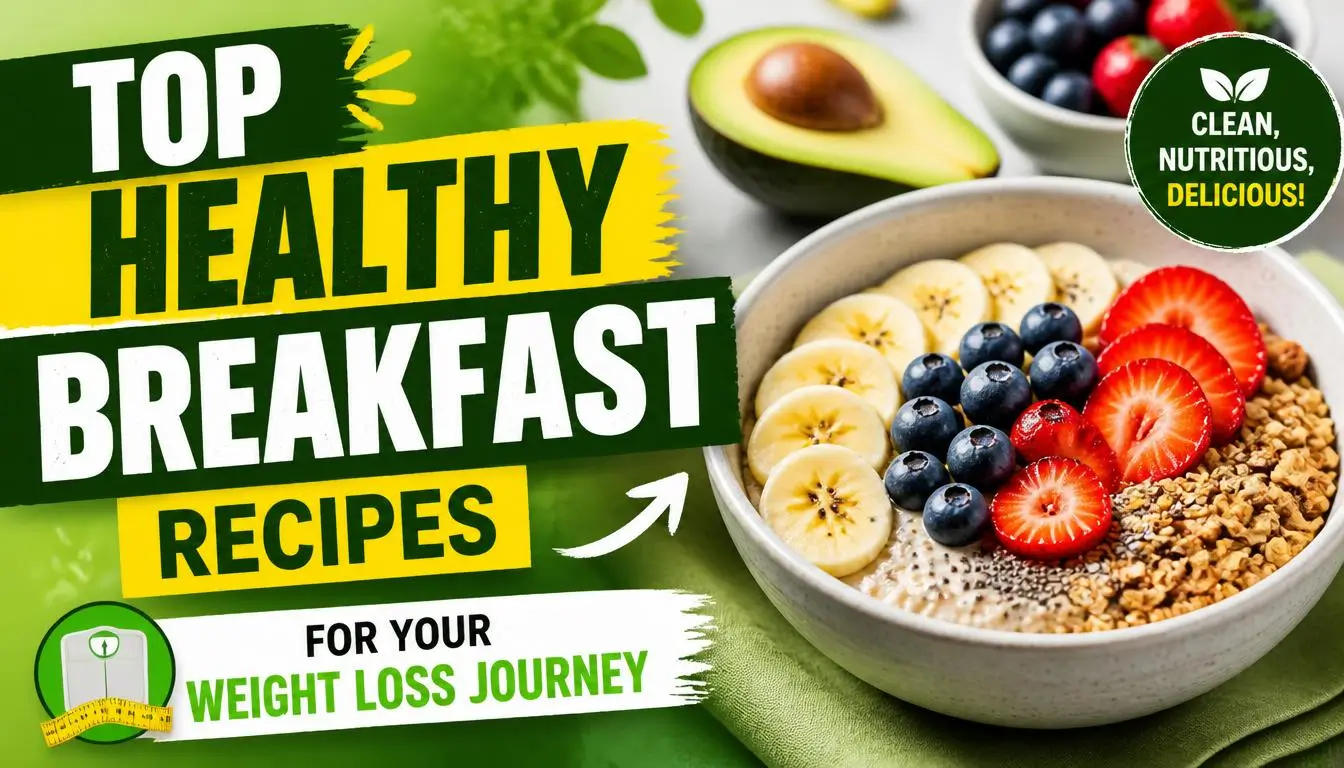
The top healthy breakfast recipes for weight loss share one quality that separates them from the sad, unsatisfying diet food that makes most people abandon a weight loss effort by week three: they are filling enough to prevent the mid-morning hunger spiral that sends people to the vending machine at 10:30 AM having already blown their daily intentions before lunch. I have spent enough time cooking for myself during weight loss phases to know that the difference between a breakfast that supports fat loss and one that undermines it is not primarily about calories. It is about protein content, fiber density, and how long the meal keeps hunger signals quiet. Every recipe below is built around those three variables first and flavor second, in the full understanding that flavor is what determines whether you actually make it again tomorrow.
What Makes a Breakfast Actually Support Weight Loss
Most breakfast advice focuses on what to avoid rather than what to include, which produces a framework of restriction that feels punishing from day one. Understanding the positive case for specific breakfast components produces better long-term eating behavior than a list of foods to eliminate.
Protein is the macronutrient with the strongest effect on satiety, the feeling of fullness that prevents overconsumption at subsequent meals. A breakfast containing 25 to 35 grams of protein reduces hunger hormone levels measurably through the morning and has been shown in multiple studies to reduce total daily calorie intake by 200 to 400 calories compared to low-protein breakfasts of equivalent calorie content. The specific mechanism is the suppression of ghrelin, the primary hunger hormone, which remains lower for longer after a protein-rich breakfast than after a carbohydrate-focused one.
Fiber slows gastric emptying, which extends the period between breakfast and the return of hunger signals. Soluble fiber specifically forms a gel in the digestive tract that physically slows the absorption of nutrients, producing a sustained energy release that prevents the blood sugar spike and subsequent crash that refined carbohydrate breakfasts generate. The crash after a refined carbohydrate breakfast, white toast, sugary cereal, or a pastry, is the mechanism that produces mid-morning hunger despite having eaten relatively recently.
Volume with low calorie density is the third lever that breakfast can pull for weight loss. Foods with high water and fiber content, specifically vegetables, fruits, and legumes, provide physical stomach volume that triggers satiation signals without the caloric load of equivalent-volume processed foods. A bowl of oatmeal topped with fruit takes up more physical space in the stomach than a granola bar with the same calories and produces stronger satiation signals through stretch receptors in the stomach wall that respond to volume rather than caloric content.
1. High Protein Greek Yogurt Parfait
A Greek yogurt parfait built correctly around protein-dense ingredients provides 25 to 35 grams of protein, significant fiber, and enough volume to occupy a breakfast-sized hunger gap genuinely without the caloric cost of a restaurant breakfast of equivalent satisfying power.
Ingredients for one serving, approximately 350 to 400 calories:
- 1 cup plain non-fat Greek yogurt, about 17 to 20 grams protein
- 1 scoop vanilla protein powder mixed into the yogurt, about 20 to 25 grams protein
- Half cup mixed berries, fresh or frozen and thawed
- 2 tablespoons granola, just enough for texture without excess sugar and calories
- 1 teaspoon honey
- 1 tablespoon chia seeds
Mix the protein powder into the Greek yogurt before assembling, which distributes the protein evenly and prevents the powdery top layer that ruins the texture. Layer yogurt in a bowl or jar. Add berries. Add granola. Drizzle honey and add chia seeds. The protein powder mixed directly into the yogurt rather than served as a separate shake doubles the protein content of the parfait without adding meaningful volume or changing the eating experience, which is the specific technique that makes this breakfast genuinely effective for weight loss rather than merely healthy in appearance. Refrigerate assembled jars overnight for five days of ready breakfasts that require zero morning preparation.
2. Veggie Packed Egg White Scramble
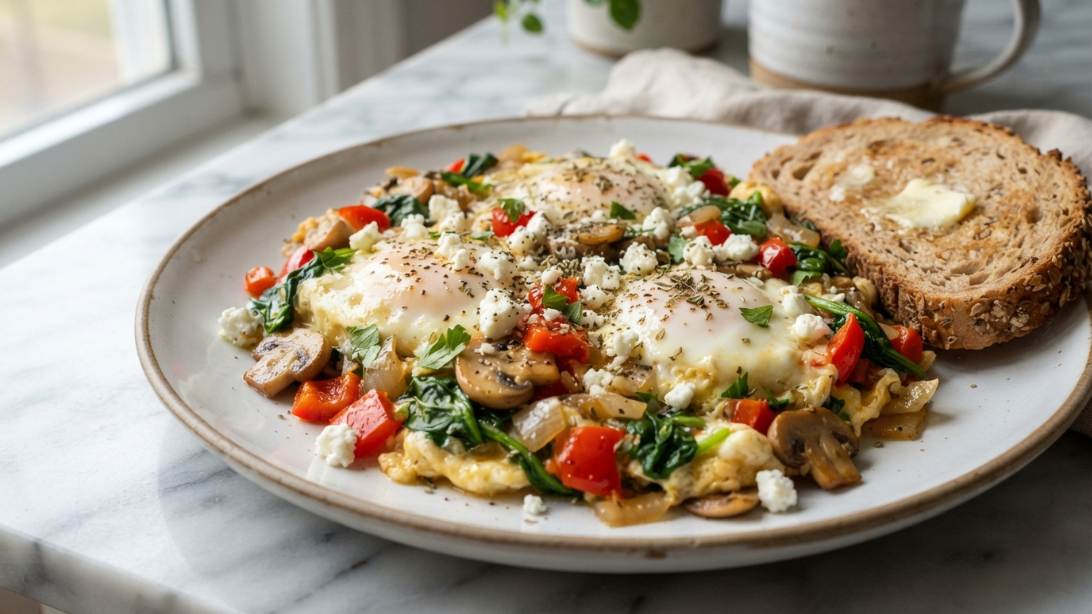
Egg whites provide pure protein with essentially no fat, and combining them with whole eggs in the right ratio produces a scramble with the protein density of egg whites and the flavor satisfaction of whole eggs, which is the compromise that makes this breakfast sustainable rather than punishing.
Ingredients for one serving, approximately 280 to 320 calories:
- 2 whole eggs
- 3 egg whites
- Quarter cup diced bell pepper any color
- Quarter cup baby spinach
- Quarter cup diced mushrooms
- 2 tablespoons diced onion
- Salt, pepper, garlic powder
- Cooking spray or half teaspoon olive oil
- Optional: 1 oz crumbled feta cheese adds 75 calories and significant flavor
Heat a non-stick pan over medium heat. Add cooking spray or olive oil. Cook onion and bell pepper for three minutes until slightly softened. Add mushrooms and cook two more minutes. Add spinach and cook thirty seconds until wilted. Whisk whole eggs and egg whites together with salt, pepper, and garlic powder. Pour over vegetables. Cook over medium-low heat using the gentle scramble technique: push cooked egg from the edges toward the center, letting liquid egg flow to the edges, and remove from heat while still slightly glossy. The two whole egg plus three egg white ratio is the specific combination that provides 22 to 25 grams of protein at approximately 280 calories while maintaining enough yolk flavor that the scramble tastes like food rather than diet food. Adding feta brings protein to 28 grams and dramatically improves flavor at a reasonable caloric cost.
3. Overnight Oats With Maximum Protein
Standard overnight oats are a reasonable breakfast. Overnight oats built specifically around protein content are a genuinely effective weight loss breakfast that keeps hunger suppressed for four to five hours while providing fiber, complex carbohydrates, and sustained energy.
Ingredients for one serving, approximately 380 to 420 calories:
- Half cup rolled oats, not instant
- Half cup plain Greek yogurt
- Half cup unsweetened almond milk or regular milk
- 1 scoop vanilla or unflavored protein powder
- 1 tablespoon chia seeds
- 1 teaspoon vanilla extract
- Half teaspoon cinnamon
- Pinch of salt
- Toppings: half a banana sliced, 1 tablespoon almond butter
Combine oats, Greek yogurt, milk, protein powder, chia seeds, vanilla, cinnamon, and salt in a jar or container. Stir thoroughly until the protein powder is fully incorporated without dry clumps. Seal and refrigerate overnight. In the morning, stir once to redistribute the liquid that the oats and chia seeds have absorbed. Add toppings. The Greek yogurt plus protein powder combination produces a breakfast with 30 to 35 grams of protein from what looks like a bowl of oatmeal, which is the specific outcome that makes this recipe more effective for weight loss than standard overnight oats recipes that provide eight to twelve grams of protein and leave you hungry by mid-morning.
Top Healthy Breakfast Recipes for Weight Loss That Take Under Ten Minutes
The weight loss breakfast that takes forty minutes to prepare is the breakfast that gets skipped on the Tuesday when the alarm went off late and the meeting starts at nine. These recipes produce genuinely nutritious, high-protein, fiber-rich breakfasts in under ten minutes of active preparation time.
Two Ingredient Protein Pancakes
Protein pancakes made from banana and eggs with a protein powder addition produce a breakfast that tastes like a treat, provides 25 grams of protein, and costs under $2 per serving in ingredients, which is the specific combination that makes a weight loss breakfast feel sustainable rather than like a sentence.
Ingredients for one serving, approximately 300 to 340 calories:
- 1 ripe banana
- 2 whole eggs
- 1 scoop protein powder, vanilla works best
- Half teaspoon cinnamon
- Cooking spray
Mash the banana completely until no lumps remain. Add eggs, protein powder, and cinnamon. Mix until fully combined. The batter will be thinner than standard pancake batter. Heat a non-stick pan over medium-low heat. Add cooking spray. Pour small rounds of batter, about two tablespoons each, which are easier to flip successfully than large pancakes. Cook two minutes until edges look set and small bubbles appear across the surface. Flip gently and cook one more minute. The medium-low heat is specifically important: banana’s natural sugar content causes these pancakes to burn at higher temperatures before the interior sets, and patient low-heat cooking produces a golden result that higher heat burns before achieving.
Cottage Cheese Toast With Everything Bagel Seasoning
Cottage cheese provides one of the highest protein densities of any dairy food at 14 grams per half cup with only 80 calories, and its neutral flavor makes it an excellent vehicle for savory toppings that make breakfast feel genuinely satisfying rather than diet-coded.
Ingredients for one serving, approximately 250 to 280 calories:
- 2 slices whole grain toast
- Half cup low-fat cottage cheese
- Everything bagel seasoning
- 2 to 3 slices of tomato
- Fresh cracked black pepper
- Optional: quarter of an avocado adds 80 calories and healthy fat
Toast the bread until genuinely crispy rather than merely warm, which provides textural contrast to the creamy cottage cheese that makes the combination more satisfying. Spread cottage cheese evenly across both slices. Add tomato slices. Sprinkle everything bagel seasoning generously. Add avocado if using. The everything bagel seasoning is the specific flavor element that converts what sounds like a diet food into something genuinely craveable, which is the behavioral outcome that matters most for a breakfast that needs to be repeated daily for months to produce meaningful weight loss results.
4. Smoked Salmon and Avocado Egg Cups
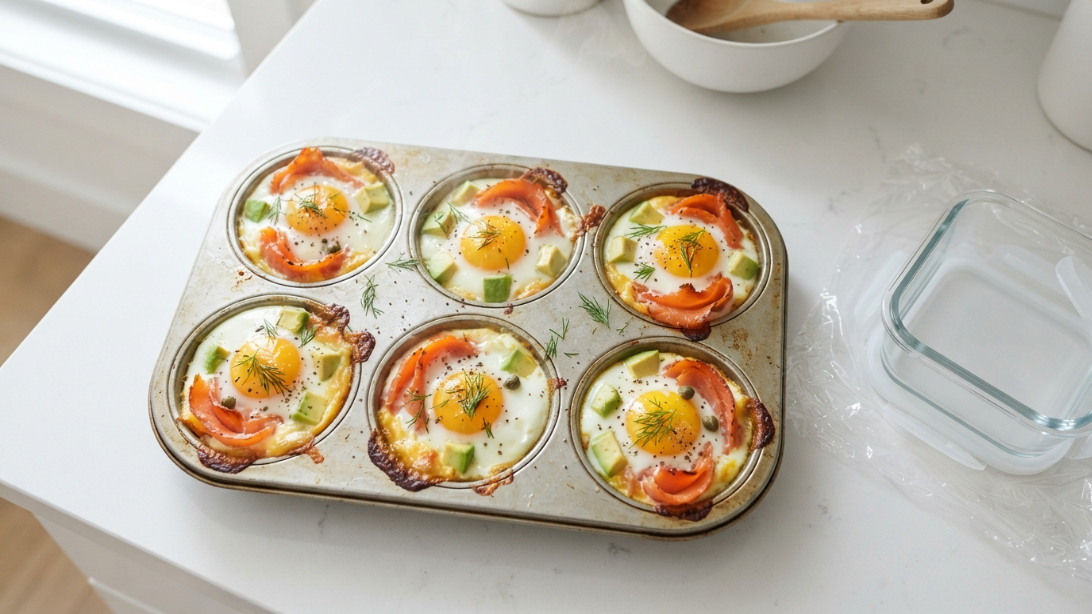
Egg cups baked in a muffin tin produce portable, meal-prepped breakfasts that provide protein, healthy fat, and genuine flavor at approximately 180 to 220 calories for two cups, which pairs with a piece of fruit to produce a complete breakfast under 300 calories with 20 grams of protein.
Ingredients for six egg cups, three servings:
- 6 large eggs
- 2 oz smoked salmon roughly torn into small pieces
- Quarter of an avocado diced into small pieces
- 2 tablespoons cream cheese softened
- 1 tablespoon capers if available
- Fresh dill
- Salt and pepper
- Cooking spray
Preheat oven to 375°F. Spray a six-cup muffin tin thoroughly with cooking spray. Distribute smoked salmon, avocado, and a small amount of cream cheese into each muffin cup. Crack one egg into each cup over the filling ingredients. Season with salt, pepper, and fresh dill. Bake for twelve to fifteen minutes depending on preferred yolk consistency: twelve minutes produces a runny yolk, fifteen produces fully set. Cool for five minutes before removing from the tin with a thin knife or spatula. Refrigerate for up to four days. Reheat in the microwave for forty-five seconds. The cream cheese in the cup bottom melts during baking and creates a rich base that makes the egg cups taste significantly more indulgent than their calorie count justifies, which is the specific quality that makes this recipe effective for long-term adherence to a weight loss eating pattern.
5. Chia Seed Pudding With Protein
Chia seed pudding prepared with protein-fortified milk provides a breakfast with the specific combination of omega-3 fatty acids, fiber, and protein that makes it genuinely supportive of weight loss rather than merely low-calorie. The gel-forming property of chia seeds in liquid creates a physical satiation that is distinct from and complementary to hormonal satiety signals.
Ingredients for one serving, approximately 320 to 360 calories:
- 3 tablespoons chia seeds
- 1 cup unsweetened almond milk or regular milk
- 1 scoop vanilla protein powder
- 1 teaspoon vanilla extract
- 1 teaspoon maple syrup or honey
- Pinch of salt
- Toppings: half cup sliced strawberries, 1 tablespoon crushed pistachios
Whisk protein powder into the milk until fully dissolved before adding chia seeds, which prevents the protein powder from clumping around individual chia seeds and producing uneven texture. Add vanilla, sweetener, and salt. Add chia seeds and whisk vigorously. Let sit for five minutes and whisk again to break up any chia seed clumping. Refrigerate overnight or for a minimum of four hours. The pudding is set when it has achieved a thick, spoonable consistency with no pooled liquid at the bottom. Add toppings before serving. Prepare five jars on Sunday for the full week at a total preparation time of fifteen minutes.
6. Turkey and Spinach Breakfast Burrito
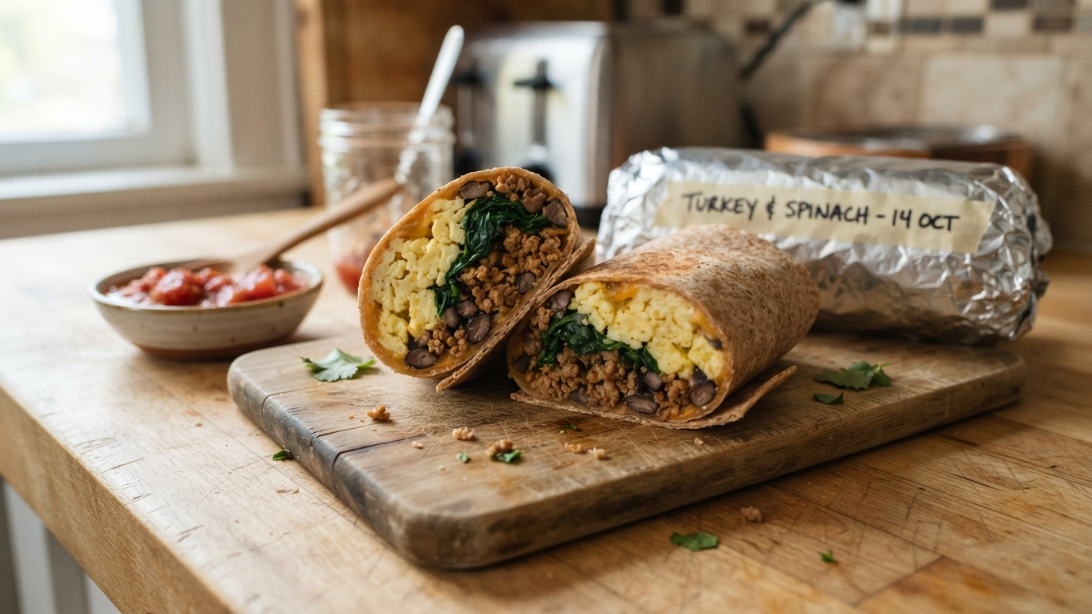
A breakfast burrito built around lean protein rather than processed breakfast meats and refined flour provides a genuinely satisfying, portable, high-protein breakfast that travels well and reheats from frozen in three minutes.
Ingredients for one burrito, approximately 380 to 420 calories:
- 1 whole wheat or low-carb tortilla
- 2 whole eggs
- 2 oz ground turkey, cooked and seasoned
- Quarter cup baby spinach
- 2 tablespoons black beans
- 2 tablespoons salsa
- 1 tablespoon shredded cheese
- Salt, pepper, cumin
Cook ground turkey in a small pan over medium-high heat with salt, pepper, and cumin until cooked through. Set aside. Scramble eggs in the same pan over medium-low heat. In the last thirty seconds, add spinach and let it wilt into the eggs. Warm the tortilla briefly in the microwave for twenty seconds. Layer eggs, turkey, black beans, and cheese down the center of the tortilla. Add salsa. Fold the sides in and roll from the bottom up. The black beans are the fiber addition that makes this burrito perform significantly better for weight loss than a protein-only egg and turkey version, because the combination of protein and fiber together suppresses appetite more effectively than either macronutrient alone. Wrap individually in foil and freeze for up to three months. Reheat from frozen wrapped in a damp paper towel in the microwave for three to four minutes.
7. Savory Oatmeal With Egg
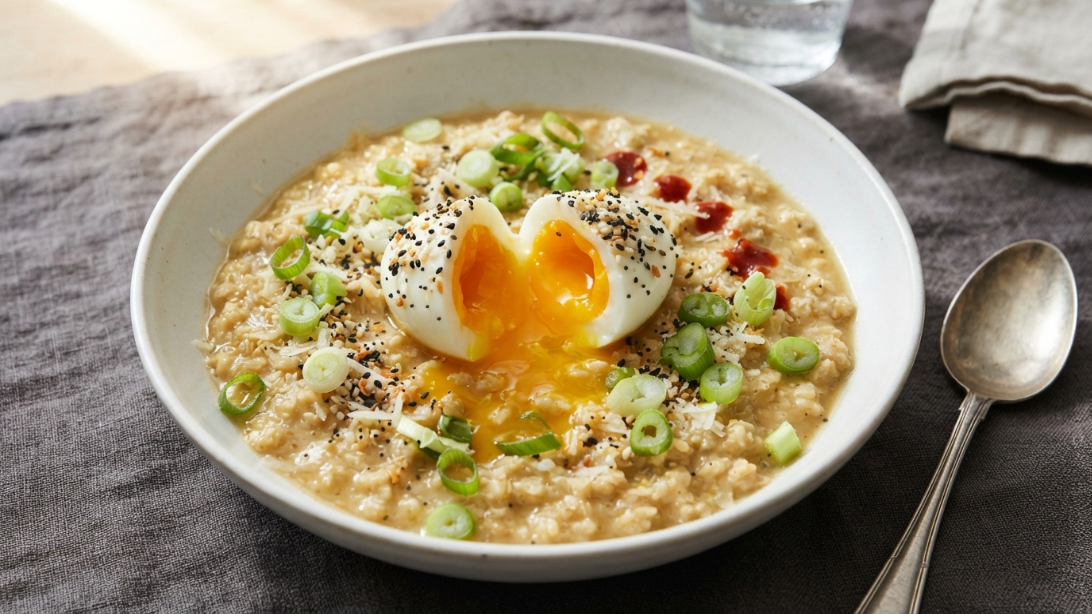
Savory oatmeal sounds counterintuitive to anyone who has eaten only sweet oatmeal versions, and it converts almost every skeptic who tries it into someone who cannot believe they spent years limiting oats to a sweet breakfast format. The addition of a soft-cooked egg, cheese, and savory toppings transforms oats into a genuinely satisfying meal that increases the protein content significantly above the sweet version.
Ingredients for one serving, approximately 360 to 400 calories:
- Half cup rolled oats cooked in low-sodium chicken or vegetable broth instead of water
- 1 soft-boiled or poached egg
- 1 tablespoon parmesan grated
- Quarter teaspoon garlic powder
- Salt and pepper
- Toppings: sliced green onion, half teaspoon hot sauce, 1 tablespoon everything bagel seasoning
Cook oats in broth rather than water following the package directions but substituting broth as the cooking liquid, which adds savory depth without meaningful caloric addition. Stir in parmesan and garlic powder during the final minute of cooking. Transfer to a bowl. Top with the egg. Add remaining toppings. Break the yolk when eating so it coats the oats. The broth cooking technique is the specific substitution that makes savory oatmeal genuinely satisfying rather than a novelty that gets tried once: the oats absorb the savory character of the broth and develop a flavor profile that accepts an egg and cheese topping naturally rather than in awkward contrast to residual sweetness.
8. Smoothie With Real Staying Power
Most breakfast smoothies are primarily fruit and liquid, which provides vitamins and fiber but insufficient protein to maintain satiation through the morning. This version is specifically engineered around protein and fiber content while maintaining the flavor and convenience of a standard smoothie format.
Ingredients for one large serving, approximately 380 to 420 calories:
- 1 scoop vanilla protein powder, about 20 to 25 grams protein
- Half cup plain Greek yogurt, about 10 grams protein
- 1 cup unsweetened almond milk
- 1 cup frozen spinach, which is nutritionally identical to fresh and does not change the flavor when combined with other ingredients
- Half a frozen banana for creaminess and natural sweetness
- 1 tablespoon almond butter
- 1 tablespoon ground flaxseed
- Half teaspoon cinnamon
- 3 to 4 ice cubes
Blend all ingredients starting with the liquid and yogurt at the bottom, which prevents the blender from struggling with the frozen ingredients. Blend on high for sixty seconds until completely smooth. If the consistency is too thick, add two tablespoons of additional almond milk. If too thin, add two tablespoons of additional Greek yogurt. The frozen spinach is the specific ingredient that most people resist adding to a smoothie and that genuinely does not affect the flavor when combined with banana, protein powder, and almond butter, while providing iron, folate, and fiber that fresh spinach also provides but that frozen spinach delivers more economically and with a longer storage life that reduces waste.
Building a Weight Loss Breakfast Habit That Survives Real Life
Individual recipes are only part of the weight loss breakfast picture. The system around them determines whether the intention of eating a healthy breakfast translates into the behavior of eating one consistently enough to matter.
Meal prep Sunday for breakfast is a ten to fifteen minute investment that produces five days of ready breakfasts that eliminate the decision fatigue and time pressure of weekday morning cooking. Five jars of overnight oats, a batch of twelve egg cups, and five jars of chia pudding prepared simultaneously cover two weeks of breakfasts for a single person with minimal ingredient overlap. The psychological value of opening a refrigerator that contains ready-made healthy breakfasts rather than ingredients that require assembly cannot be overstated: the decision to eat the healthy breakfast is already made, which removes the moment of vulnerability where hunger and convenience combine to produce a less aligned choice.
Protein target before adding anything else is the recipe design principle that makes weight loss breakfasts work at the physiological level. Designing every breakfast around hitting 25 to 30 grams of protein first, and then adding fiber and flavor, produces meals that genuinely suppress appetite rather than ones that are merely lower in calories than the alternative. A 400-calorie breakfast with 30 grams of protein outperforms a 300-calorie breakfast with 10 grams of protein for weight loss purposes because it prevents the additional 300 to 500 calories of mid-morning hunger consumption that the lower-protein breakfast triggers.
Frequently Asked Questions
What are the top healthy breakfast recipes for weight loss that require no cooking at all?
Overnight oats, chia seed pudding, Greek yogurt parfaits, and cottage cheese toast require zero cooking and minimal assembly. All four can be prepared in under five minutes using only mixing and layering. Preparing five jars of overnight oats or chia pudding on Sunday eliminates even the five-minute morning assembly from Monday through Friday, providing zero-effort weekday breakfasts that support weight loss more effectively than the skipped or fast-food alternative that zero morning preparation time typically produces.
How many calories should a weight loss breakfast contain?
Most nutrition frameworks for weight loss suggest allocating 25 to 30 percent of daily calories to breakfast, which for a 1,500 calorie daily target means 375 to 450 calories at breakfast. This range is large enough to feel genuinely satisfying when built around protein and fiber and small enough to preserve caloric space for lunch, dinner, and snacks. The specific calorie target matters less than the protein content: a breakfast that hits 25 to 30 grams of protein within a reasonable calorie range almost always produces the satiation outcomes that support weight loss regardless of the exact calorie number.
Is skipping breakfast better for weight loss than eating a healthy one?
This depends on the individual and their eating pattern. Intermittent fasting approaches that skip breakfast work well for people who are not genuinely hungry in the morning and who do not compensate by overeating at lunch. They work poorly for people who skip breakfast from a sense of dietary virtue despite genuine morning hunger and then experience significant hunger-driven overeating at lunch and throughout the afternoon. If you are hungry in the morning, eating a high-protein breakfast produces better weight loss outcomes than skipping it according to most research on the subject.
Can I lose weight eating the same breakfast every day?
Yes, and there is research suggesting that breakfast variety actually increases caloric intake by stimulating appetite more broadly than a consistent breakfast that the body learns to anticipate and satisfy efficiently. Many successful long-term weight loss maintainers report eating the same two or three breakfasts on rotation indefinitely. The psychological sustainability of breakfast monotony varies by individual, which is why having three to four reliable high-protein breakfast options that rotate rather than a single daily choice provides the consistency benefits without the motivational cost of complete inflexibility.
What should I drink with a weight loss breakfast?
Water is the most effective breakfast beverage for weight loss because it contributes to the physical stomach volume that supports satiation without adding calories. Black coffee has evidence behind it for appetite suppression and fat oxidation through caffeine’s effect on metabolism, making it the second-best choice. Green tea provides similar benefits at lower caffeine levels. Fruit juice, even freshly squeezed, delivers sugar without the fiber that slows its absorption in whole fruit form and adds 100 to 150 calories per glass without meaningful satiation benefit. Sweetened coffee drinks and commercial smoothies frequently contain 300 to 500 calories that most people do not account for as part of breakfast caloric intake.
Conclusion
A weight loss breakfast that you actually want to eat tomorrow morning is worth more than a nutritionally perfect one that you dread making and eventually stop making entirely. Every recipe on this list was built around the intersection of those two requirements, and finding the two or three that fit both your taste preferences and your morning schedule is the whole project. Which one are you making first?