
Finding genuinely useful best chicken dinner recipes for high protein diets requires cutting through the fitness nutrition content that treats chicken as a vehicle for hitting macros rather than as an ingredient worth cooking well. The grilled chicken breast weighed on a food scale and eaten alongside steamed broccoli with nothing else represents the failure mode of high protein eating that produces short-term compliance and long-term abandonment, because food that is nutritionally correct but genuinely unpleasant to eat consistently loses to food that is nutritionally imperfect but genuinely enjoyable. Every recipe on this list was chosen because it hits meaningful protein targets while being food you’d choose to eat regardless of macro considerations, which is the specific quality that makes a high protein eating approach sustainable across months rather than weeks.
Understanding High Protein Chicken Cooking
Before any specific recipe is useful, understanding what high protein chicken cooking actually requires produces better results than simply cooking chicken without fat or sauce and calling it a high protein meal.
Chicken is genuinely the most versatile high protein animal protein available to most home cooks, providing approximately 25 to 35 grams of protein per 150 gram serving depending on the cut, at a cost per gram of protein that no other animal protein matches consistently. The specific challenge of high protein chicken cooking is not the protein content, which all chicken provides regardless of preparation, but the tendency of chicken to become dry, bland, and texturally unpleasant when cooked without the fat, sauce, and technique elements that make food genuinely satisfying to eat. Chicken breast provides the highest protein per calorie of any chicken cut but is the most vulnerable to dryness from overcooking, which most people do because they’re afraid of undercooking it. Chicken thigh provides slightly less protein per calorie but significantly more flavor and forgiveness in cooking, and for most high protein dieters who aren’t bodybuilders in competition prep, the additional calories from thigh fat are nutritionally irrelevant relative to the meaningfully better eating experience thighs consistently provide. The internal temperature target of 165°F is the food safety standard but chicken breast pulled at 160°F and rested for five minutes, during which carryover cooking reaches the safe temperature, produces noticeably juicier results than chicken cooked to 165°F and served immediately.
1. Greek Lemon Chicken With Tzatziki
Greek lemon chicken with tzatziki hits the highest protein content of any recipe on this list when the tzatziki is made with Greek yogurt rather than standard yogurt, adding approximately 10 additional grams of protein per serving from the sauce alone while providing the cooling, bright flavor contrast that makes this dinner genuinely exciting rather than merely compliant.
Ingredients for chicken:
- 4 large chicken breasts, approximately 200g each
- Juice and zest of two lemons
- 4 cloves garlic, minced
- 3 tablespoons olive oil
- 1 tablespoon dried oregano
- 1 teaspoon dried thyme
- Salt and pepper
Ingredients for tzatziki:
- 1 cup full-fat Greek yogurt
- Half a cucumber, grated and squeezed dry
- 2 cloves garlic, minced
- 1 tablespoon fresh dill
- 1 tablespoon lemon juice
- 1 tablespoon olive oil
- Salt and pepper
Method:
Combine lemon juice, lemon zest, garlic, olive oil, oregano, thyme, salt, and pepper in a bowl. Add chicken breasts and marinate for at least thirty minutes and up to eight hours. For tzatziki, combine all ingredients and refrigerate for at least thirty minutes to allow flavors to develop. Grill or pan-cook marinated chicken over medium-high heat for six to seven minutes per side until internal temperature reaches 160°F. Rest five minutes before slicing. Serve sliced chicken over tzatziki with additional fresh dill and lemon wedges.
Estimated protein per serving: approximately 55 grams including tzatziki.
Grating the cucumber rather than dicing it and then squeezing out the moisture through a kitchen towel or clean cloth before adding to the yogurt is the technique that produces a thick, creamy tzatziki rather than a watery one, because cucumber releases an extraordinary amount of liquid when combined with salt and yogurt that dilutes the sauce entirely if not removed first.
2. Chicken and Quinoa Power Bowl
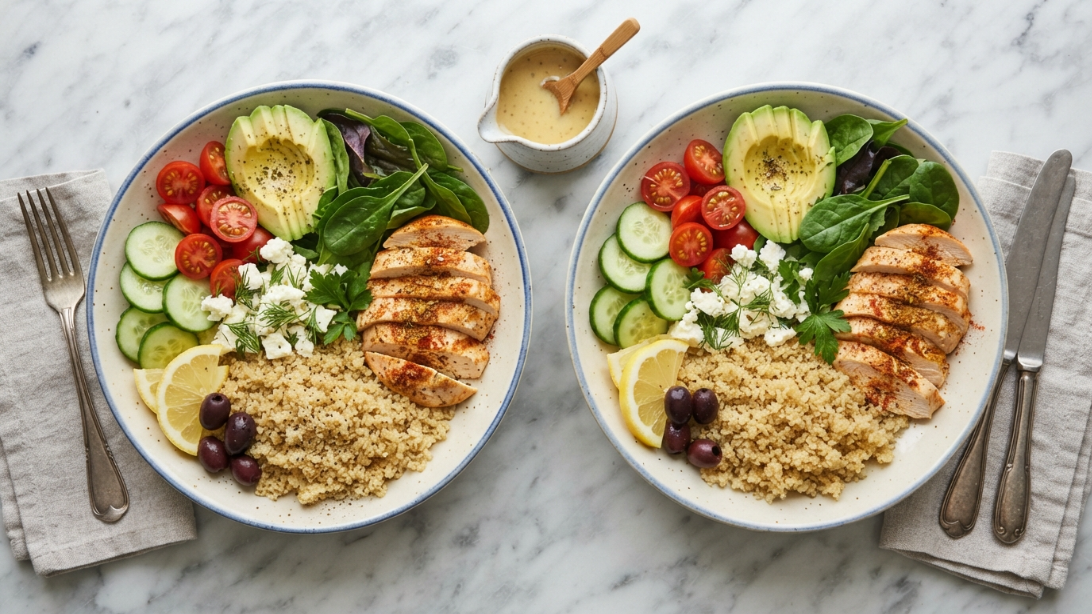
A chicken and quinoa power bowl provides the highest combined protein content from two non-supplemented food sources on this list, with quinoa contributing complete protein from a plant source that combines with chicken’s amino acid profile to produce a genuinely comprehensive protein intake from a single meal.
Ingredients:
- 2 large chicken breasts
- 1 cup quinoa, rinsed
- 2 cups chicken broth for cooking quinoa
- 2 cups mixed greens or spinach
- 1 cup cherry tomatoes, halved
- Half cucumber, diced
- Half avocado, sliced
- Quarter cup feta cheese
For the dressing:
- 3 tablespoons olive oil
- 2 tablespoons lemon juice
- 1 teaspoon Dijon mustard
- 1 clove garlic, minced
- Salt and pepper
Chicken seasoning:
- 1 teaspoon garlic powder
- 1 teaspoon paprika
- Half teaspoon cumin
- Salt and pepper
- 1 tablespoon olive oil
Method:
Cook quinoa in chicken broth according to package instructions. Cooking in broth rather than water adds flavor and additional protein from the broth itself. Season chicken with garlic powder, paprika, cumin, salt, and pepper. Heat oil in a skillet over medium-high heat. Cook chicken six to seven minutes per side until cooked through. Rest five minutes and slice. Whisk all dressing ingredients together. Assemble bowls with quinoa as the base, topped with mixed greens, tomatoes, cucumber, sliced chicken, and avocado. Crumble feta over the top. Drizzle with dressing and serve immediately.
Estimated protein per serving: approximately 52 grams.
Cooking the quinoa in chicken broth is a small technique change that adds meaningfully to both the flavor and the protein content of the finished bowl, and it requires no additional effort beyond substituting broth for water in the cooking process.
3. Honey Garlic Chicken Breast
Honey garlic chicken breast is the high protein dinner that most consistently converts people who claim they don’t enjoy chicken breast into people who request it specifically, because the combination of garlic, honey, and soy sauce produces a sticky, caramelized glaze that makes chicken breast genuinely exciting to eat rather than a protein delivery system requiring mental fortitude to finish.
Ingredients:
- 4 chicken breasts
- 4 tablespoons honey
- 4 cloves garlic, minced
- 3 tablespoons soy sauce
- 1 tablespoon apple cider vinegar
- 1 teaspoon sesame oil
- 1 tablespoon cornstarch mixed with 2 tablespoons cold water
- 2 tablespoons vegetable oil
- Salt and pepper
- Sesame seeds and green onions for serving
Method:
Pound chicken breasts to even thickness of approximately two centimeters using a rolling pin or meat mallet. Season with salt and pepper. Mix honey, garlic, soy sauce, vinegar, and sesame oil in a small bowl. Heat oil in a large skillet over medium-high heat. Cook chicken five to six minutes per side until golden and cooked through. Remove and set aside. Pour sauce mixture into the same pan over medium heat. Add cornstarch mixture and cook two to three minutes, stirring constantly, until sauce thickens and bubbles. Return chicken to the pan and coat thoroughly in the thickened glaze. Serve topped with sesame seeds and sliced green onions.
Estimated protein per serving: approximately 48 grams.
Pounding the chicken to even thickness before cooking is the technique that produces the most consistent result from chicken breast cooking, because the tapered end of a standard chicken breast cooks faster than the thick center, producing the situation where the thin end is dry and overcooked before the thick center reaches safe temperature. Even thickness eliminates this problem completely.
4. Buffalo Chicken Lettuce Wraps
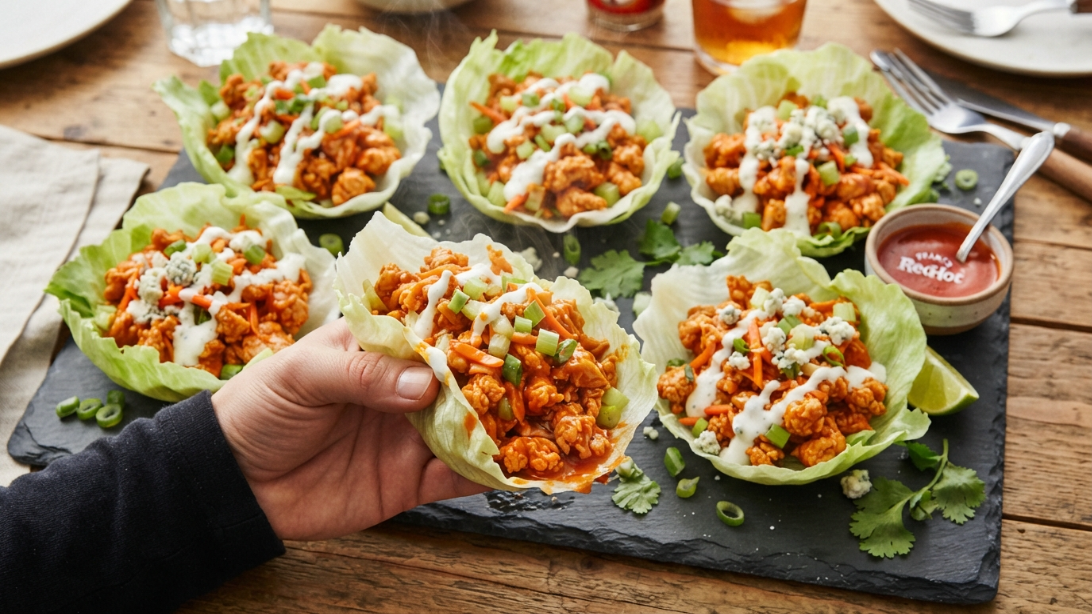
Buffalo chicken lettuce wraps provide the high protein content of a full chicken dinner in a lighter, fresher format that works specifically well as a high protein dinner for people whose protein targets require multiple high-protein meals per day and who therefore need dinner to be substantial in protein without being heavy in total calories.
Ingredients:
- 500g ground chicken or finely chopped chicken breast
- Quarter cup Frank’s RedHot sauce or any buffalo sauce
- 2 tablespoons butter
- 1 teaspoon garlic powder
- 1 teaspoon onion powder
- Salt and pepper
- 1 tablespoon vegetable oil
- Large iceberg or romaine lettuce leaves for wrapping
Toppings:
- Half cup blue cheese or ranch dressing
- 2 celery stalks, finely diced
- 2 carrots, finely diced or shredded
- Quarter cup blue cheese crumbles
- Green onions
Method:
Heat oil in a skillet over medium-high heat. Add ground chicken and cook, breaking apart, until browned throughout. Drain excess liquid if using ground chicken rather than chopped breast. Add garlic powder, onion powder, salt, and pepper. Add buffalo sauce and butter and stir to combine. Cook two more minutes until the sauce coats every piece of chicken and the butter is fully incorporated. Serve in lettuce leaves topped with celery, carrot, blue cheese crumbles, dressing, and green onions.
Estimated protein per serving: approximately 42 grams.
Draining excess liquid from ground chicken before adding the buffalo sauce is the step that produces a thick, well-coated filling rather than a watery one, because ground chicken releases significant moisture during cooking that dilutes the sauce if not removed before it’s added.
5. Chicken Tikka Masala With Cauliflower Rice
Chicken tikka masala with cauliflower rice produces a high-protein dinner with the specific depth of flavor that long-marinated, high-heat cooked chicken produces in a rich tomato and cream sauce, while the cauliflower rice keeps the total caloric load appropriate for high protein dieters who are also managing overall intake.
Ingredients for chicken:
- 700g chicken breast or thigh, cubed
- 1 cup Greek yogurt
- 2 teaspoons cumin
- 2 teaspoons coriander
- 1 teaspoon turmeric
- 1 teaspoon garam masala
- 1 teaspoon paprika
- Salt
For the sauce:
- 1 large onion, finely diced
- 4 cloves garlic, minced
- 1 tablespoon fresh ginger
- 2 cans crushed tomatoes
- 1 cup heavy cream or coconut cream
- 3 tablespoons butter or ghee
- 1 teaspoon garam masala
- 1 teaspoon cumin
- Salt to taste
For cauliflower rice:
- 1 large head cauliflower, riced
- 1 tablespoon butter
- Salt and pepper
Method:
Marinate cubed chicken in yogurt and all marinade spices for at least two hours and preferably overnight. Cook marinated chicken in a very hot skillet or under the broiler until charred at the edges, approximately four minutes per side. Set aside. Melt butter in a large saucepan over medium heat. Cook onion ten minutes until deeply golden. Add garlic and ginger and cook two minutes. Add crushed tomatoes, cumin, and remaining garam masala. Simmer fifteen minutes. Add cream and simmer five more minutes. Add chicken to the sauce and simmer ten minutes. For cauliflower rice, cook riced cauliflower in butter over medium-high heat for five minutes until slightly golden. Season with salt and pepper. Serve tikka masala over cauliflower rice.
Estimated protein per serving: approximately 50 grams.
The charring of the marinated chicken before adding it to the sauce is the technique that distinguishes genuinely good tikka masala from an adequate one, because the Maillard reaction products created by high-heat cooking of the yogurt-marinated chicken produce flavor compounds that don’t develop in gently simmered chicken and that the sauce alone cannot replicate.
6. Sheet Pan Chicken Fajitas
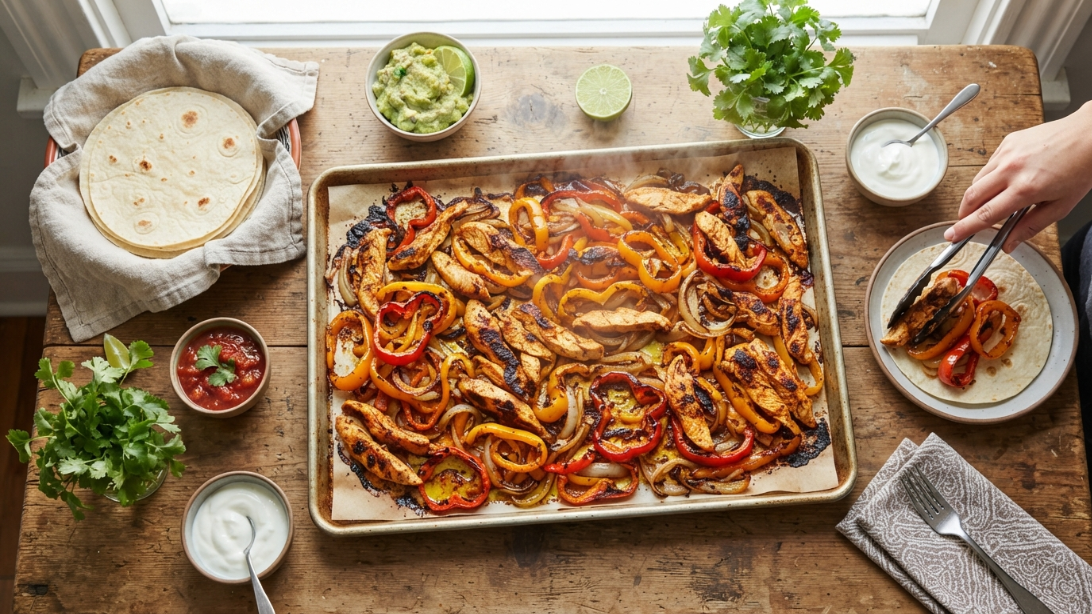
Sheet pan chicken fajitas produce a high-protein dinner that also satisfies through the combination of multiple textures, bold spices, and the social quality of a build-your-own meal format that makes eating to a nutritional goal feel less like dietary compliance and more like genuinely enjoying dinner.
Ingredients:
- 600g chicken breast, sliced thin
- 3 bell peppers, assorted colors, sliced
- 2 large onions, sliced
- 3 tablespoons olive oil
- 2 teaspoons chili powder
- 1 teaspoon cumin
- 1 teaspoon garlic powder
- 1 teaspoon smoked paprika
- Half teaspoon oregano
- Salt and pepper
- Juice of one lime
Serving options:
- Warm tortillas or lettuce wraps for lower carbs
- Greek yogurt or sour cream
- Salsa and guacamole
- Fresh cilantro and lime wedges
Method:
Preheat oven to 425°F. Mix all spices together. Toss chicken strips with two tablespoons olive oil and all the spice mixture. Toss peppers and onions with remaining olive oil, salt, and pepper. Spread peppers and onions on a large sheet pan. Add seasoned chicken on top. Roast twenty to twenty-five minutes until chicken is cooked through and edges are slightly charred. Squeeze lime juice over everything immediately after removing from the oven. Serve in tortillas or lettuce wraps with all accompaniments.
Estimated protein per serving without tortillas: approximately 45 grams.
Squeezing lime juice over the fajita mixture immediately after removing from the oven rather than before cooking or serving cold is the timing that produces the brightest citrus flavor, because the heat of the freshly cooked food releases the aromatic compounds in the lime juice in a way that cold application or cooking doesn’t replicate.
7. Chicken and Broccoli Stir Fry
Chicken and broccoli stir fry is the high protein dinner that most efficiently delivers protein, fiber, and genuine flavor satisfaction in the shortest possible preparation time, and when cooked correctly at genuinely high heat it produces the specific smokiness called wok hei that distinguishes excellent stir fry from the home version that most people accept without knowing what’s missing.
Ingredients:
- 600g chicken breast, sliced thin against the grain
- 2 large heads broccoli, cut into florets
- 4 cloves garlic, minced
- 1 tablespoon fresh ginger
- 3 tablespoons soy sauce
- 1 tablespoon oyster sauce
- 1 tablespoon sesame oil
- 1 teaspoon cornstarch mixed with 2 tablespoons water
- 3 tablespoons vegetable oil
- Salt and pepper
- Cooked brown rice for serving
Method:
Toss sliced chicken with a pinch of salt, pepper, and a teaspoon of cornstarch. This coating helps the chicken brown rather than steam. Heat two tablespoons oil in a wok or large skillet over the highest heat available until smoking. Add chicken in a single layer and cook without stirring two minutes until golden. Flip and cook one more minute. Remove and set aside. Add remaining oil. Add broccoli and cook three minutes until bright green and slightly charred. Add garlic and ginger and stir thirty seconds. Mix soy sauce, oyster sauce, and sesame oil in a small bowl. Return chicken to the wok. Pour sauce over everything. Add cornstarch mixture and toss vigorously for two minutes until sauce thickens and coats every piece. Serve immediately over brown rice.
Estimated protein per serving with rice: approximately 50 grams.
Coating the chicken in cornstarch before cooking is the restaurant technique that produces golden, lightly crispy chicken pieces in a stir fry rather than the pale, soft pieces that plain chicken produces, because the cornstarch creates a surface that browns and crisps against the hot pan in a way that the protein alone doesn’t.
8. Baked Stuffed Chicken Breast
Baked stuffed chicken breast provides the highest visual impact per unit of cooking effort on this list, producing a dinner that looks significantly more elaborate than its preparation requires while delivering a protein content from the chicken and ricotta filling combination that makes it one of the more substantial high protein dinners available.
Ingredients:
- 4 large chicken breasts
- 1 cup ricotta cheese
- Half cup spinach, cooked and squeezed completely dry
- Quarter cup sun-dried tomatoes, finely chopped
- Quarter cup parmesan, grated
- 2 cloves garlic, minced
- Salt, pepper, and Italian seasoning
- 2 tablespoons olive oil
- Toothpicks for securing
Method:
Preheat oven to 400°F. Mix ricotta, spinach, sun-dried tomatoes, parmesan, garlic, salt, and pepper until combined. Cut a deep pocket into the side of each chicken breast without cutting all the way through. Season the inside and outside of each pocket with salt, pepper, and Italian seasoning. Fill each pocket generously with ricotta mixture. Secure with two to three toothpicks to hold the filling inside during cooking. Heat oil in an oven-safe skillet over medium-high heat. Sear stuffed chicken two to three minutes per side until golden. Transfer the entire skillet to the oven. Bake eighteen to twenty minutes until internal temperature reaches 165°F. Remove toothpicks before serving.
Estimated protein per serving: approximately 55 grams.
Squeezing every drop of moisture from the cooked spinach before adding to the ricotta filling is the step that prevents the filling from liquefying during baking and leaking out of the pocket, which defeats the purpose of the stuffing and produces a baking dish full of watery ricotta rather than a chicken breast with intact filling.
9. Chicken Souvlaki Skewers
Chicken souvlaki skewers produce a high-protein dinner with the specific char and herb flavor that open-fire cooking of marinated meat produces and that distinguishes genuinely excellent grilled chicken from the pale, unseasoned version that gives high protein eating its unfair reputation for blandness.
Ingredients:
- 700g chicken breast or thigh, cut into large cubes
- 4 tablespoons olive oil
- Juice and zest of two lemons
- 4 cloves garlic, minced
- 2 teaspoons dried oregano
- 1 teaspoon cumin
- Salt and pepper
- Wooden skewers soaked in water for thirty minutes
For serving:
- Warm pita or lettuce wraps
- Sliced tomatoes and onions
- Tzatziki from recipe one above
- Fresh parsley
Method:
Combine olive oil, lemon juice, lemon zest, garlic, oregano, cumin, salt, and pepper. Add chicken cubes and marinate for at least two hours and up to twelve hours in the refrigerator. Thread marinated chicken onto skewers, leaving a small gap between pieces to allow heat circulation. Grill over medium-high heat for four to five minutes per side until charred at the edges and cooked through. Alternatively cook under the broiler on a lined baking sheet for the same time. Rest three minutes before serving with pita or lettuce wraps, fresh vegetables, and tzatziki.
Estimated protein per serving: approximately 48 grams.
Leaving small gaps between chicken pieces on the skewer rather than pressing them tightly together allows heat to circulate completely around each piece, which produces even cooking and charring rather than the steaming that tightly packed pieces produce where they touch each other.
10. One Pan Creamy Chicken and White Beans
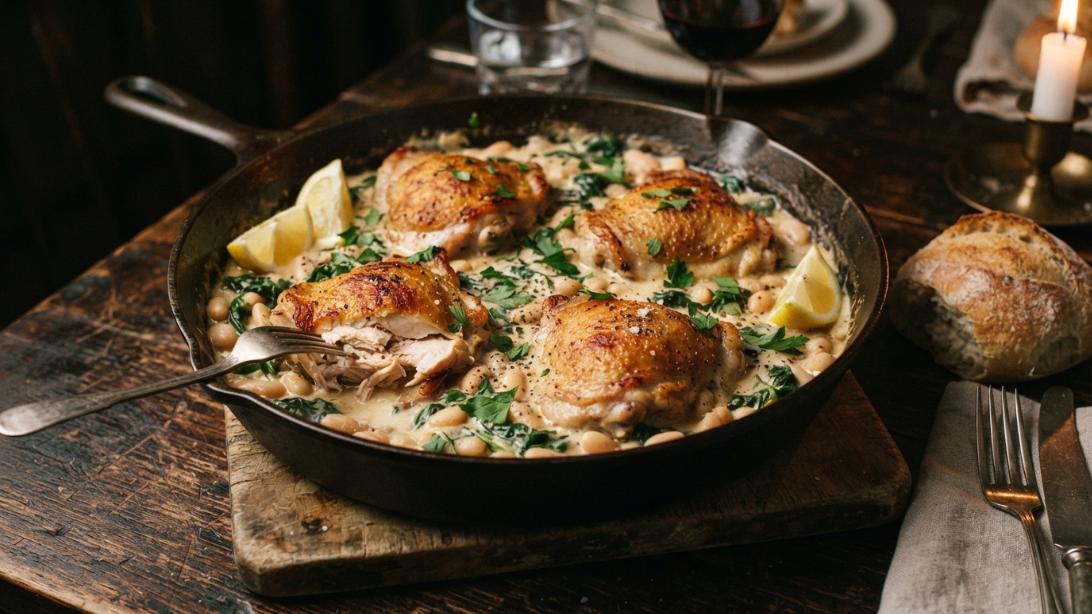
One pan creamy chicken and white beans provides the highest protein combination from chicken and legumes on this list, with white beans contributing approximately 15 grams of plant protein per cup in a creamy sauce alongside the chicken’s contribution, producing a dinner that reaches genuinely impressive protein totals from entirely whole food sources.
Ingredients:
- 4 chicken thighs, bone-in skin-on
- 2 cans white beans, cannellini or great northern, drained
- 4 cups baby spinach
- 1 cup chicken broth
- Half cup heavy cream
- 4 cloves garlic, minced
- 1 small onion, diced
- 1 teaspoon thyme
- 1 teaspoon rosemary
- 2 tablespoons olive oil
- Salt and pepper
- Fresh parsley and lemon wedges for serving
Method:
Season chicken thighs generously with salt, pepper, thyme, and rosemary. Heat oil in a large oven-safe skillet over medium-high heat. Place chicken skin-side down and cook without moving for eight minutes until skin is deeply golden and crispy. Flip and cook three more minutes. Remove and set aside. Pour off all but two tablespoons of the fat from the pan. Add onion and cook five minutes. Add garlic and cook two minutes. Add white beans and stir to coat in the fat and aromatics. Add broth and cream and bring to a simmer. Return chicken skin-side up to the pan. Transfer to a 375°F oven and bake twenty minutes until chicken is cooked through and the sauce has reduced slightly. Add spinach in the last two minutes of cooking and stir until wilted. Serve with parsley and lemon wedges.
Estimated protein per serving: approximately 55 grams.
Cooking the chicken skin-side down for eight minutes without moving is the technique that produces genuinely crispy skin that maintains its texture even after returning to the sauce, because the sustained contact with the hot pan renders the fat from the skin and allows it to crisp properly rather than the pale, flabby skin that shorter cooking or frequent flipping produces.
Frequently Asked Questions
How much protein does chicken actually provide per serving?
A 150 gram cooked chicken breast provides approximately 46 grams of protein. The same weight of cooked chicken thigh provides approximately 40 grams. These numbers make chicken the most protein-dense whole food available at its price point in most markets. The specific protein content varies slightly based on whether the chicken is weighed raw or cooked, since water loss during cooking concentrates the protein content per gram of cooked weight relative to raw weight.
Is chicken breast or thigh better for high protein diets?
Chicken breast provides more protein per calorie which matters for people managing both protein intake and total caloric intake simultaneously. Chicken thigh provides more flavor, more moisture, and more cooking forgiveness which matters for people who need to enjoy their food consistently enough to sustain a high protein eating approach over months rather than weeks. For most people who aren’t competitive bodybuilders in the final weeks before a competition, the additional fat in chicken thighs is nutritionally insignificant relative to the substantially better eating experience they consistently provide.
How do you keep chicken breast from drying out during cooking?
Three techniques produce consistently juicy chicken breast. Pounding to even thickness before cooking ensures the entire breast cooks at the same rate rather than the thin end overcooking before the thick center reaches temperature. Pulling at 160°F internal temperature rather than 165°F and resting five minutes produces the safe temperature through carryover cooking while maintaining noticeably more moisture. Marinating in an acidic marinade containing lemon juice, vinegar, or yogurt for at least thirty minutes before cooking partially denatures surface proteins in a way that produces more moisture retention during cooking.
Can you meal prep these chicken recipes for the whole week?
Most recipes on this list reheat well when stored properly. Slice or portion chicken before refrigerating rather than reheating whole pieces, which reduces reheating time and produces more even warming. Store sauces separately when possible and combine with chicken during reheating rather than storing combined. Add fresh herbs, lemon juice, and finishing elements after reheating rather than before storage, which maintains their bright flavor rather than the dulled version that stored and reheated herbs produce. Most cooked chicken dishes store safely for four days refrigerated.
How do high protein diet followers avoid getting bored eating chicken every day?
Varying the cooking method, the marinade, and the flavor profile produces the perception of variety that the repetition of chicken as the protein source doesn’t automatically provide. The ten recipes on this list cover Greek, Indian, Mexican, Japanese, Italian, and American flavor profiles that taste sufficiently distinct that rotating through them across two weeks produces no two identical dinners. Varying the vegetable and grain accompaniments while keeping chicken as the protein produces additional variety within the same recipe rotation.
Conclusion
High protein eating succeeds long-term when the food involved is genuinely worth eating rather than merely worth eating for its macronutrient content, and every recipe on this list was chosen because it passes the test of being genuinely desirable food that happens to be high in protein rather than high protein food that requires motivation and nutritional awareness to choose. The protein goals take care of themselves when the food is actually good. Which recipe are you making this week, and which cut of chicken are you working with?