
The top vegetarian dinner recipes for plant based beginners need to clear a specific bar that most vegetarian recipe content sets too low: they need to be filling enough that nobody finishes dinner thinking about what they are not eating. The most common reason people abandon plant-based eating in the first month is not ethical reconsideration or nutritional concern. It is persistent hunger. They cooked a vegetable dish that tasted fine but did not satisfy, went to bed slightly hungry, and decided the whole project was not worth the discomfort. The recipes below were chosen specifically because they solve the satiation problem through protein density, healthy fat content, and the kind of flavor complexity that makes a meal feel complete rather than like the side dish that forgot to bring a main course.
What Plant Based Beginners Actually Need to Know Before Starting
The transition to vegetarian eating produces the best outcomes when it is built on understanding rather than rules, and there are three nutritional concepts that matter more than everything else combined for people making this switch for the first time.
Protein completeness is the concept that caused decades of unnecessary anxiety in vegetarian communities before the science settled on a more relaxed position. Individual plant foods often lack one or more essential amino acids, but eating varied plant proteins across the day, not necessarily within the same meal, provides all essential amino acids without careful combining. Legumes, tofu, tempeh, edamame, quinoa, and dairy or eggs for vegetarians who include them cover the complete amino acid profile effectively. The practical implication is that a dinner of beans and rice, lentil soup with bread, or tofu stir fry with edamame provides complete protein without any deliberate combining strategy beyond eating varied foods.
Iron and its absorption matters specifically because plant-based iron, non-heme iron, absorbs less efficiently than animal-based heme iron. Pairing iron-rich plant foods including lentils, spinach, tofu, and pumpkin seeds with vitamin C sources including tomatoes, bell peppers, citrus, and broccoli at the same meal increases non-heme iron absorption by up to 300 percent. This is not complicated to implement in practice because most genuinely flavorful vegetarian recipes already combine these food categories naturally.
Caloric density awareness is the concept that catches most plant-based beginners off guard. Vegetables are nutritionally excellent and calorically sparse, which means a plate of vegetables without adequate protein, fat, and complex carbohydrate leaves the stomach physically full but calorically insufficient, producing hunger within two to three hours. Building every vegetarian dinner around a protein source, a healthy fat, and a complex carbohydrate alongside vegetables produces the satiation that keeps people committed to plant-based eating rather than abandoning it after three weeks of persistent evening hunger.
1. Red Lentil Dal With Coconut Milk
Red lentil dal is the vegetarian dinner that converts more skeptics in a single meal than any other plant-based recipe, because it provides thirty minutes of cooking time, one pot of cleanup, complete plant protein from the lentils, and a depth of spiced flavor that requires no apology or comparison to meat-based alternatives.
Ingredients for four servings:
- 1 and half cups dried red lentils rinsed thoroughly
- 1 can full-fat coconut milk
- 1 can diced tomatoes
- 1 large onion finely diced
- 5 garlic cloves minced
- 1 inch fresh ginger grated
- 1 teaspoon each cumin, coriander, turmeric, garam masala
- Half teaspoon cayenne, adjust to preference
- 2 tablespoons neutral oil or ghee if including dairy
- Salt
- Juice of one lime
- Fresh cilantro for serving
- Cooked basmati rice or naan for serving
Heat oil in a large pot over medium heat. Add onion and cook eight minutes until softened and beginning to develop golden edges. Add garlic and ginger, cook two minutes. Add all spices and cook two minutes, stirring constantly, until the spice mixture is fragrant and beginning to stick to the pot bottom. This spice blooming step is the most important technique in dal cooking and the one that separates dal with genuine depth from dal that tastes flat and powdery regardless of how many spices went into it. Spice compounds are fat-soluble, meaning they activate and develop only when cooked in fat at sufficient temperature. Add tomatoes and cook three minutes. Add lentils and coconut milk plus half a cup of water. Bring to a simmer and cook twenty-five minutes, stirring occasionally, until lentils have completely broken down into a thick, uniform sauce. Season generously with salt and finish with lime juice. The lime juice finish is the acid addition that brightens the entire dish and balances the richness of the coconut milk in a way that makes the difference between a good dal and a genuinely exceptional one.
2. Black Bean Tacos With Mango Salsa
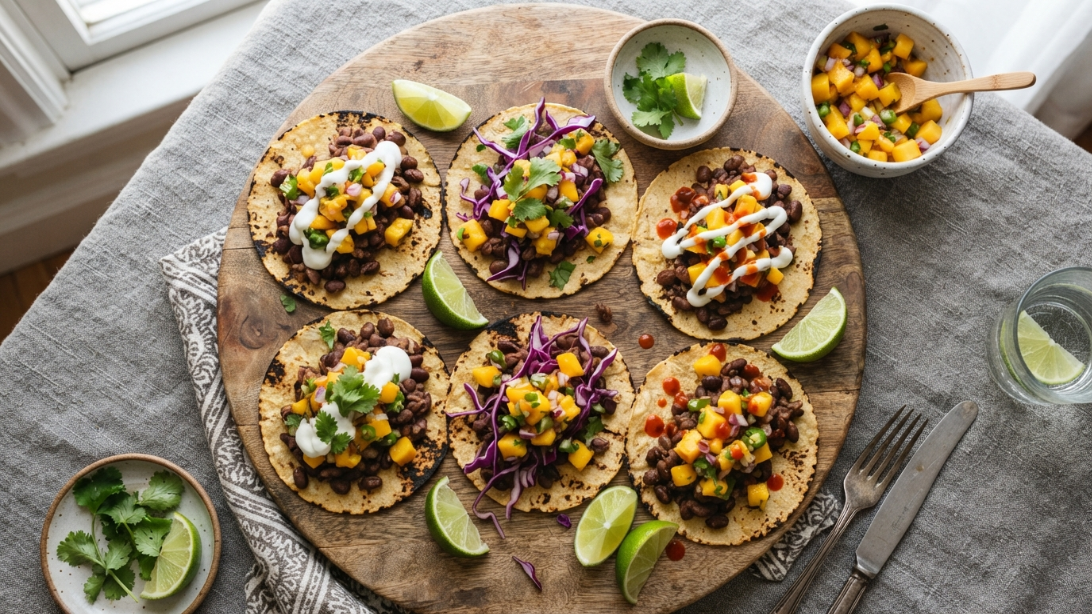
Black bean tacos demonstrate a principle that plant-based beginners benefit enormously from internalizing early: the taco format is so flavor-delivery-efficient that the protein source becomes secondary to the overall experience, which makes the switch from meat tacos to bean tacos feel like lateral movement rather than downgrade.
Ingredients for four servings:
- 2 cans black beans drained and rinsed
- 1 teaspoon each cumin, chili powder, garlic powder, smoked paprika
- Salt and lime juice
- 12 small corn or flour tortillas
- 1 cup shredded purple cabbage
- Half cup sour cream or vegan alternative
- Hot sauce
Mango salsa:
- 1 ripe mango diced small
- Half red onion finely diced
- 1 jalapeño seeded and minced, optional
- Juice of one lime
- Quarter cup fresh cilantro chopped
- Pinch of salt
Make the mango salsa first by combining all ingredients and letting them sit while you prepare the beans, which allows the flavors to integrate. Heat a splash of oil in a skillet over medium heat. Add drained beans and all spices. Cook stirring occasionally for five to six minutes until the beans are heated through and some have begun to crisp slightly at the edges, which adds a textural quality that plain heated beans lack entirely. Mash roughly one third of the beans against the side of the pan with a wooden spoon, which creates a mixture of whole and mashed beans that holds in a taco significantly better than fully whole beans. Season with salt and lime juice. Warm tortillas. Serve beans topped with mango salsa, cabbage, sour cream, and hot sauce. The partial mashing technique is the specific preparation step that converts beans from a filling that falls out of every taco into one that has enough cohesion to stay assembled through the first bite.
3. Mushroom and Lentil Bolognese
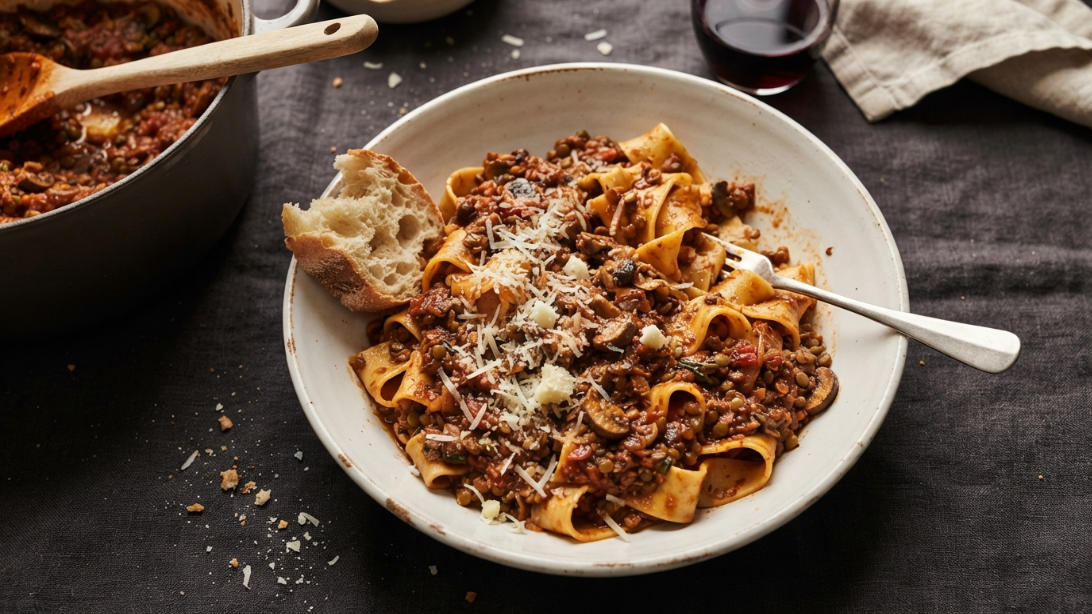
Mushroom and lentil bolognese is the vegetarian recipe that performs best in blind taste comparisons with meat-based bolognese, because mushrooms provide the umami depth and textural variation that meat contributes to the original, and lentils provide the protein density and body that make the sauce genuinely filling.
Ingredients for six servings:
- 1 lb cremini or mixed mushrooms finely chopped
- 1 cup green or brown lentils rinsed
- 1 can crushed tomatoes
- 1 can diced tomatoes
- 1 large onion finely diced
- 2 carrots finely diced
- 3 celery stalks finely diced
- 5 garlic cloves minced
- Half cup dry red wine or vegetable broth
- 2 tablespoons tomato paste
- 1 tablespoon soy sauce or tamari
- 1 teaspoon dried thyme
- 1 teaspoon dried rosemary
- 2 cups vegetable broth
- 3 tablespoons olive oil
- Salt and pepper
- Parmesan or nutritional yeast for serving
- 1 lb pasta cooked separately
Heat olive oil in a large heavy pot over medium heat. Add onion, carrot, and celery. Cook ten minutes until very soft and beginning to caramelize at the edges. Add garlic, cook two minutes. Increase heat to medium-high and add mushrooms. Cook without stirring for three minutes, then stir and cook three more minutes until mushrooms have released their liquid and it has evaporated completely, leaving the mushrooms beginning to brown. The evaporation before browning sequence is what develops the deep mushroom flavor that distinguishes this sauce from a mushroom soup: mushrooms cannot brown until their moisture has cooked off, and adding them to a crowded pan where the moisture cannot evaporate produces steamed rather than sautéed mushrooms with significantly less flavor depth. Add tomato paste, cook two minutes. Add wine and cook until absorbed. Add both cans of tomatoes, lentils, broth, soy sauce, thyme, and rosemary. Bring to a simmer and cook forty minutes until lentils are completely tender and the sauce has thickened to a proper bolognese consistency. Season generously. Serve over pasta.
Top Vegetarian Dinner Recipes for Plant Based Beginners: High Protein Options
The plant-based protein sources that beginners find most practical and most satisfying are tofu, tempeh, chickpeas, and lentils, and each requires slightly different preparation to achieve the texture and flavor that make it genuinely competitive with the meat proteins it replaces.
Crispy Tofu Stir Fry
Crispy tofu requires one specific technique that most beginners skip and that determines whether tofu becomes a protein they genuinely enjoy or one they tolerate. That technique is pressing, removing the moisture from the tofu before cooking, without which it steams in its own water rather than crisping.
Ingredients for four servings:
- 2 blocks firm or extra-firm tofu
- 3 tablespoons soy sauce or tamari
- 2 tablespoons cornstarch
- 2 tablespoons neutral oil
- 1 tablespoon sesame oil
- 3 cups mixed vegetables: broccoli, bell pepper, snap peas, carrot, bok choy
- 3 garlic cloves minced
- 1 tablespoon fresh ginger minced
- Cooked rice for serving
- Sesame seeds and green onion for garnish
Stir fry sauce:
- 3 tablespoons soy sauce
- 2 tablespoons rice vinegar
- 1 tablespoon honey or maple syrup
- 1 tablespoon cornstarch dissolved in 2 tablespoons water
- 1 teaspoon sesame oil
- Half teaspoon red pepper flakes
Drain tofu and press between two kitchen towels or paper towels with a heavy pan on top for fifteen to thirty minutes. Cut into one-inch cubes. Toss with soy sauce and let sit five minutes. Add cornstarch and toss to coat each piece. Heat neutral oil in a large skillet or wok over high heat until very hot. Add tofu in a single layer without overcrowding. Do not touch for three to four minutes until the bottom forms a golden crust. Flip and cook three more minutes. Remove and set aside. Add vegetables to the same pan in order of cooking time needed, starting with broccoli and carrot, then adding bell pepper and snap peas after two minutes. Add garlic and ginger and cook one minute. Add sauce and toss until thickened and glossy, about sixty seconds. Return tofu. Serve over rice.
Tempeh Tacos With Chipotle Sauce
Tempeh has a nuttier, denser character than tofu that suits the seasoning profile of taco meat particularly well, and crumbling it into a skillet with the right spice combination produces a filling that converts tempeh skeptics more reliably than any other preparation.
Ingredients for four servings:
- 8 oz tempeh crumbled into small pieces
- 1 tablespoon each soy sauce, cumin, chili powder
- Half teaspoon each smoked paprika, garlic powder, onion powder
- 2 tablespoons olive oil
- Salt
Chipotle sauce:
- Half cup cashews soaked in water two hours and drained, or half cup sour cream
- 1 to 2 chipotle peppers in adobo sauce
- 2 tablespoons lime juice
- Quarter cup water
- Salt
Blend chipotle sauce ingredients until completely smooth. Heat olive oil in a skillet over medium-high heat. Add crumbled tempeh and all seasonings. Cook stirring occasionally for eight to ten minutes until tempeh is golden and slightly crispy at the edges. The high heat and patience combination is what produces the texture: tempeh needs enough heat to develop color and enough time for that color to develop without constant stirring that prevents crust formation. Serve in warmed tortillas with chipotle sauce, avocado, and whatever toppings the family accepts.
4. Chickpea and Spinach Curry
Chickpea curry is the plant-based beginner recipe with the highest frequency of becoming a permanent weekly rotation, because it costs under $5 to make four servings, takes thirty minutes, provides complete plant protein, and tastes genuinely impressive relative to its simplicity.
Ingredients for four servings:
- 2 cans chickpeas drained and rinsed
- 2 cans diced tomatoes
- 4 cups baby spinach
- 1 large onion diced
- 5 garlic cloves minced
- 1 inch ginger grated
- 1 can coconut milk, optional but adds richness
- 1 teaspoon each cumin, coriander, turmeric, garam masala, smoked paprika
- Half teaspoon cayenne
- 2 tablespoons neutral oil
- Salt
- Juice of half a lemon
- Cooked rice or naan for serving
Cook onion in oil over medium heat for eight minutes. Add garlic, ginger, and all spices. Cook two minutes. Add tomatoes and cook five minutes until slightly reduced. Add chickpeas and coconut milk if using. Simmer fifteen minutes. Add spinach in three additions, stirring each until wilted before adding the next. Season with salt and finish with lemon juice. For a richer, thicker sauce, remove a third of the chickpeas and mash them roughly before returning to the pot. The partial chickpea mashing produces a sauce with significantly more body than a thin tomato-based curry, which improves the satisfaction level of the dish without adding any ingredient or preparation step beyond pressing some chickpeas against the side of the pot.
5. Vegetable Fried Rice With Egg
Fried rice made with day-old cold rice, scrambled egg, and a generous array of vegetables provides a complete vegetarian meal that takes twelve minutes, uses leftover rice that might otherwise go to waste, and produces a genuinely satisfying dinner with protein from the eggs and fiber from the vegetables.
Ingredients for four servings:
- 4 cups cooked cold rice, at least one day old
- 4 large eggs
- 2 cups mixed vegetables: frozen peas, corn, diced carrots, edamame, diced bell pepper
- 3 garlic cloves minced
- 2 green onions sliced
- 3 tablespoons soy sauce or tamari
- 1 tablespoon sesame oil
- 2 tablespoons neutral oil
- White pepper
- Optional: 1 tablespoon oyster sauce for non-strict vegetarians or hoisin sauce for vegan version
Heat a large wok or skillet over high heat until very hot. Add neutral oil. Add cold rice and press flat against the pan. Leave undisturbed for ninety seconds until the bottom layer begins to crisp. Stir and press flat again. Repeat once more. Push rice to one side. Add eggs to the empty side and scramble until almost set, then fold into the rice before they fully firm. Add vegetables and garlic, stir fry for two minutes. Add soy sauce, sesame oil, and white pepper. Toss everything together for sixty seconds. Finish with green onions and sesame oil drizzle. The day-old cold rice requirement is the non-negotiable ingredient quality that determines the success of fried rice more than any technique: fresh rice contains too much moisture to fry rather than steam, producing the wet, clumped result that makes people think they cannot make fried rice at home.
6. White Bean and Kale Soup With Crusty Bread
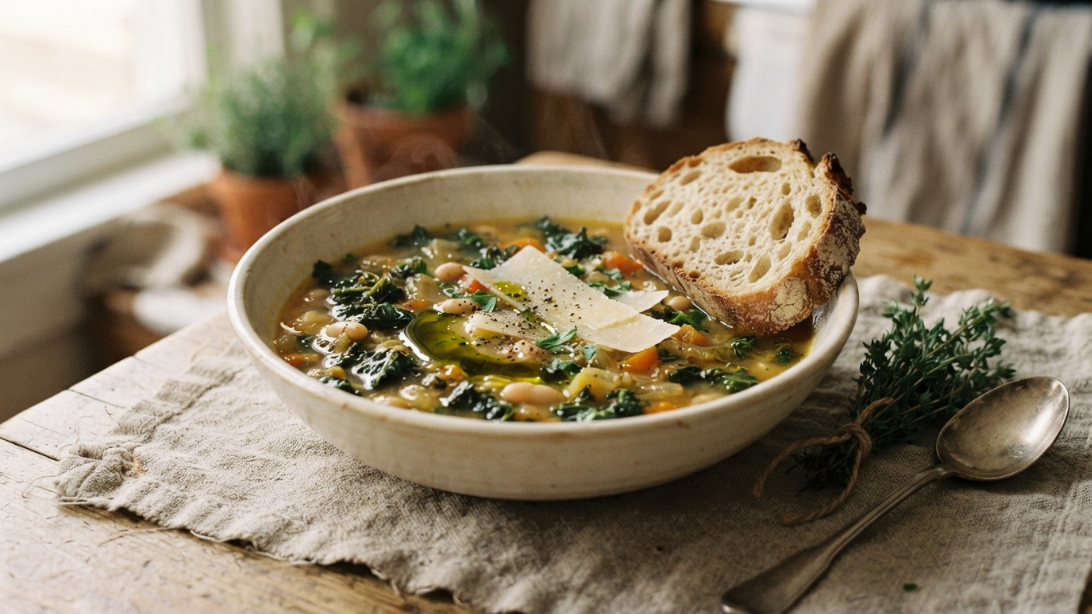
White bean soup is the vegetarian dinner that most effectively demonstrates how plant-based eating produces genuinely hearty, warming, deeply satisfying meals rather than the light, insubstantial soups that the term vegetable soup implies to most people who grew up with broth as the primary component.
Ingredients for six servings:
- 2 cans white cannellini beans drained and rinsed
- 1 can great northern beans drained and rinsed
- 4 cups chopped kale stems removed
- 1 large onion diced
- 4 carrots diced
- 3 celery stalks diced
- 5 garlic cloves minced
- 4 cups vegetable broth
- 1 can diced tomatoes
- 1 teaspoon each dried thyme, dried rosemary, dried sage
- 1 parmesan rind if including dairy, adds extraordinary depth
- 2 tablespoons olive oil plus more for serving
- Salt and pepper
- Lemon juice
- Crusty bread for serving
Heat olive oil in a large pot over medium heat. Cook onion, carrot, and celery for eight minutes. Add garlic and dried herbs, cook two minutes. Add tomatoes, broth, both cans of beans, and the parmesan rind if using. Bring to a simmer and cook twenty minutes. Remove a third of the soup and blend until smooth, then return to the pot to thicken the base while maintaining the textural interest of whole beans and vegetables. Add kale and cook five minutes until tender. Remove parmesan rind. Season with salt, pepper, and lemon juice. Serve with a drizzle of olive oil and crusty bread. The parmesan rind addition is the specific ingredient that plant-based beginners who are still eating dairy should know about: a rind saved from a block of parmesan and simmered in soup releases an extraordinary amount of umami and depth that transforms vegetable soup into something that tastes like it simmered with meat-based stock.
7. Stuffed Bell Peppers With Quinoa and Black Beans
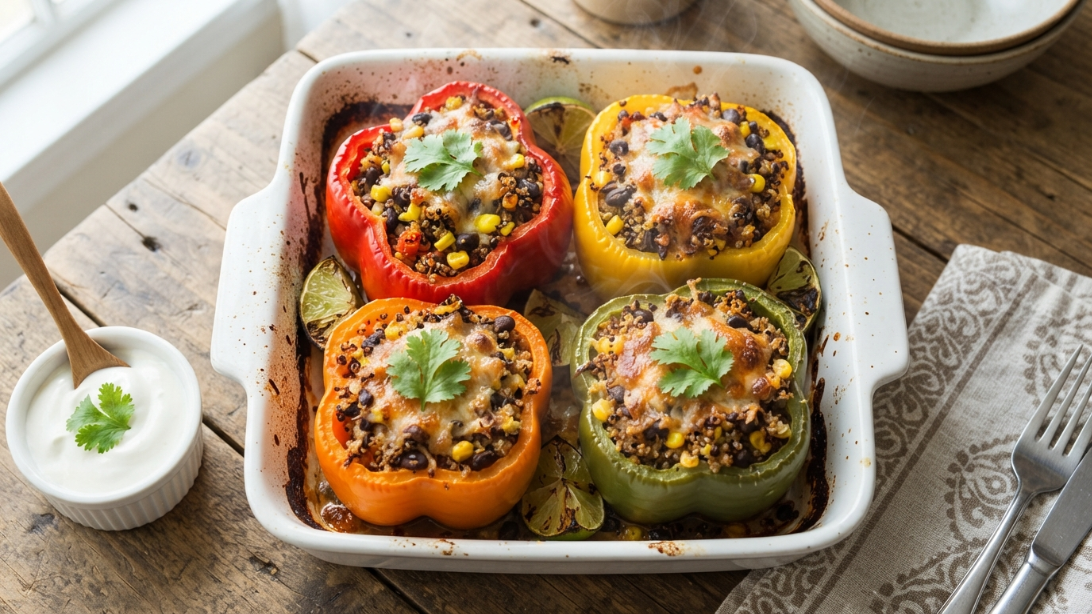
Stuffed bell peppers with a quinoa and black bean filling provide a complete plant-based meal with all essential amino acids from the quinoa and legume combination, visual appeal from the pepper vessel, and the specific satisfaction of a composed dish that looks more complex to prepare than it actually is.
Ingredients for four servings:
- 4 large bell peppers any color, tops cut off and seeds removed
- 1 cup quinoa rinsed and cooked according to package directions
- 1 can black beans drained
- 1 can diced tomatoes drained
- 1 cup corn frozen and thawed
- 1 cup shredded cheese, divided, or nutritional yeast for vegan version
- 1 teaspoon each cumin, chili powder, garlic powder
- Salt and pepper
- Fresh cilantro
- Lime juice
- Sour cream or avocado for serving
Preheat oven to 375°F. Combine cooked quinoa, black beans, tomatoes, corn, three quarters of the cheese, and all seasonings in a large bowl. Add a squeeze of lime juice and fresh cilantro. Mix well and taste for seasoning. Pack filling firmly into each pepper, pressing down to fit as much filling as possible. Place peppers upright in a baking dish with a quarter inch of water in the bottom. Cover tightly with foil. Bake thirty minutes. Remove foil, top each pepper with remaining cheese, and bake ten more minutes until cheese is melted and the pepper exterior is tender when pierced with a knife. The water in the baking dish creates steam that cooks the pepper from the outside while the filling heats from within, which produces a pepper that is completely tender all the way through rather than the partially raw result that dry-oven roasting without steam often produces.
8. Eggplant Parmesan
Eggplant parmesan is the classic vegetarian comfort food that satisfies the specific craving for something rich, baked, and cheesy that appears most strongly during the transition period when people miss the indulgence of meat-centered meals. Done correctly, it is not a compromise. It is simply what it is, and what it is genuinely satisfies.
Ingredients for six servings:
- 2 large eggplants sliced into half-inch rounds
- 2 cups panko breadcrumbs
- Half cup parmesan grated, divided
- 2 eggs beaten
- 1 cup all-purpose flour
- 1 teaspoon each garlic powder, dried oregano
- Salt and pepper
- 2 cups marinara sauce
- 2 cups shredded mozzarella
- Fresh basil for serving
- Olive oil spray
Preheat oven to 425°F. Salt eggplant slices on both sides and let them sit on paper towels for twenty minutes, which draws out excess moisture and bitterness. Pat completely dry. Set up three bowls: flour seasoned with salt and pepper, beaten eggs, and panko mixed with half the parmesan and all seasonings. Coat each eggplant slice in flour, then egg, then panko mixture. Place on baking sheets lined with parchment. Spray generously with olive oil spray. Bake twenty minutes, flip, spray again, bake fifteen more minutes until golden and crisp on both sides. Reduce oven to 375°F. In a 9×13 baking dish, layer marinara, baked eggplant, mozzarella, and remaining parmesan. Repeat layers. Bake twenty-five minutes until bubbling and golden. Rest ten minutes before serving. The salting and drying step is the preparation sequence that most recipes mention and most beginners skip, and skipping it produces eggplant parmesan with a watery, slightly bitter filling that baking cannot correct.
Building a Plant Based Weekly Dinner Rotation
Individual recipes are the material. A rotation is the system that makes plant-based eating sustainable beyond the first enthusiastic week.
The most successful plant-based beginners build their initial rotation around five to seven reliable recipes rather than attempting wide variety from the start. Cooking the red lentil dal, the chickpea curry, and the mushroom bolognese on rotation for a month produces mastery of those recipes that reduces preparation time by half and builds the intuitive cooking confidence that allows improvisation when the specific ingredients are unavailable.
Pantry stocking for plant-based cooking requires a one-time investment that reduces the marginal cost of every subsequent meal. Dried lentils, canned chickpeas, canned beans, canned tomatoes, coconut milk, soy sauce, and a complete spice collection including cumin, coriander, turmeric, garam masala, smoked paprika, and chili powder form the foundation from which the majority of plant-based dinners are built. A pantry stocked with these items reduces every dinner on this list to a fresh produce purchase rather than a complete grocery run.
Batch cooking legumes from dried rather than canned reduces cost by 70 percent at the expense of planning time rather than active cooking time. A pound of dried chickpeas soaked overnight and cooked for ninety minutes in a large pot produces the equivalent of four cans of chickpeas for approximately $1.50. Storing cooked legumes in the refrigerator for five days or the freezer for three months produces a ready protein source for every recipe without the per-meal cost of canned alternatives.
Frequently Asked Questions
What are the top vegetarian dinner recipes for plant based beginners who are worried about getting enough protein?
Red lentil dal, black bean tacos, mushroom and lentil bolognese, chickpea curry, and the crispy tofu stir fry all provide 18 to 25 grams of protein per serving, which meets or approaches the protein content of equivalent meat-based meals. The key is building every dinner around a legume, tofu, tempeh, or egg rather than around vegetables as the primary component. A dinner of lentils and vegetables provides dramatically more protein than a dinner of vegetables with lentils as a minor addition.
How do I make plant based meals filling enough to prevent hunger before bed?
The three variables that control satiation in plant-based meals are protein content, healthy fat inclusion, and meal volume from fiber-rich foods. Including a legume or tofu protein source, adding olive oil or coconut milk for fat, and building in adequate complex carbohydrates from rice, quinoa, or bread produces the complete satiation package that vegetables alone cannot provide. A dinner that hits these three variables consistently prevents the persistent evening hunger that causes most beginners to abandon plant-based eating.
Can I meal prep these vegetarian recipes for the week?
The lentil dal, chickpea curry, mushroom bolognese, white bean soup, and turkey lentil soup all store excellently for five days in the refrigerator and improve in flavor as the ingredients continue to meld. The tofu stir fry and fried rice reheat adequately but are significantly better fresh. Stuffed bell peppers store for four days and reheat well in the oven at 350°F for fifteen minutes. Preparing two large-batch recipes on Sunday provides a week of dinners with minimal weeknight cooking.
Is vegetarian eating significantly cheaper than eating meat?
Genuine plant-based eating built around dried legumes, whole grains, and seasonal vegetables costs significantly less than meat-centered eating across most dietary contexts. A dinner of red lentil dal costs approximately $1.50 per serving. A dinner of chickpea curry costs approximately $1.80 per serving. The cost increase comes from specialty plant-based products including meat substitutes, plant-based cheeses, and processed vegan convenience foods that are not nutritionally necessary and that cost significantly more than their whole food alternatives.
Do I need to give up all meat immediately or can I transition gradually?
Gradual transition produces better long-term outcomes than abrupt elimination for most people, because it allows palate adjustment, recipe skill development, and identification of the plant-based meals that genuinely satisfy before the option of returning to familiar foods is removed. Starting with two to three plant-based dinners per week and expanding the proportion over two to three months produces the cooking confidence and food preference development that makes the transition sustainable rather than a willpower exercise.
Conclusion
Plant-based eating is not a sacrifice padded with enough variety to be tolerable. It is a genuinely different way of cooking that produces its own satisfactions, its own flavor discoveries, and its own comfort food canon that eventually stops feeling like an alternative to something else and starts feeling like simply how you cook. The recipes on this list are the starting point of that realization rather than the entirety of it. Which one are you making this week?