
Finding genuinely useful best vegan dessert recipes for dairy free households requires cutting through the recipe content that either apologizes for being vegan in every sentence, reassuring readers that the result is almost as good as the real thing, or presents recipes requiring seventeen specialty ingredients available only at health food stores that charge premium prices for the privilege of being ethical. Real vegan dessert success comes from understanding which plant-based ingredients genuinely replicate the functions of dairy and eggs in baking, which flavor combinations are so inherently delicious that the absence of animal products is genuinely unremarkable, and which recipes are achievable enough to become part of a regular household rotation rather than an occasional special effort. Every recipe on this list was chosen because it produces results that would be impressive in any context, not just impressive for a vegan dessert.
Understanding Vegan Dessert Ingredients Before Baking
Before any specific recipe is useful, understanding the functional roles that dairy and eggs play in conventional desserts and which plant-based alternatives replicate those functions most effectively produces better results than simply substituting one ingredient for another without understanding why.
Eggs in baking serve three distinct functions that different plant-based replacements address in different ways. As a binder, eggs hold ingredients together in the finished product, which flax eggs replicate most reliably. One tablespoon of ground flaxseed mixed with three tablespoons of water and rested for five minutes produces a gel that binds baked goods in the same way a whole egg does. As a leavening agent, eggs provide lift through the steam produced during baking, which aquafaba, the liquid from canned chickpeas, replicates most effectively when whipped to stiff peaks in meringues and mousses. As a moisture contributor, eggs add liquid to batters that additional plant-based milk or yogurt replaces in equivalent quantity. Dairy in baking is more straightforwardly replaceable because most plant-based milks replicate the liquid function of dairy milk in equal quantity, coconut cream replicates heavy cream with closer fat content than other alternatives, and vegan butter from brands including Miyoko’s Creamery, Earth Balance, and Flora replicate both the fat content and the specific behavioral properties of dairy butter in most baking applications more reliably than coconut oil, which is sometimes recommended as a substitute but behaves differently at room temperature in ways that affect texture.
1. Chocolate Avocado Mousse
Chocolate avocado mousse is the vegan dessert that converts the most skeptics most decisively, specifically because the avocado’s fat content produces the silky, rich texture that chocolate mousse requires without any detectable avocado flavor in the finished result, which means every person who tastes it without knowing what’s in it describes it as genuinely excellent chocolate mousse rather than an acceptable dairy-free version.
Ingredients:
- 3 ripe avocados, flesh only
- Half cup good quality cocoa powder or melted dark chocolate
- Quarter cup maple syrup or agave
- Quarter cup coconut cream
- 2 teaspoons vanilla extract
- Pinch of salt
- Optional: 1 tablespoon espresso powder which amplifies chocolate flavor significantly
Toppings:
- Fresh raspberries or strawberries
- Coconut whipped cream
- Dark chocolate shavings
- Flaked sea salt
Method:
Blend avocado flesh in a food processor or blender until completely smooth with no lumps remaining. Add cocoa powder, maple syrup, coconut cream, vanilla, salt, and espresso powder if using. Blend on high for two full minutes until the mixture is completely silky and homogeneous. Taste and adjust sweetness. Spoon into serving glasses or ramekins. Refrigerate for at least two hours before serving. Top with fresh berries, coconut whipped cream, and dark chocolate shavings immediately before serving.
Total time: 15 minutes plus 2 hours chilling.
The two-minute blending time rather than a quick pulse is the technique that produces genuinely smooth mousse rather than mousse with detectable avocado texture, because avocado requires extended blending to fully break down its cell structure into the completely homogeneous texture that makes the result indistinguishable from a cream-based mousse.
2. Banana Nice Cream
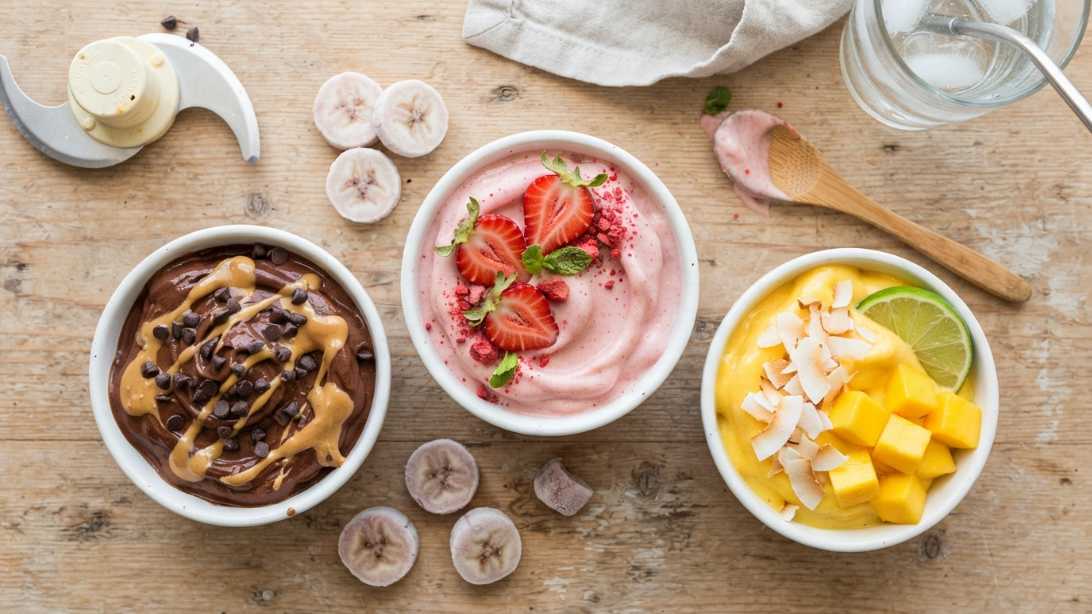
Banana nice cream requires one ingredient in its base form and produces a result so similar to soft-serve ice cream in texture that it has converted people who were specifically skeptical of vegan dessert claims, because the frozen banana’s natural creaminess when blended is not a reasonable approximation of ice cream but a genuinely excellent frozen dessert in its own right.
Base ingredients:
- 4 large ripe bananas, sliced and frozen overnight
Flavor variations:
Peanut butter chocolate:
- 3 tablespoons peanut butter
- 2 tablespoons cocoa powder
- 2 tablespoons maple syrup
Strawberry:
- 1 cup frozen strawberries added to the bananas
- 1 tablespoon lemon juice
Mango coconut:
- 1 cup frozen mango chunks
- Quarter cup coconut cream
- Squeeze of lime juice
Method:
Allow frozen banana slices to sit at room temperature for five minutes to soften slightly. Add to a food processor and process, stopping to scrape down the sides every thirty seconds. The banana will go through a crumbly stage before coming together into a smooth, creamy consistency resembling soft-serve. This takes three to four minutes of total processing. Add any flavor variation ingredients and process for thirty seconds until fully combined. Serve immediately as soft-serve consistency or freeze for two hours for a firmer scoopable consistency.
Total time: 10 minutes plus overnight freezing.
The five-minute counter rest before processing is the specific detail that makes the difference between nice cream that processes smoothly and nice cream that strains the food processor motor, because slightly softened frozen banana processes significantly more easily than banana frozen solid from the freezer.
3. Vegan Chocolate Chip Cookies
Vegan chocolate chip cookies made with vegan butter and a flax egg produce results so close to the conventional version that they have passed blind taste tests in households that were not told they were eating vegan cookies, which is the specific standard worth aiming for rather than the lower bar of being good for a vegan cookie.
Ingredients:
- 2 and a quarter cups all-purpose flour
- 1 teaspoon baking soda
- 1 teaspoon salt
- 1 cup vegan butter, Miyoko’s or Earth Balance, softened to room temperature
- Three quarter cup granulated sugar
- Three quarter cup packed brown sugar
- 2 flax eggs, 2 tablespoons ground flax plus 6 tablespoons water rested 5 minutes
- 2 teaspoons vanilla extract
- 2 cups dairy-free chocolate chips, Enjoy Life brand is widely available
Method:
Preheat oven to 375°F. Whisk flour, baking soda, and salt in a bowl. Beat softened vegan butter with both sugars using a hand mixer or stand mixer for three full minutes until light and fluffy. This extended creaming produces lift that the recipe depends on. Add flax eggs and vanilla and beat one more minute. Add flour mixture gradually and mix until just combined. Fold in chocolate chips. Scoop rounded tablespoons onto lined baking sheets, spacing two inches apart. Bake eleven to thirteen minutes until edges are golden but centers still look slightly underdone. Cool on the baking sheet for five minutes before transferring, during which time the centers finish setting.
Total time: 35 minutes.
Removing the cookies when the centers still look slightly underdone and allowing them to finish setting on the hot baking sheet is the technique that produces the chewy center and crispy edge combination that makes an excellent chocolate chip cookie, because cookies that look fully done in the oven are overcooked by the time they cool.
4. Coconut Milk Panna Cotta
Coconut milk panna cotta made with agar agar rather than gelatin produces a silky, elegant dessert that looks and tastes genuinely sophisticated, with the coconut milk’s natural creaminess providing the richness that dairy cream provides in conventional panna cotta without requiring any flavor compensation.
Ingredients:
- 2 cans full-fat coconut milk
- 3 tablespoons maple syrup or sugar
- 1 teaspoon vanilla extract
- 1 and a half teaspoons agar agar powder
- Pinch of salt
Berry coulis:
- 2 cups mixed berries, fresh or frozen
- 2 tablespoons maple syrup
- 1 tablespoon lemon juice
Method:
Combine coconut milk, maple syrup, vanilla, salt, and agar agar powder in a saucepan. Whisk to distribute the agar agar throughout the liquid before applying heat. Bring to a simmer over medium heat while whisking continuously. Simmer for two full minutes while continuing to whisk. This activates the agar agar completely. Pour into lightly oiled ramekins or glasses. Refrigerate for a minimum of two hours until fully set. For the coulis, simmer berries, maple syrup, and lemon juice for ten minutes until berries break down and the mixture thickens. Cool completely before serving. To serve, run a knife around the edge of the ramekin and invert onto a plate, or serve in the glass topped with berry coulis.
Total time: 20 minutes plus 2 hours chilling.
Whisking the agar agar into the cold coconut milk before heating rather than adding it to hot liquid is the technique that prevents clumping, because agar agar dissolves more evenly and completely when introduced to cold liquid that is gradually heated rather than when added to already hot liquid where it immediately hydrates unevenly.
5. Vegan Brownies
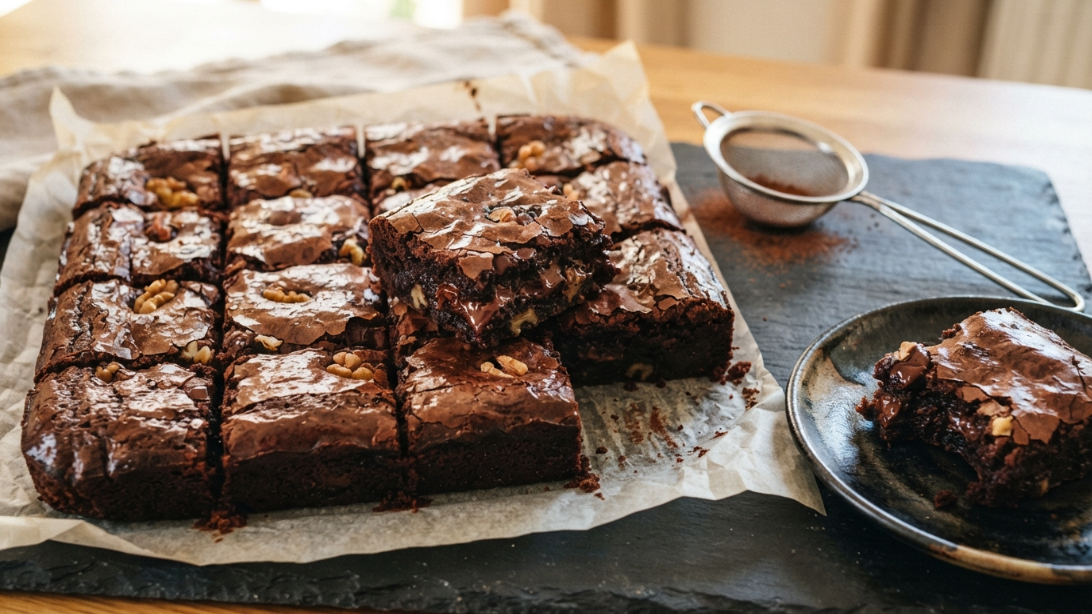
Vegan brownies made with flax eggs and vegan butter produce the specific dense, fudgy texture that makes a brownie genuinely excellent rather than merely acceptable, and the aquafaba addition in this recipe provides the lift that prevents the result from being too dense while maintaining the characteristic brownie chew.
Ingredients:
- Three quarter cup all-purpose flour
- Half cup cocoa powder, good quality
- Half teaspoon baking soda
- Half teaspoon salt
- Three quarter cup vegan butter, melted
- 1 cup sugar
- 2 flax eggs
- 3 tablespoons aquafaba
- 2 teaspoons vanilla extract
- 1 cup dairy-free chocolate chips
- Optional: half cup walnuts or pecans
Method:
Preheat oven to 350°F. Line an 8×8 inch baking pan with parchment paper. Whisk flour, cocoa powder, baking soda, and salt in a bowl. In a separate bowl, whisk melted vegan butter with sugar until combined. Add flax eggs, aquafaba, and vanilla and whisk vigorously for one full minute. The aquafaba creates a slight foam that contributes to the final texture. Add dry ingredients and fold until just combined. Fold in chocolate chips and nuts if using. Pour into prepared pan and spread evenly. Bake twenty-five to twenty-eight minutes until a toothpick inserted in the center comes out with moist crumbs attached but not wet batter. Cool completely in the pan before cutting.
Total time: 45 minutes.
Cooling completely before cutting is not optional for brownies and is specifically more important in vegan brownies than conventional ones because the binding structure provided by flax eggs rather than conventional eggs requires the full cooling period to set completely, and cutting into warm vegan brownies produces crumbling rather than the clean squares that cooled brownies provide.
6. Mango Sorbet
Mango sorbet made from frozen mango with lime juice and a simple syrup produces a dessert so intensely flavored and so naturally creamy from the mango’s own fiber content that it requires no dairy substitution because it is simply excellent in its own right, which is the best possible position for a vegan dessert to occupy.
Ingredients:
- 4 cups frozen mango chunks
- 3 tablespoons lime juice
- 2 tablespoons maple syrup or agave, adjust to taste
- Pinch of chili powder, optional but genuinely recommended
- Pinch of salt
- Quarter cup water if needed for blending
Method:
Allow frozen mango to sit at room temperature for ten minutes. Place in a blender with lime juice, maple syrup, chili powder if using, and salt. Blend on high until completely smooth, adding water one tablespoon at a time only if needed to get the blender moving. The mixture should be thick and creamy. Taste and adjust sweetness and acidity. For soft-serve texture, serve immediately. For scoopable sorbet, pour into a freezer-safe container and freeze for three to four hours, stirring once halfway through to break up ice crystals. Serve with fresh mint and additional lime zest.
Total time: 10 minutes plus optional 3 hours freezing.
The pinch of chili powder sounds wrong in a fruit sorbet and is genuinely transformative, amplifying the mango’s tropical sweetness through the contrast that mild heat provides and producing the specific flavor complexity that separates genuinely interesting sorbet from simply frozen sweet fruit.
7. Vegan Lemon Tart
A vegan lemon tart with a cashew-based filling produces one of the most elegant and most genuinely impressive vegan desserts available, with the soaked cashews providing the creamy, rich base that dairy cream would in a conventional lemon curd tart and the lemon’s acidity providing the characteristic bright, sharp contrast that makes the dessert genuinely refreshing.
Ingredients for crust:
- 1 and a half cups all-purpose flour
- Quarter cup powdered sugar
- Half cup vegan butter, cold and cubed
- 2 tablespoons cold water
- Pinch of salt
Ingredients for filling:
- 1 and a half cups raw cashews soaked in water for four hours and drained
- Half cup lemon juice, approximately 4 lemons
- Zest of two lemons
- Half cup coconut cream
- Quarter cup maple syrup
- 1 teaspoon vanilla extract
- Pinch of turmeric for color
- Pinch of salt
Method:
For the crust, pulse flour, powdered sugar, and salt in a food processor. Add cold vegan butter and pulse until the mixture resembles breadcrumbs. Add cold water one tablespoon at a time until dough just comes together. Press into a tart pan evenly. Refrigerate thirty minutes. Bake at 350°F for twenty minutes until lightly golden. Cool completely. For the filling, blend all filling ingredients on high for three full minutes until completely smooth and no cashew texture remains. Pour into the cooled tart shell. Refrigerate four hours until set. Serve with lemon zest and fresh berries.
Total time: 40 minutes plus soaking and chilling.
Blending the cashew filling for a full three minutes rather than stopping when it looks smooth is the technique that eliminates the slight graininess that insufficiently blended cashews produce in creamy desserts, because cashews require extended high-speed blending to fully break down their cell structure into the completely smooth consistency that makes the filling indistinguishable from a cream-based version.
8. Vegan Carrot Cake With Cashew Frosting
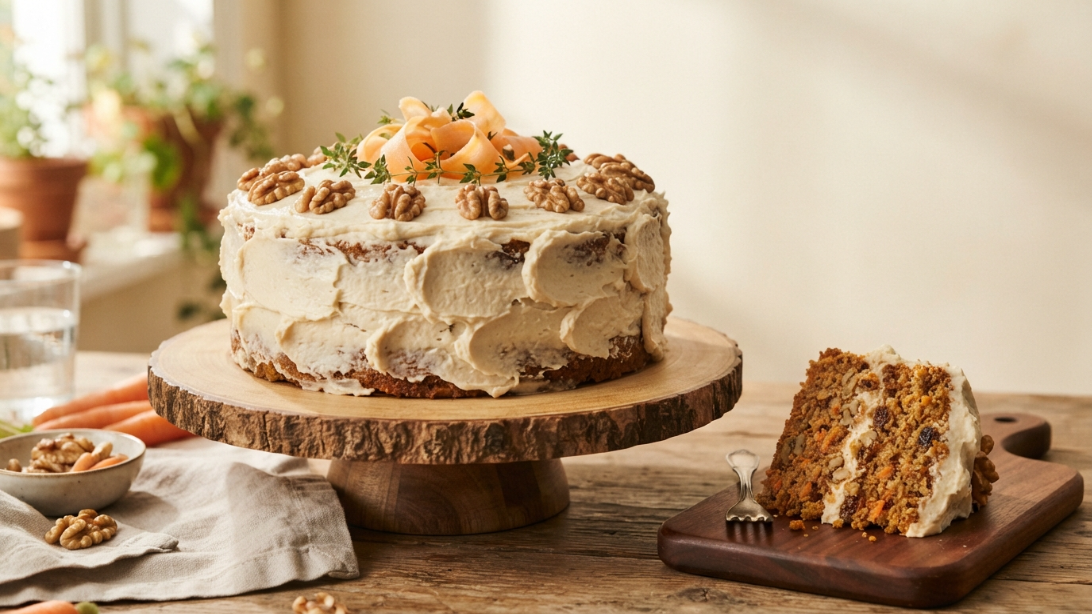
Vegan carrot cake with cashew cream frosting produces one of the most genuinely excellent cakes available in any dietary category, specifically because carrot cake’s inherent moisture from grated carrots and its warm spice profile are so flavor-forward that the substitution of plant-based ingredients for dairy ones is genuinely unremarkable in the finished result.
Ingredients for cake:
- 2 cups all-purpose flour
- 1 teaspoon baking soda
- 1 teaspoon baking powder
- 2 teaspoons cinnamon
- Half teaspoon nutmeg
- Half teaspoon ginger
- Half teaspoon salt
- 1 cup granulated sugar
- Three quarter cup vegetable oil
- 2 flax eggs
- Half cup plant-based milk
- 2 teaspoons vanilla extract
- 3 cups grated carrots, approximately 4 medium carrots
- Half cup crushed pineapple, drained
- Half cup walnuts, optional
Ingredients for cashew frosting:
- 2 cups raw cashews, soaked four hours and drained
- Quarter cup lemon juice
- Quarter cup maple syrup
- Quarter cup coconut cream
- 1 teaspoon vanilla extract
- Pinch of salt
Method:
Preheat oven to 350°F. Grease and line two 9-inch round cake pans. Whisk flour, baking soda, baking powder, spices, and salt. Whisk oil, sugar, flax eggs, plant milk, and vanilla in a separate bowl until combined. Add wet to dry and stir until just combined. Fold in grated carrots, pineapple, and walnuts. Divide between prepared pans. Bake thirty to thirty-five minutes until a toothpick comes out clean. Cool completely before frosting. For frosting, blend all frosting ingredients on high for three minutes until completely smooth. Refrigerate one hour to firm slightly before frosting the cooled cake. Frost between layers and on the outside of the cake. Decorate with walnuts and refrigerate until serving.
Total time: 1 hour plus chilling.
Draining the crushed pineapple completely before adding to the batter is the technique that prevents the cake from becoming too wet during baking, because pineapple releases significant additional moisture during baking when not fully drained that produces a gummy, underbaked texture in the center of the cake.
9. Aquafaba Chocolate Mousse
Aquafaba chocolate mousse uses the liquid from canned chickpeas whipped to stiff peaks to replicate the airy, light texture that whipped cream and eggs provide in conventional chocolate mousse, and the result is a dessert with the exact texture of the original that genuinely cannot be identified as vegan from taste or texture alone.
Ingredients:
- Aquafaba from 2 cans chickpeas, approximately 1 cup, chilled
- 200g dark chocolate, 70 percent or higher, melted and cooled to room temperature
- 3 tablespoons maple syrup
- 1 teaspoon vanilla extract
- Pinch of cream of tartar
- Pinch of salt
Toppings:
- Coconut whipped cream
- Raspberry coulis
- Dark chocolate shavings
- Fresh mint
Method:
The aquafaba must be cold from the refrigerator for it to whip properly. Place in a completely clean, completely dry bowl. Add cream of tartar. Beat with an electric mixer on high speed for five to eight minutes until stiff peaks form that hold their shape when the beater is lifted. This takes longer than whipping dairy cream. Fold maple syrup and vanilla into the melted, cooled chocolate. The chocolate must be at room temperature rather than warm or it will cause the aquafaba to deflate. Add one third of the whipped aquafaba to the chocolate and fold gently until incorporated. Add remaining aquafaba in two more additions, folding gently each time to preserve as much air as possible. Spoon into serving glasses. Refrigerate three hours. Serve with coconut whipped cream and chocolate shavings.
Total time: 20 minutes plus 3 hours chilling.
The cream of tartar addition to the aquafaba before whipping stabilizes the foam in the same way it stabilizes conventional egg white meringue, producing a stiffer, more stable peak that holds its structure better during the folding process and in the finished mousse.
10. Vegan Sticky Toffee Pudding
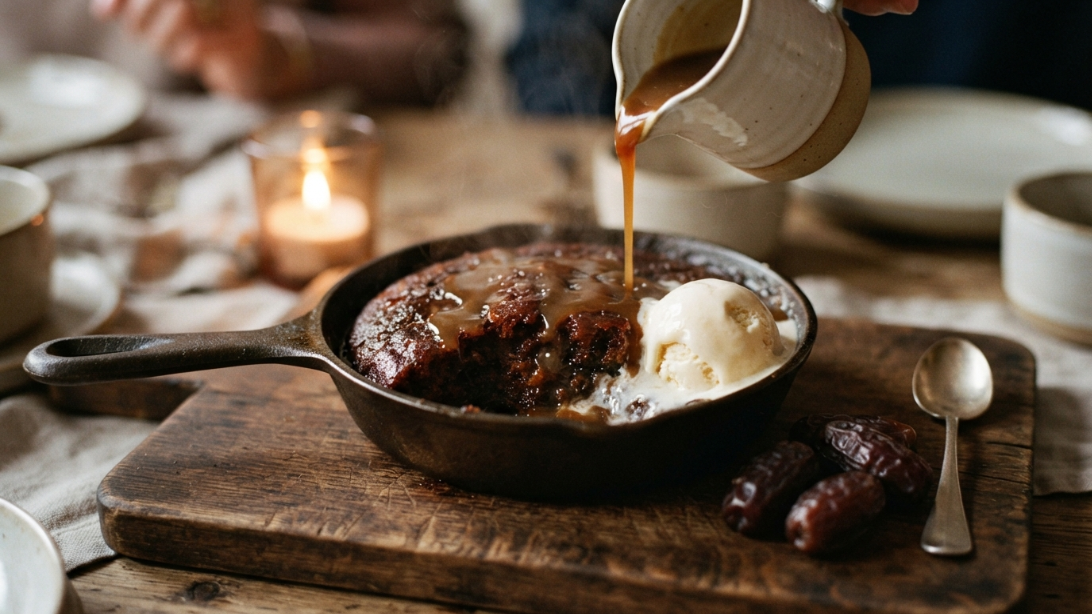
Vegan sticky toffee pudding is the most ambitious recipe on this list and the one that most definitively proves that vegan dessert can achieve genuine greatness rather than merely acceptable substitution, producing the specific combination of dense, moist date cake and rich toffee sauce that makes this classic British pudding one of the most satisfying desserts in any culinary tradition.
Ingredients for pudding:
- 200g Medjool dates, pitted and chopped
- 1 cup boiling water
- 1 teaspoon baking soda
- 1 and three quarter cups all-purpose flour
- 1 teaspoon baking powder
- Half teaspoon cinnamon
- Half teaspoon salt
- Three quarter cup brown sugar
- Half cup vegan butter, melted
- 2 flax eggs
- 1 teaspoon vanilla extract
Ingredients for toffee sauce:
- 1 cup full-fat coconut cream
- Three quarter cup brown sugar
- 3 tablespoons vegan butter
- 1 teaspoon vanilla extract
- Pinch of salt
Method:
Preheat oven to 350°F. Grease a 9×9 inch baking pan. Combine chopped dates and baking soda in a bowl. Pour boiling water over and allow to soak fifteen minutes until dates are completely soft. Mash or blend until mostly smooth. Whisk flour, baking powder, cinnamon, and salt. In a separate bowl mix melted vegan butter, brown sugar, flax eggs, and vanilla. Add date mixture and stir to combine. Add dry ingredients and mix until just combined. Pour into prepared pan. Bake thirty to thirty-five minutes until a toothpick comes out clean. For toffee sauce, combine all ingredients in a saucepan over medium heat. Bring to a simmer, stirring constantly, and cook eight minutes until the sauce thickens and deepens in color. Pierce the warm pudding all over with a fork and pour half the toffee sauce over the top, allowing it to soak in. Serve warm with remaining sauce poured over each portion and coconut ice cream alongside.
Total time: 1 hour.
Piercing the warm pudding with a fork before pouring the first portion of toffee sauce is the technique that allows the sauce to penetrate the cake rather than sitting on the surface, producing the specific toffee-saturated interior that makes sticky toffee pudding one of the most indulgent desserts available rather than merely a cake with sauce on top.
Frequently Asked Questions
What are the best egg substitutes for vegan dessert baking?
Flax eggs work best for binding in dense baked goods including brownies, cookies, and cakes. Aquafaba works best for airy applications including mousse and meringue where whipped egg white structure is required. Mashed banana adds moisture and binding with a noticeable banana flavor that suits certain recipes. Unsweetened applesauce adds moisture and mild binding with minimal flavor impact. The specific choice depends on the function the egg serves in the original recipe rather than a universal substitution that works across all applications.
Which vegan butter brand works best for baking?
Miyoko’s Creamery European Style Cultured Vegan Butter produces the most consistent results in baking applications that require browning, creaming, and lamination because its fat content and water content most closely match conventional dairy butter. Earth Balance Vegan Buttery Sticks are widely available and produce reliable results in most baking applications at a lower price point. Flora Plant Butter is the most widely available option in UK and European markets. Coconut oil is sometimes recommended as a butter substitute but behaves differently at room temperature in ways that affect cookie spread and cake texture.
How do you make vegan whipped cream for dessert toppings?
Full-fat coconut cream chilled overnight in the refrigerator separates into a thick white solid and a clear liquid. Scoop only the thick solid portion into a cold bowl. Beat with a cold electric mixer on high speed for three to four minutes until light, fluffy, and holds soft peaks. Add two tablespoons of powdered sugar and one teaspoon of vanilla and beat thirty more seconds. Use immediately or refrigerate for up to four hours. The coconut cream must be full-fat rather than light and must be thoroughly chilled for the separation to occur adequately.
Can vegan desserts be made ahead for a dinner party?
Most of the desserts on this list are specifically well-suited to advance preparation. The panna cotta, lemon tart, chocolate mousse, aquafaba mousse, and nice cream all require advance preparation and refrigeration or freezing rather than last-minute effort. Brownies and cookies bake well a day ahead and maintain quality when stored in an airtight container. The carrot cake and sticky toffee pudding both benefit from being made a day ahead and refrigerated, which allows the flavors to develop and makes slicing significantly cleaner.
Are these vegan desserts also gluten-free?
Not by default, but most recipes on this list adapt relatively easily to gluten-free versions. The banana nice cream, mango sorbet, and chocolate avocado mousse are naturally gluten-free as written. The baked goods use all-purpose flour that can be replaced with a one-to-one gluten-free flour blend including King Arthur Measure for Measure or Bob’s Red Mill 1 to 1 in equal quantity. The cashew-based desserts including the lemon tart filling and carrot cake frosting are naturally gluten-free when the crust components are adapted.
Conclusion
Vegan desserts done right don’t need the vegan label to justify their existence, and every recipe on this list was chosen because it produces a result worth eating regardless of the dietary framework that produced it. The chocolate avocado mousse is excellent because it’s a great mousse. The sticky toffee pudding is extraordinary because it’s a genuinely great pudding. The plant-based ingredients are the method rather than the point, and when the method is understood and applied correctly the point takes care of itself. Which recipe are you making first, and who are you making it for?