
Finding genuinely useful best homemade cake recipes for beginner home bakers requires cutting through the baking content that either presents every recipe as suitable for beginners when it clearly isn’t, or hedges every instruction with so many warnings about what can go wrong that the beginner finishes reading more anxious than when they started. Real beginner baking success comes from understanding which recipes have the widest margin for error, which techniques are genuinely essential versus unnecessarily fussy, and which specific pitfalls produce the failures that make beginners conclude they can’t bake when the actual problem was a missing instruction rather than a missing talent. Every recipe on this list was chosen because it reliably works on the first attempt for someone who has never baked a cake before, produces results genuinely worth eating, and builds the foundational understanding that makes subsequent baking progressively easier.
Understanding Why Beginner Cakes Fail Before Starting
Before any specific recipe is useful, understanding the specific mechanisms that produce beginner cake failures prevents the most common problems from occurring rather than requiring diagnosis after the fact.
Beginner cake failures cluster around five consistent causes that have nothing to do with baking talent and everything to do with information that most recipes assume rather than explain. Incorrect oven temperature is the most consistent cause, because most home ovens run significantly hotter or cooler than their dials indicate and a difference of even 25 degrees produces meaningfully different results. An inexpensive oven thermometer placed inside the oven resolves this problem permanently. Ingredient temperature matters more in baking than in almost any other form of cooking, specifically because butter that is too cold doesn’t cream properly with sugar, eggs taken straight from the refrigerator cause butter to seize in a batter, and cold milk creates a denser crumb than room temperature milk. Room temperature means genuinely at room temperature for one to two hours rather than briefly counter-rested. Measuring by volume rather than weight introduces inconsistency because a cup of flour measured by different people in different moods produces different amounts of flour, while a scale always produces the same amount. Overmixing after flour is added develops gluten in a way that produces a tough, dense cake rather than a tender one, and most beginner recipes don’t explain clearly enough that mixing after flour addition should be minimal rather than thorough. Opening the oven door during baking drops the temperature enough to cause cakes to sink in the center before the structure has set. Understanding these five failure modes specifically prevents them from occurring rather than requiring the post-mortem analysis of a collapsed cake.
1. Classic Vanilla Butter Cake
A classic vanilla butter cake is the recipe every beginner baker should learn first because it teaches the fundamental creaming method that underlies the majority of all subsequent cake recipes, uses ingredients available in every kitchen, and produces a genuinely excellent result that serves as both a standalone celebration cake and a foundation for countless variations.
Ingredients:
- 2 and half cups all-purpose flour
- 2 and half teaspoons baking powder
- Half teaspoon salt
- 1 cup unsalted butter, genuinely at room temperature
- 1 and three quarter cups granulated sugar
- 4 large eggs, room temperature
- 1 tablespoon pure vanilla extract
- 1 cup whole milk, room temperature
Simple vanilla buttercream:
- 1 cup unsalted butter, room temperature
- 3 cups powdered sugar, sifted
- 3 to 4 tablespoons heavy cream
- 1 teaspoon vanilla extract
- Pinch of salt
Method:
Preheat oven to 350°F. Grease two 9-inch round cake pans and line the bottoms with parchment paper circles. Greasing the sides and lining the bottom is the specific combination that ensures reliable release. Whisk flour, baking powder, and salt in a medium bowl and set aside. Beat butter on medium speed for two full minutes until smooth and lighter in color. Add sugar and beat on medium-high speed for four full minutes until the mixture is pale, very light, and significantly increased in volume. This extended creaming is not optional. It creates the air bubbles that leaven the cake. Add eggs one at a time, beating for thirty seconds after each addition. Add vanilla and beat thirty more seconds. Reduce mixer speed to low. Add flour mixture in three additions, alternating with milk in two additions, beginning and ending with flour. Mix only until each addition is just incorporated. The batter will look smooth and slightly thick. Divide evenly between prepared pans. Bake thirty to thirty-five minutes until a toothpick inserted in the center comes out clean and the tops spring back when lightly touched. Cool in pans for ten minutes then turn onto wire racks to cool completely. For buttercream, beat butter four minutes until very pale and fluffy. Add sifted powdered sugar one cup at a time, alternating with cream. Add vanilla and salt. Beat two more minutes until light and spreadable.
Total time: 1 hour 15 minutes.
The four-minute creaming of butter and sugar is the instruction most beginners stop early because it looks ready before it actually is. Set a timer rather than judging by appearance, because the pale, fluffy, significantly increased volume that four full minutes produces is categorically different from the one-minute result and determines the cake’s final texture more than any other single step.
2. One Bowl Chocolate Cake
A one bowl chocolate cake is the recipe that converts the most beginner bakers from anxious first-timers into confident regular bakers, specifically because it produces a deeply chocolatey, genuinely moist result from a single bowl with a whisk and no mixer required, which removes the equipment barrier and the intimidation of the multi-bowl creaming method simultaneously.
Ingredients:
- 2 cups all-purpose flour
- 2 cups granulated sugar
- Three quarter cup good quality cocoa powder
- 2 teaspoons baking soda
- 1 teaspoon baking powder
- 1 teaspoon salt
- 2 large eggs, room temperature
- 1 cup buttermilk, room temperature
- 1 cup strong hot coffee
- Half cup vegetable oil
- 1 teaspoon vanilla extract
Simple chocolate frosting:
- Half cup unsalted butter
- Two thirds cup good quality cocoa powder
- 3 cups powdered sugar, sifted
- One third cup whole milk
- 1 teaspoon vanilla extract
Method:
Preheat oven to 350°F. Grease and flour two 9-inch round cake pans or line with parchment. Sift flour, sugar, cocoa powder, baking soda, baking powder, and salt directly into a large bowl. Whisk dry ingredients to combine. Add eggs, buttermilk, oil, and vanilla and whisk until combined. Carefully pour in the hot coffee and whisk until the batter is completely smooth. The batter will be thin. This is correct and intentional. Divide evenly between prepared pans. Bake thirty to thirty-five minutes until a toothpick comes out clean. Cool in pans ten minutes then turn onto wire racks to cool completely before frosting. For frosting, melt butter in a medium saucepan over medium heat. Add cocoa and stir until smooth. Remove from heat. Add powdered sugar alternately with milk, stirring until smooth after each addition. Add vanilla. Use immediately while still slightly warm and pourable, or cool to a spreadable consistency.
Total time: 55 minutes.
The hot coffee in this recipe performs two essential functions that beginners sometimes question when they see it in the ingredient list. It blooms the cocoa powder, dissolving the cocoa solids completely and activating the full flavor potential of the cocoa, and it contributes to the exceptional moistness of the finished cake. The coffee flavor is completely undetectable in the finished cake and can be replaced with hot water if preferred, though the flavor depth is noticeably reduced.
3. Lemon Drizzle Cake
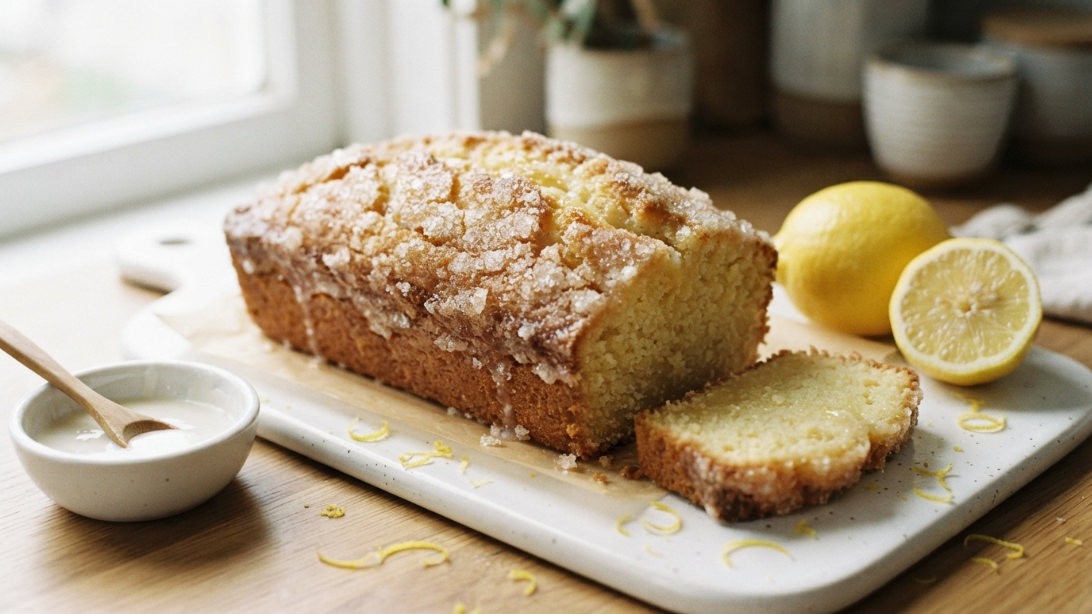
A lemon drizzle cake is the beginner recipe that most clearly demonstrates that genuinely great baking doesn’t require complexity, producing one of the most reliably crowd-pleasing cakes available from a simple loaf format and a straightforward method that teaches the all-in-one approach to cake making.
Ingredients for cake:
- 1 and half cups all-purpose flour
- 1 and half teaspoons baking powder
- Quarter teaspoon salt
- Three quarter cup unsalted butter, room temperature
- 1 cup granulated sugar
- 3 large eggs, room temperature
- Zest of 2 lemons
- 3 tablespoons lemon juice
- 3 tablespoons whole milk
For the drizzle:
- Juice of 2 lemons
- Half cup granulated sugar, do not substitute powdered sugar
Method:
Preheat oven to 350°F. Grease and line a 9×5 inch loaf pan with parchment paper, leaving overhang on the long sides for easy removal. Beat butter and sugar together for three minutes until light and fluffy. Add eggs one at a time, beating well after each addition. If the mixture looks like it’s curdling, add a tablespoon of flour and continue beating. Add lemon zest and juice. Fold in flour, baking powder, and salt alternately with milk until just combined. Pour into prepared pan and smooth the top. Bake fifty to fifty-five minutes until deeply golden and a toothpick comes out clean. While the cake is in its final ten minutes of baking, combine lemon juice and sugar for the drizzle but do not dissolve the sugar. As soon as the cake comes out of the oven, poke all over with a skewer or thin knife making holes all the way through. Pour the lemon and sugar drizzle evenly over the hot cake. The sugar will crunch on the surface as it cools. Cool in the pan completely before removing.
Total time: 1 hour 15 minutes.
Using granulated sugar rather than powdered sugar in the drizzle and pouring it over the hot cake without dissolving it first is the technique that produces the characteristic crunchy, slightly crystallized surface that distinguishes a proper lemon drizzle cake from a merely lemon-glazed one.
4. Carrot Cake With Cream Cheese Frosting
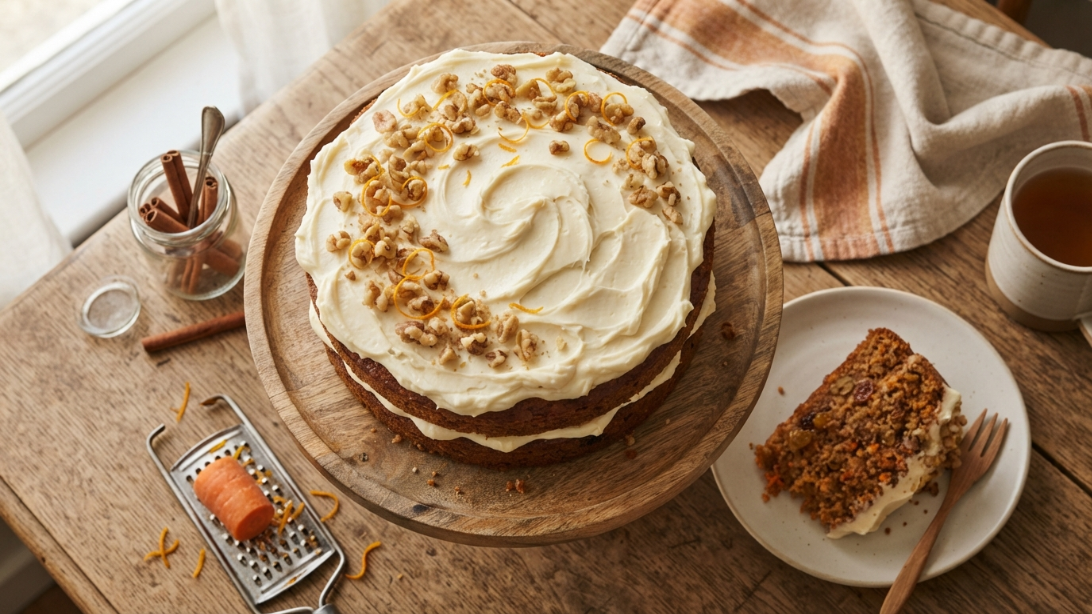
Carrot cake is genuinely one of the most beginner-friendly recipes available because grated carrots contribute natural moisture that makes the cake forgiving of minor technique errors, the spice profile is bold enough to be interesting without requiring precision, and cream cheese frosting is the most foolproof frosting available for beginners.
Ingredients for cake:
- 2 cups all-purpose flour
- 2 teaspoons baking soda
- 2 teaspoons cinnamon
- Half teaspoon nutmeg
- Half teaspoon ginger
- Half teaspoon salt
- 1 and half cups granulated sugar
- 1 cup vegetable oil
- 4 large eggs, room temperature
- 2 teaspoons vanilla extract
- 3 cups grated carrots, approximately 4 medium carrots
- Half cup crushed pineapple, well drained
- Half cup chopped walnuts, optional
Cream cheese frosting:
- 450g full-fat cream cheese, room temperature
- Half cup unsalted butter, room temperature
- 3 cups powdered sugar, sifted
- 1 teaspoon vanilla extract
- Pinch of salt
Method:
Preheat oven to 350°F. Grease and line two 9-inch round cake pans. Whisk flour, baking soda, spices, and salt in a large bowl. In a separate bowl whisk sugar, oil, eggs, and vanilla until combined. Pour wet ingredients into dry and stir until just combined. Fold in grated carrots, pineapple, and walnuts if using. Divide between prepared pans. Bake thirty to thirty-five minutes until a toothpick comes out clean. Cool in pans ten minutes then cool completely on wire racks. For frosting, beat cream cheese and butter together for three minutes until completely smooth with no lumps. Add sifted powdered sugar one cup at a time on low speed to avoid a sugar cloud. Add vanilla and salt. Beat two minutes until smooth. Frost completely cooled cake and refrigerate thirty minutes before serving.
Total time: 1 hour 10 minutes.
Both the cream cheese and butter for the frosting must be genuinely at room temperature for the frosting to come together without lumps. Cold cream cheese mixed with room temperature butter produces a lumpy frosting that cannot be smoothed by additional beating, while truly room temperature cream cheese blends into a completely smooth mixture within thirty seconds of mixing.
5. Banana Bread Cake
Banana bread cake occupies the most forgiving position in all beginner baking, requiring overripe bananas that most households would otherwise discard, needing no mixer, and producing a moist, flavorful result even when technique is imperfect, because the natural moisture and binding properties of very ripe bananas compensate for minor errors in a way that most cake batters don’t.
Ingredients:
- 3 very ripe bananas, the riper the better
- 2 cups all-purpose flour
- 1 teaspoon baking soda
- Half teaspoon baking powder
- Half teaspoon salt
- 1 teaspoon cinnamon
- Three quarter cup granulated sugar
- Half cup brown sugar, packed
- Half cup unsalted butter, melted and cooled
- 2 large eggs
- 1 teaspoon vanilla extract
- Half cup sour cream or Greek yogurt
Simple brown butter glaze:
- 3 tablespoons unsalted butter
- 1 cup powdered sugar, sifted
- 2 tablespoons milk
- Half teaspoon vanilla extract
Method:
Preheat oven to 350°F. Grease and flour a 9×13 inch baking pan or grease and line two 8-inch round cake pans. Mash bananas thoroughly in a large bowl until almost completely smooth. Add melted butter, both sugars, eggs, vanilla, and sour cream and whisk until combined. Add flour, baking soda, baking powder, salt, and cinnamon directly to the wet mixture. Fold with a rubber spatula until just combined. Small lumps are acceptable. Do not whisk vigorously. Pour into prepared pan. Bake thirty to thirty-five minutes for the rectangular pan or twenty-five to thirty minutes for round pans until a toothpick comes out clean. For the glaze, melt butter in a small saucepan over medium heat and continue cooking until it turns golden brown and smells nutty, approximately three minutes. Remove from heat. Whisk in sifted powdered sugar, milk, and vanilla until smooth. Pour over the cooled cake.
Total time: 55 minutes.
The bananas should have significantly brown-spotted or entirely black skins to produce the best flavor in this recipe. A yellow banana contributes sweetness but lacks the concentrated banana flavor and natural sugars that black-skinned bananas provide, and the difference in flavor between a yellow banana cake and a properly overripe banana cake is significant enough to justify waiting for the bananas to reach the correct ripeness before baking.
6. Olive Oil Orange Cake
An olive oil orange cake is the beginner recipe that most consistently surprises people with how genuinely excellent a very simple cake can be, using olive oil instead of butter in a way that produces an unusually moist, tender crumb with a subtle complexity that butter doesn’t provide, and orange zest and juice that make the cake bright and fragrant rather than heavy.
Ingredients:
- 2 cups all-purpose flour
- 1 and half teaspoons baking powder
- Half teaspoon baking soda
- Half teaspoon salt
- 1 cup granulated sugar
- Three quarter cup good quality olive oil, mild rather than strongly flavored
- 3 large eggs, room temperature
- Zest of 2 oranges
- Three quarter cup orange juice, freshly squeezed
- 1 teaspoon vanilla extract
Orange glaze:
- 1 cup powdered sugar, sifted
- 3 to 4 tablespoons orange juice
- Zest of one orange
Method:
Preheat oven to 350°F. Grease a 9-inch round cake pan or a 9-inch springform pan and line the bottom with parchment. Whisk flour, baking powder, baking soda, and salt in a bowl. In a large bowl whisk sugar and olive oil until combined. Add eggs one at a time, whisking after each. Add orange zest, orange juice, and vanilla and whisk until smooth. Add dry ingredients and whisk until just smooth and combined. Pour into prepared pan. Bake thirty-five to forty minutes until the top is deep golden and a toothpick comes out clean. Cool in pan fifteen minutes before turning onto a wire rack. For the glaze, whisk sifted powdered sugar with enough orange juice to produce a thick but pourable consistency. Add zest. Pour over the cooled cake allowing it to drip down the sides. Allow to set twenty minutes before slicing.
Total time: 1 hour.
Using a mild olive oil rather than a strongly flavored extra-virgin variety is the ingredient specification that matters most in this recipe, because a very assertive olive oil produces a savory note that conflicts with the orange in the finished cake while a mild olive oil contributes the moistness and subtle complexity that makes this cake distinctive without being detectable as olive oil in the flavor.
7. Victoria Sponge
A Victoria sponge is the British classic that teaches the simplest possible method for producing an excellent cake, using equal weights of butter, sugar, eggs, and flour in a ratio so memorable that it can be reproduced from any starting weight of eggs without referring to a recipe, and sandwiching two light sponge layers with jam and cream in a combination of such perfect simplicity that it has remained unchanged for over a century.
Ingredients:
- 4 large eggs, weighed in their shells
- Equal weight of unsalted butter, room temperature, as the eggs
- Equal weight of granulated sugar as the eggs
- Equal weight of self-raising flour as the eggs
- 1 teaspoon baking powder
- 1 teaspoon vanilla extract
- 2 tablespoons milk if needed to loosen the batter
Filling:
- Half cup good quality strawberry or raspberry jam
- 1 cup heavy cream, whipped to soft peaks
- Fresh strawberries or raspberries
Topping:
- Powdered sugar for dusting
Method:
Preheat oven to 350°F. Grease and line two 8-inch round cake pans. Weigh the eggs, then measure out equal weights of butter, sugar, and flour. Beat butter and sugar together for four minutes until pale and very fluffy. Add eggs one at a time, beating for thirty seconds after each. Add vanilla. Add a tablespoon of flour with each egg if the mixture looks like it might curdle. Sift flour and baking powder together and fold into the batter in two additions until just combined. Add a tablespoon or two of milk if the batter doesn’t fall easily from the spoon when lifted. Divide between prepared pans and smooth the tops. Bake twenty-five minutes until golden and the tops spring back when lightly pressed. Cool in pans five minutes then cool completely on wire racks. Place one layer on a serving plate, spread with jam, then whipped cream, then berries. Place the second layer on top. Dust generously with powdered sugar.
Total time: 50 minutes.
The Victoria sponge is the ideal recipe for learning to judge cake batter consistency correctly because the equal-weight ratio produces a batter that should just fall from a spoon when lifted, and the adjustment of adding milk until this consistency is achieved teaches the specific judgment that transfers to many subsequent cake recipes.
8. Apple Cinnamon Cake
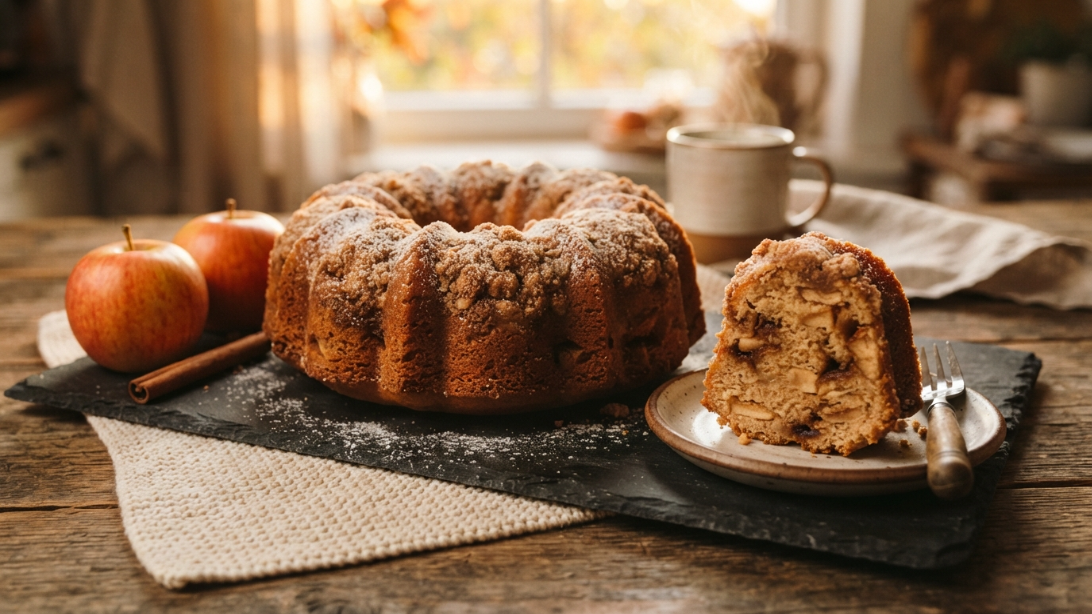
An apple cinnamon cake demonstrates how fruit additions create natural moisture and flavor in baked goods without requiring any additional technique, and the warm spice profile combined with tender apple pieces makes this one of the most seasonally appropriate and most genuinely comforting beginner cakes available.
Ingredients for cake:
- 2 cups all-purpose flour
- 1 and half teaspoons baking powder
- 1 teaspoon baking soda
- 2 teaspoons cinnamon
- Half teaspoon nutmeg
- Half teaspoon salt
- Three quarter cup unsalted butter, room temperature
- 1 cup granulated sugar
- Quarter cup brown sugar
- 3 large eggs, room temperature
- 1 teaspoon vanilla extract
- 1 cup sour cream or plain yogurt
- 3 medium apples, peeled, cored, and diced into small pieces
Cinnamon streusel topping:
- Half cup all-purpose flour
- Quarter cup brown sugar
- 1 teaspoon cinnamon
- Quarter cup cold butter, cubed
Method:
Preheat oven to 350°F. Grease and flour a 9×13 inch pan or a 10-inch bundt pan. For streusel, combine flour, brown sugar, and cinnamon. Add cold butter and rub with fingertips until the mixture resembles coarse crumbs. Refrigerate while making the cake. Beat butter with both sugars for three minutes until light and fluffy. Add eggs one at a time, beating after each. Add vanilla. Add sifted dry ingredients alternately with sour cream in three additions. Fold in diced apples. Pour into prepared pan. Sprinkle streusel evenly over the top. Bake forty-five to fifty minutes for the rectangular pan or fifty to sixty minutes for the bundt pan until a toothpick comes out clean. Cool fifteen minutes before removing from pan.
Total time: 1 hour 15 minutes.
Cutting the apples into small pieces rather than large chunks ensures they distribute evenly throughout the batter and cook completely during the baking time, because large apple pieces can remain slightly firm in the finished cake and can also sink to the bottom during baking rather than remaining suspended throughout the crumb.
9. Tres Leches Cake
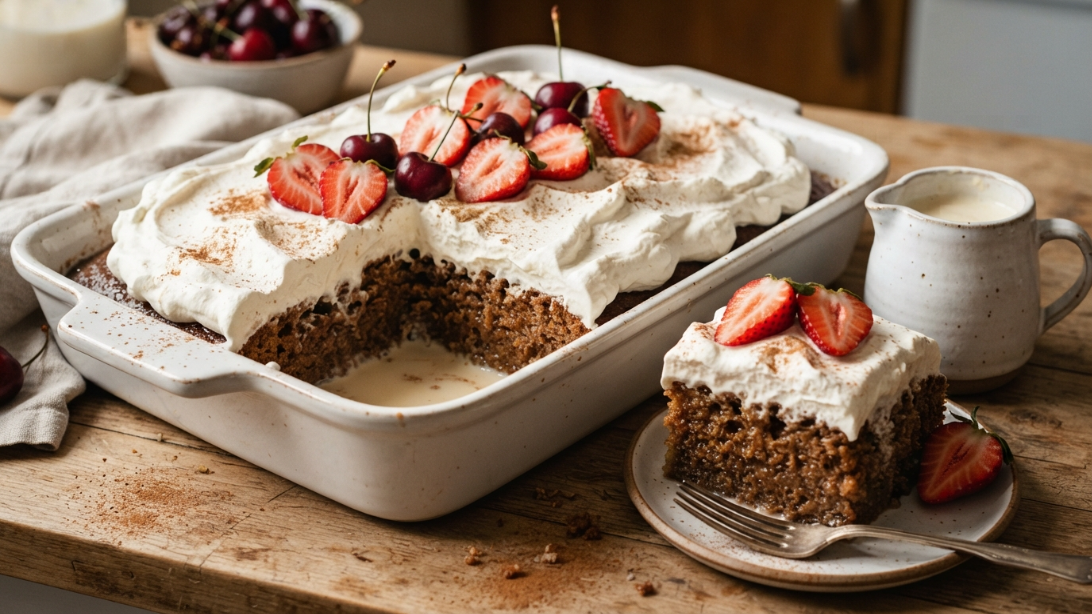
Tres leches cake is the beginner recipe that produces the most dramatic and most impressive result relative to its technical difficulty, specifically because the three-milk soaking technique is simple to execute and transforms a plain sponge into a remarkably moist, rich dessert that guests consistently describe as extraordinary without knowing how straightforward it is to produce.
Ingredients for sponge:
- 1 cup all-purpose flour
- 1 and half teaspoons baking powder
- Half teaspoon salt
- 5 large eggs, separated
- 1 cup granulated sugar, divided
- One third cup whole milk
- 1 teaspoon vanilla extract
Three milk mixture:
- 1 cup heavy cream
- 1 cup sweetened condensed milk
- 1 cup evaporated milk
- 1 teaspoon vanilla extract
Topping:
- 2 cups heavy whipping cream
- 3 tablespoons powdered sugar
- 1 teaspoon vanilla extract
- Ground cinnamon for serving
- Fresh strawberries or maraschino cherries
Method:
Preheat oven to 350°F. Grease a 9×13 inch baking pan. Beat egg yolks with three quarters of the sugar on high speed for four minutes until pale and thick. Add milk and vanilla and beat briefly. Fold in flour, baking powder, and salt. Beat egg whites to soft peaks, gradually add remaining sugar, and beat to stiff peaks. Fold one third of the whites into the batter vigorously. Fold remaining whites in two additions gently. Pour into prepared pan. Bake twenty-five to thirty minutes until golden and a toothpick comes out clean. Cool completely in the pan. Pierce the surface all over with a fork or skewer, making holes throughout the entire cake. Whisk all three milks together with vanilla. Pour slowly and evenly over the cooled cake, pausing to allow each addition to absorb before adding more. Refrigerate for at least four hours or overnight. Whip cream with powdered sugar and vanilla to soft peaks. Spread over the soaked cake. Serve cold with cinnamon, strawberries, or cherries.
Total time: 1 hour plus 4 hours soaking.
Allowing the three-milk mixture to absorb slowly rather than pouring the entire amount at once is the technique that produces even soaking throughout the cake rather than saturated edges with a dry center, and refrigerating for the full four hours rather than attempting to serve sooner allows the milk to distribute completely and the cake to set to the correct consistency.
10. Simple Pound Cake
A pound cake is the recipe that most directly teaches beginners the relationship between technique and texture in baking, because the creaming method applied to equal parts butter, sugar, eggs, and flour produces either a perfectly tender, buttery crumb or a dense, heavy one depending almost entirely on how thoroughly the butter and sugar were creamed and whether the eggs were added correctly.
Ingredients:
- 1 cup unsalted butter, room temperature
- 1 and half cups granulated sugar
- 5 large eggs, room temperature
- 2 teaspoons vanilla extract
- 2 cups all-purpose flour
- Half teaspoon baking powder
- Half teaspoon salt
- Quarter cup sour cream or plain yogurt
Lemon glaze:
- 1 cup powdered sugar, sifted
- 3 tablespoons lemon juice
- Zest of one lemon
Method:
Preheat oven to 325°F. A lower temperature than most cakes produces the dense, tight crumb that distinguishes pound cake from lighter layer cakes. Grease and flour a 9×5 inch loaf pan thoroughly. Beat butter on medium speed for two minutes until smooth. Add sugar and beat on medium-high for five full minutes until very pale, very fluffy, and significantly increased in volume. This is the longest creaming time of any recipe on this list and produces the specific texture pound cake requires. Add eggs one at a time, beating for forty-five seconds after each. If the batter curdles, add a tablespoon of flour and continue. Add vanilla. Sift flour, baking powder, and salt together. Fold dry ingredients into the batter in three additions alternating with sour cream in two additions. Mix only until just combined. Pour into prepared pan. Bake sixty-five to seventy-five minutes until deep golden and a toothpick comes out clean. Cool in pan fifteen minutes then cool completely on a wire rack. Whisk glaze ingredients until smooth and pour over cooled cake.
Total time: 1 hour 30 minutes.
The 325°F baking temperature rather than the 350°F used by most other cakes produces the characteristic golden crust and dense, tight crumb of a proper pound cake because the lower heat allows the center to cook completely before the outside over-browns, which is specifically important for a loaf format where the depth of the pan makes center cooking the determining factor in doneness.
Frequently Asked Questions
What equipment do beginner home bakers actually need to start?
The genuinely essential equipment for the recipes on this list is a 9-inch round cake pan or two, a 9×5 inch loaf pan, parchment paper, a rubber spatula, a whisk, and measuring cups and spoons. An electric hand mixer makes creaming butter and sugar significantly easier but a stand mixer is not necessary. A kitchen scale produces more consistent results than volume measuring and costs as little as ten dollars. An oven thermometer at approximately five dollars is the single most impactful equipment investment available because it reveals and corrects oven temperature inaccuracy that causes more beginner failures than any other single factor.
Why do beginner cakes sink in the middle?
Sinking in the middle is caused by one of three specific problems. Opening the oven door before the cake structure has set, which drops the temperature and causes the center to collapse before it can support itself. Using too much leavening, specifically baking powder or baking soda, which causes excessive rise followed by collapse. Underbaking, which leaves the center structure unset so that it sinks as the cake cools. The solution to all three is using an oven thermometer to verify temperature, measuring leavening precisely, and testing doneness with a toothpick in the center of the cake rather than the edges.
How do you tell when a cake is done baking?
Three tests used together produce reliable doneness assessment. A toothpick or thin skewer inserted in the center of the cake comes out with no wet batter attached, though moist crumbs are acceptable. The top of the cake springs back when lightly pressed with a fingertip rather than leaving an indentation. The edges of the cake are pulling away from the sides of the pan slightly. For beginners, the toothpick test is the most reliable single indicator because it directly samples the center of the cake where underbaking most commonly occurs.
How do you store homemade cakes?
Unfrosted cakes wrapped tightly in plastic wrap keep at room temperature for three days or frozen for up to three months. Frosted cakes with buttercream frosting store at room temperature for two days in an airtight container or domed cake carrier. Cakes frosted with cream cheese frosting or filled with whipped cream must be refrigerated and are best consumed within two days. Refrigerated cakes should be brought to room temperature for thirty minutes before serving because cold temperatures firm the crumb and mute the flavors in a way that room temperature serving corrects.
What is the most common mistake beginner bakers make with butter?
Using butter that is not genuinely at room temperature is the most consistent beginner mistake and the one that most directly affects the quality of the finished cake. Butter at room temperature should leave an indentation when pressed with a finger but not feel greasy or look shiny. Butter that is too cold doesn’t cream properly with sugar and produces a dense, flat cake. Butter that is too warm or melted produces a greasy, flat cake with poor rise. The reliable method for achieving correct butter temperature is removing it from the refrigerator one to two hours before baking, or cutting it into small cubes and leaving at room temperature for thirty minutes.
Conclusion
Every baker on this list started as a beginner who produced at least one disappointing cake before understanding what the recipe hadn’t explained clearly, and the recipes and techniques here exist specifically to prevent those disappointments rather than simply providing the instructions and leaving the failures to chance. Baking is genuinely learnable, the margin for error is wider than most beginners believe, and the first successful cake from scratch produces a specific satisfaction that no purchased cake replicates. Which recipe are you baking first, and who are you baking it for?