

The appeal of top one pot dinner recipes for busy weeknight cooking is not just the cleanup, though eliminating a pile of dishes at 8 PM after a full workday is genuinely significant. It is the specific relief of a cooking format that does not require you to manage four simultaneous things at different temperatures while also helping with homework and answering a work email that came in at 6:30 PM. One pot cooking asks for your attention in a concentrated way at the beginning and then largely takes care of itself, which is the cooking contract that weeknight reality actually honors. I have cooked through enough exhausted Tuesday evenings to know that the recipes I returned to were almost always the ones where everything went into one vessel and came out as dinner without requiring constant intervention.
Why One Pot Cooking Works Better on Weeknights Than Any Other Format
The advantages of one pot cooking extend beyond the obvious cleanup reduction into the specific way weeknight cooking fails and how a single-vessel format addresses those failure points.
Flavor development in one pot cooking occurs through the layering of ingredients over time in a shared liquid environment that transfers and merges flavors in ways that separately cooked components never fully achieve. A braise where aromatics, protein, and vegetables cook together for forty-five minutes produces a unified flavor that the same ingredients cooked separately and combined on the plate never replicates, because the flavors never had the opportunity to exchange and integrate. This means one pot meals often taste more complex than their ingredient list and preparation effort suggest, which is the specific quality that makes them genuinely satisfying rather than merely convenient.
Timing forgiveness is the operational advantage that matters most on weeknights when nothing goes as scheduled. A pasta dish on the stovetop requires precise timing of the pasta, the sauce, and the protein to coincide at the right moment. A one pot pasta where everything cooks in the same vessel at the same time provides a window of several minutes between perfectly done and merely well done, because the integrated cooking environment provides more thermal buffering than separate components allow. A braise or slow cooker meal provides a window of an hour or more where the result is equally good regardless of exactly when it comes off the heat.
Mental load reduction is the third advantage that rarely gets named explicitly but that any working adult who has cooked dinner at the end of a full day understands immediately. Managing multiple burners, multiple timers, and multiple component completion points requires sustained cognitive attention that weeknight cooking situations rarely provide. One pot cooking reduces the active decision-making requirement of dinner preparation to checking and stirring, which allows the mental space to decompress from the workday rather than immediately replacing work stress with kitchen stress.
1. One Pot Chicken Thighs With White Beans and Kale
Chicken thighs braised with white beans and kale in a single Dutch oven or large skillet produce a complete meal with protein, legumes, and greens in approximately forty minutes of elapsed time and fifteen minutes of active cooking attention.
Ingredients for four servings:
- 4 bone-in skin-on chicken thighs
- 2 cans white cannellini beans drained and rinsed
- 4 cups chopped kale stems removed
- 4 garlic cloves minced
- 1 large onion diced
- 1 can diced tomatoes with their juice
- 1 cup chicken broth
- 1 teaspoon dried rosemary
- 1 teaspoon smoked paprika
- Salt and pepper
- 2 tablespoons olive oil
Season chicken thighs generously on both sides with salt, pepper, and smoked paprika. Heat olive oil in a large Dutch oven or deep oven-safe skillet over medium-high heat. Add chicken thighs skin-side down and do not touch them for five to six minutes until the skin is deeply golden and releases from the pan without sticking. This is the moment where the dish’s entire flavor foundation is built, and rushing it produces pale skin and a pot that lacks the rendered fat needed for the subsequent steps. Flip and cook two more minutes. Remove chicken and set aside. Add onion to the rendered fat in the pot and cook five minutes. Add garlic, rosemary, and remaining paprika. Cook one minute. Add tomatoes, broth, and beans. Return chicken skin-side up, nestling it into the beans. Bring to a simmer. Cover and cook twenty-five minutes until chicken is cooked through. Add kale, stir into the liquid around the chicken, cover and cook five more minutes until wilted. The skin-side up positioning for the braising phase keeps the skin above the liquid so it stays crispy rather than becoming the soggy result that submerged chicken skin always produces.
2. One Pot Pasta With Tomato and Basil
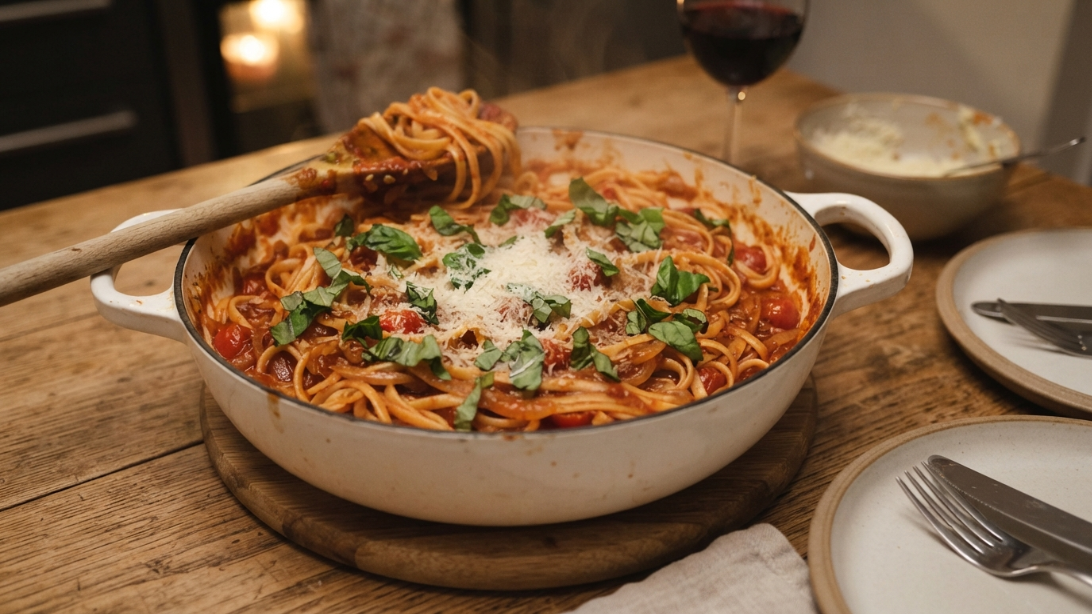
One pot pasta where the pasta cooks directly in the sauce rather than in a separate pot of boiling water produces a result with a specific creaminess from the starch released into the cooking liquid that traditionally sauced pasta achieves only through careful pasta water addition. It also eliminates the largest, most inconvenient pot in the dish lineup.
Ingredients for four servings:
- 12 oz linguine or spaghetti uncooked
- 1 can crushed tomatoes
- 3 cups water
- 1 large onion thinly sliced
- 4 garlic cloves minced
- Half teaspoon red pepper flakes
- 1 teaspoon dried basil plus fresh basil for serving
- 2 tablespoons olive oil
- Salt and pepper
- Parmesan for serving
- Optional: half cup heavy cream added in the final two minutes for a rosé sauce variation
Add uncooked pasta, tomatoes, water, onion, garlic, red pepper flakes, dried basil, olive oil, salt, and pepper to a large wide pot or Dutch oven. The pasta should lie as flat as possible in the liquid. Bring to a boil over high heat, stirring frequently to prevent pasta from sticking together. Reduce to a vigorous simmer and cook for nine to eleven minutes, stirring every minute, until the pasta is al dente and most of the liquid has been absorbed into a glossy, coating sauce. The remaining liquid should appear saucy rather than soupy when the pasta is done. Add heavy cream if using and stir for one more minute. Top with fresh basil and parmesan. The frequent stirring during cooking is the technique requirement that distinguishes this from a set-and-forget recipe: the pasta releases starch into the water during cooking that thickens the sauce only if it is agitated regularly rather than sitting in contact with one spot of the pot.
3. Slow Cooker Beef and Vegetable Stew
Slow cooker beef stew started in the morning produces a meal of genuine richness and depth by dinnertime with five minutes of morning preparation and zero active cooking attention during the workday, which is the specific format that makes weeknight cooking feel manageable rather than like an additional job obligation.
Ingredients for six servings:
- 2 lbs beef stew meat cut into one-inch cubes
- 4 medium carrots cut into one-inch rounds
- 4 medium potatoes cubed
- 3 celery stalks cut into one-inch pieces
- 1 large onion diced
- 4 garlic cloves minced
- 2 cups beef broth
- 2 tablespoons tomato paste
- 1 tablespoon Worcestershire sauce
- 1 teaspoon each dried thyme and rosemary
- 2 bay leaves
- Salt and pepper
- 3 tablespoons cornstarch mixed with 3 tablespoons cold water, added at the end
Season beef with salt and pepper. For maximum flavor, brown the beef in batches in a hot skillet before adding to the slow cooker, two minutes per side without moving, which develops a crust that adds depth the slow cooker cannot create on its own. This step is optional but produces a meaningfully better stew. Add all vegetables to the slow cooker first. Add beef on top. Whisk tomato paste into the broth and pour over everything. Add Worcestershire, herbs, and bay leaves. Cook on low eight to ten hours or high four to five hours. Thirty minutes before serving, stir in the cornstarch mixture, replace the lid, and cook thirty more minutes until the broth has thickened to proper stew consistency. Remove bay leaves. Season and serve.
Top One Pot Dinner Recipes for Busy Weeknight Cooking: Rice and Grain Dishes
Rice and grain dishes cooked in a single pot with aromatics, protein, and vegetables represent the most complete single-vessel meal format because the starch absorbs the cooking liquid’s flavor while simultaneously thickening it into a unified dish rather than separate components.
One Pot Chicken and Rice
Chicken and rice cooked together in one pot produces a dish where the rice absorbs every drop of flavor from the chicken, aromatics, and broth, creating a result significantly more satisfying than chicken and separately cooked plain rice that are combined on the plate.
Ingredients for four servings:
- 4 bone-in skin-on chicken thighs
- 1 and half cups long grain white rice uncooked
- 2 and half cups chicken broth
- 1 large onion diced
- 4 garlic cloves minced
- 1 teaspoon cumin
- 1 teaspoon smoked paprika
- Half teaspoon turmeric
- Salt and pepper
- 2 tablespoons olive oil
- Fresh parsley for serving
- Lemon wedges for serving
Season chicken thighs with half the cumin, paprika, salt, and pepper. Brown skin-side down in olive oil in a large lidded skillet or Dutch oven over medium-high heat for five to six minutes until deeply golden. Remove and set aside. Cook onion in remaining fat for five minutes. Add garlic and remaining spices, cook one minute. Add rice and stir to coat in the spiced oil for one minute, which toasts the rice and adds a nutty depth. Add broth and bring to a boil. Return chicken skin-side up on top of the rice. Reduce heat to the lowest simmer, cover tightly, and cook eighteen minutes without lifting the lid. Remove from heat and let steam covered for five more minutes. The five minute resting period with the lid on allows the rice to finish cooking from residual steam rather than requiring additional heat, and the skin remains above the steam level and therefore stays crispy rather than becoming soft during the resting period.
One Pot Lemon Herb Orzo With Shrimp
Orzo pasta cooked in a single skillet with shrimp and lemon provides a thirty-minute weeknight dinner that tastes considerably more elegant than its preparation difficulty justifies, specifically because the orzo releases starch into the cooking liquid that creates a risotto-like creaminess without requiring thirty minutes of standing and stirring.
Ingredients for four servings:
- 1 lb large shrimp peeled and deveined
- 1 and half cups orzo uncooked
- 3 cups chicken or vegetable broth
- Half cup dry white wine or additional broth
- 1 shallot finely diced
- 4 garlic cloves minced
- Juice and zest of one lemon
- Half cup frozen peas
- Quarter cup parmesan grated
- 2 tablespoons butter
- Fresh dill or parsley
- Salt, pepper, red pepper flakes
- Olive oil
Season shrimp with salt, pepper, and red pepper flakes. Cook in a large skillet over high heat in a splash of olive oil for ninety seconds per side until just pink. Remove and set aside. In the same skillet, cook shallot in butter over medium heat for three minutes. Add garlic and cook one minute. Add orzo and toast for one minute. Add wine and stir until absorbed. Add broth and bring to a simmer. Cook stirring every two minutes for ten minutes until orzo is tender and broth is mostly absorbed but still slightly saucy. Add peas, lemon juice, lemon zest, and parmesan. Stir until parmesan melts and the sauce becomes glossy. Return shrimp to the pan and stir through for thirty seconds to reheat. Serve topped with fresh dill. The shrimp removal and return is the specific technique that prevents overcooked, rubbery shrimp in a dish where the orzo requires ten additional minutes of cooking after the shrimp would otherwise be done.
4. One Pot Turkey and Lentil Soup
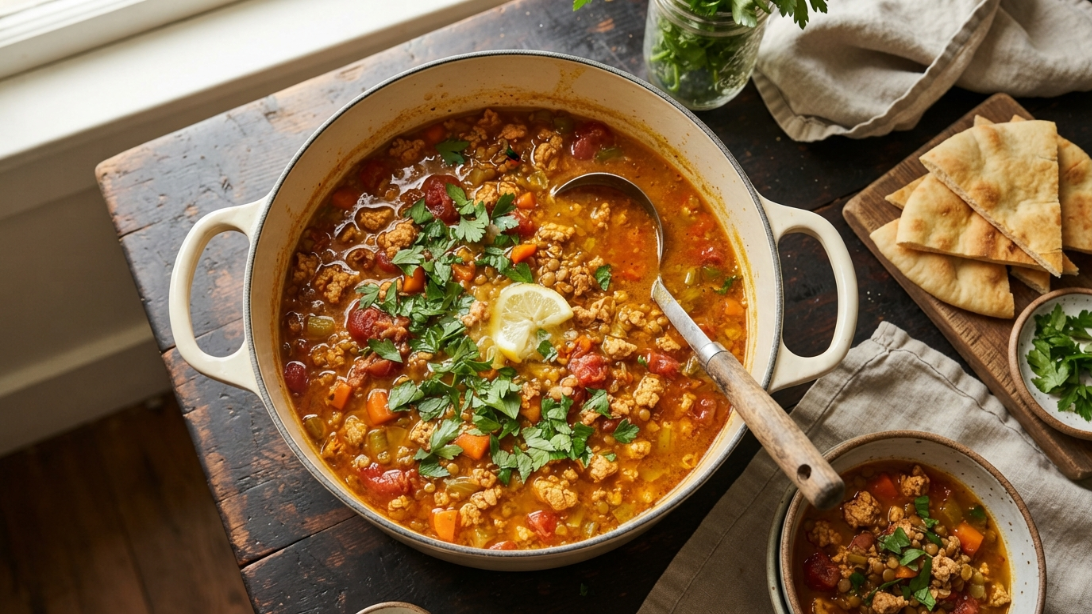
Turkey and lentil soup made in a single pot provides a high-protein, high-fiber, genuinely filling weeknight dinner at a cost per serving that competes with the least expensive weeknight meal options while delivering nutrition and satisfaction that cheap fast food alternatives never match.
Ingredients for six servings:
- 1 lb ground turkey
- 1 and half cups dried green or brown lentils rinsed
- 2 cans diced tomatoes
- 1 large onion diced
- 4 carrots diced
- 3 celery stalks diced
- 5 garlic cloves minced
- 6 cups chicken or vegetable broth
- 1 teaspoon each cumin, coriander, smoked paprika, turmeric
- Half teaspoon cayenne
- Salt and pepper
- 2 tablespoons olive oil
- Juice of one lemon
- Fresh parsley for serving
Brown ground turkey in olive oil in a large pot over medium-high heat, breaking it apart as it cooks. When no pink remains, add onion, carrot, and celery. Cook five minutes. Add garlic and all spices, cook two minutes until fragrant and the spice mixture begins to stick slightly to the bottom of the pot. Add lentils, tomatoes, and broth. Bring to a boil, reduce to a simmer, and cook thirty minutes until lentils are completely tender. The soup will thicken significantly as the lentils break down partially during cooking. If the consistency becomes too thick, add a cup of additional broth or water. Finish with lemon juice and adjust salt. The lemon juice finish is the acid addition that brightens the entire soup and balances the earthiness of the lentils in a way that makes the dish taste finished rather than merely cooked.
5. One Pot Shakshuka
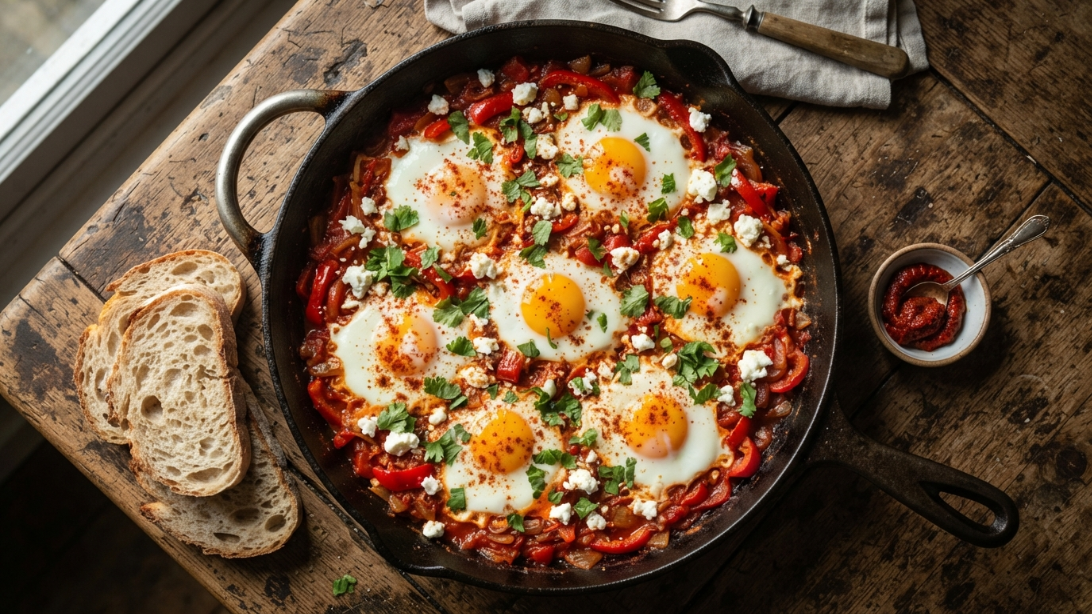
Shakshuka, eggs poached directly in spiced tomato sauce in a single skillet, provides a complete weeknight dinner in twenty-five minutes that requires minimal ingredients, produces dramatic visual impact, and delivers the specific satisfaction of a dish that tastes significantly more sophisticated than its preparation effort.
Ingredients for four servings:
- 6 large eggs
- 2 cans diced tomatoes
- 1 large onion diced
- 1 red bell pepper diced
- 4 garlic cloves minced
- 1 teaspoon each cumin and smoked paprika
- Half teaspoon cayenne or harissa paste
- Salt and pepper
- 2 tablespoons olive oil
- Half cup crumbled feta cheese
- Fresh cilantro or parsley
- Crusty bread for serving
Heat olive oil in a large lidded skillet over medium heat. Cook onion and bell pepper for seven minutes until softened. Add garlic, cumin, paprika, and cayenne. Cook two minutes. Add tomatoes and their juice. Season with salt and pepper. Simmer for ten minutes until the sauce has thickened slightly and the flavors have integrated. Use the back of a spoon to create six wells in the sauce. Crack one egg into each well. Cover the skillet with the lid. Cook for five to seven minutes depending on preferred yolk consistency: five minutes produces a runny yolk, seven produces a fully set one. Remove from heat. Add feta and fresh herbs. Serve directly from the skillet with crusty bread for scooping. The covered cooking for the eggs is the technique that poaches the tops of the eggs in steam rather than leaving them entirely raw and white while the bottoms overcook in the tomato sauce, which is the result that uncovered shakshuka cooking produces.
6. One Pot Sausage and Gnocchi in Tomato Cream Sauce
Gnocchi cooked directly in a tomato cream sauce rather than separately boiled and then sauced produces a result where the gnocchi absorb the sauce’s flavor while simultaneously releasing starch that thickens the sauce further, creating a unified dish with the specific richness of a restaurant pasta at the fraction of the effort.
Ingredients for four servings:
- 1 lb Italian sausage removed from casings
- 1 lb shelf-stable or refrigerated gnocchi uncooked
- 1 can crushed tomatoes
- Half cup heavy cream
- 1 cup chicken broth
- 1 small onion diced
- 4 garlic cloves minced
- 1 teaspoon dried Italian seasoning
- Half teaspoon red pepper flakes
- Salt and pepper
- 2 cups baby spinach
- Parmesan for serving
- Fresh basil for serving
Brown sausage in a large skillet over medium-high heat, breaking it into pieces, until no pink remains and some pieces are beginning to caramelize at the edges. Remove excess fat leaving about one tablespoon in the pan. Add onion and cook four minutes. Add garlic, Italian seasoning, and red pepper flakes. Cook one minute. Add crushed tomatoes and broth. Bring to a simmer. Add uncooked gnocchi directly to the simmering sauce. Cook stirring occasionally for five minutes until gnocchi are tender and have absorbed some of the sauce. Add cream and spinach. Stir until spinach wilts and cream is incorporated into the sauce. Season with salt and pepper. Serve topped with parmesan and fresh basil. The shelf-stable gnocchi performs equally to refrigerated gnocchi in this application and stores in the pantry indefinitely, which makes this recipe practical as a weeknight standby when the refrigerator is underpopulated.
7. One Pot Coconut Curry With Chickpeas and Spinach
Coconut chickpea curry made in a single pot provides a vegetarian weeknight dinner with complete protein from the chickpeas, healthy fat from the coconut milk, and the specific depth of a properly bloomed spice base that makes the dish taste as though it took significantly longer than thirty minutes to produce.
Ingredients for four servings:
- 2 cans chickpeas drained and rinsed
- 1 can full-fat coconut milk
- 1 can diced tomatoes
- 4 cups baby spinach
- 1 large onion diced
- 4 garlic cloves minced
- 1 inch fresh ginger grated or half teaspoon ginger powder
- 1 teaspoon each cumin, coriander, turmeric, garam masala
- Half teaspoon cayenne
- Salt
- 2 tablespoons neutral oil
- Juice of one lime
- Fresh cilantro
- Cooked rice or naan for serving
Heat oil in a large pot over medium heat. Add onion and cook eight minutes until softened and beginning to golden at the edges. Add garlic and ginger, cook two minutes. Add all spices and cook one to two minutes, stirring continuously, until the spices are fragrant and beginning to stick to the pot bottom. This spice blooming step is the most important technique in curry cooking and the one that most home cooks shorten too aggressively: the fat-soluble flavor compounds in ground spices only fully activate when cooked in fat at sufficient temperature, and inadequately bloomed spices produce curry that tastes flat and powdery rather than round and deep. Add tomatoes, cook three minutes. Add coconut milk and chickpeas. Simmer fifteen minutes. Add spinach and stir until wilted. Finish with lime juice and salt. Top with cilantro.
8. One Pot French Onion Chicken
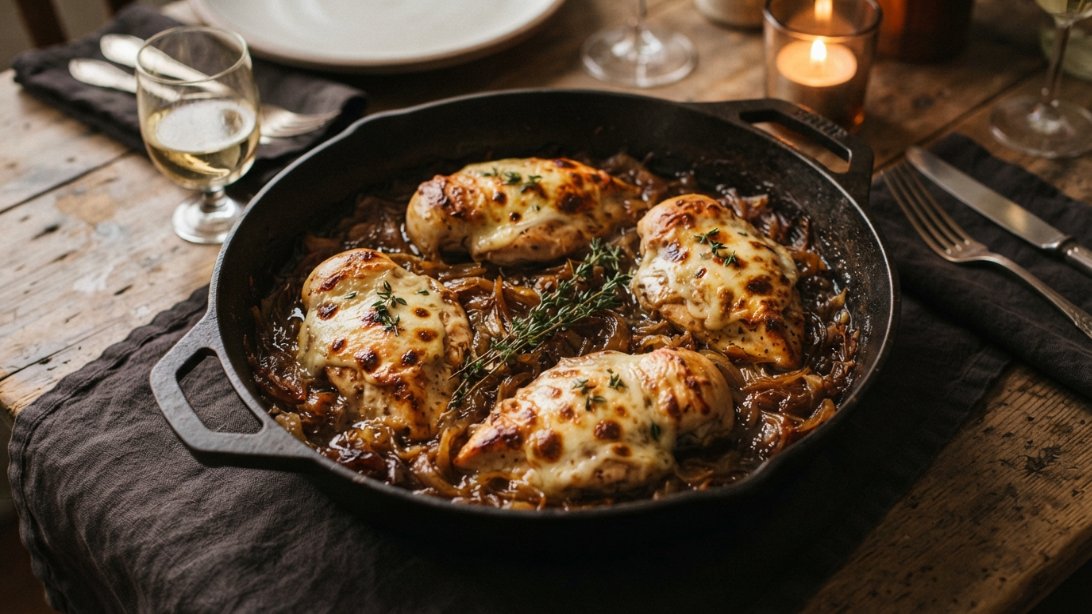
French onion soup flavors applied to a chicken braise in a single skillet produce one of the most flavor-dense weeknight dinners available in the one pot format, built on the deeply caramelized onions that form the foundation of French onion soup’s characteristic richness.
Ingredients for four servings:
- 4 boneless skinless chicken breasts or 6 thighs
- 3 large onions thinly sliced
- 4 garlic cloves minced
- 1 cup beef broth
- Half cup dry white wine or additional broth
- 1 tablespoon fresh thyme or 1 teaspoon dried
- 1 tablespoon Worcestershire sauce
- 1 tablespoon butter plus 1 tablespoon olive oil
- Salt and pepper
- 1 cup gruyere or Swiss cheese shredded
- Fresh thyme for serving
Season chicken with salt and pepper. Brown in butter and olive oil in a large oven-safe skillet over medium-high heat, three minutes per side. Remove and set aside. Add onions to the same skillet with a pinch of salt. Cook over medium-low heat for twenty-five minutes, stirring every five minutes, until deeply golden brown and caramelized throughout. This is the step that cannot be rushed: onions caramelize through a chemical process that requires sustained moderate heat and time, and attempting to speed the process with higher heat produces browned but not caramelized onions that lack the sweetness and depth the dish requires. Add garlic and thyme, cook two minutes. Add wine, scraping any browned bits from the skillet bottom. Add broth and Worcestershire. Return chicken to the skillet nestled into the onions. Simmer covered for fifteen minutes until chicken is cooked through. Top with cheese and place under the broiler for two to three minutes until bubbling and beginning to brown.
Building a One Pot Weeknight Dinner Rotation
Individual recipes solve individual evenings. A rotation built around five to seven reliable one pot recipes solves the entire weeknight dinner problem without requiring constant menu planning or the decision fatigue of choosing what to cook from an unlimited option set.
The most practical approach is building a rotation around pantry-compatible recipes, dishes whose primary ingredients store in the pantry or freezer rather than requiring fresh purchases for each meal. The one pot pasta requires only pasta, canned tomatoes, and aromatics that most kitchens keep on hand. The shakshuka requires eggs and canned tomatoes. The coconut chickpea curry requires canned chickpeas, coconut milk, and canned tomatoes. Having these pantry staples consistently stocked means the slowest part of weeknight dinner preparation is already handled.
Batch cooking the most time-consuming step of any one pot recipe on weekends eliminates the weeknight friction that causes the recipe to be skipped. Caramelizing onions on Sunday and refrigerating them means the French onion chicken takes fifteen rather than forty minutes on a weeknight. Browning several batches of ground turkey or beef and freezing in one-pound portions eliminates the ten-minute browning step from soup and curry recipes on the nights when even ten minutes feels like too much.
Frequently Asked Questions
What are the best top one pot dinner recipes for busy weeknight cooking that serve a large family?
The slow cooker beef stew, turkey and lentil soup, and one pot chicken and rice all scale to serve six to eight people with simple ingredient doubling and a larger pot or slow cooker. For large families specifically, slow cooker recipes started in the morning provide the most practical format because the serving size scales easily and the food stays warm on the low setting through staggered family dinner times that large households with varying schedules require.
Can I make one pot dinners ahead and reheat them?
Soups, stews, braises, and curries all reheat excellently and often improve in flavor from day one to day two as the ingredients continue to meld during refrigerated storage. Pasta dishes and rice dishes reheat with the addition of a splash of water or broth to restore the moisture the starch absorbs during refrigeration. Egg-based dishes including shakshuka reheat adequately but are best fresh, as the egg texture changes during refrigerated storage in ways that are acceptable but noticeably different from the original.
What equipment do I actually need for one pot cooking?
A large Dutch oven with a lid at five to six quarts handles the majority of one pot recipes including braises, soups, stews, and pasta dishes. A large oven-safe skillet with a lid handles pan-based recipes including shakshuka, French onion chicken, and orzo dishes. A slow cooker handles recipes designed for unattended long cooking. These three vessels cover every recipe format in one pot cooking, and starting with just the Dutch oven covers the majority of recipes on this list without any additional equipment purchase.
How do I prevent one pot meals from becoming bland?
The three techniques that consistently produce flavorful one pot meals are browning protein before adding liquid, blooming dried spices in fat before adding wet ingredients, and seasoning at multiple stages of cooking rather than only at the end. Each technique adds a flavor layer that compensates for the simplified preparation that one pot cooking involves. A one pot meal that skips all three techniques in favor of combining and simmering produces the flat, institutional quality that gives slow and one pot cooking an undeserved reputation for blandness.
Is a Dutch oven worth buying specifically for one pot cooking?
A quality Dutch oven is the single kitchen investment with the broadest application across all cooking contexts, and one pot cooking specifically uses it more than any other format. The Lodge 6 Quart Enameled Cast Iron Dutch Oven at $60 to $80 provides restaurant-quality heat retention and distribution at a price accessible to most home cooks. The Le Creuset and Staub equivalents at $300 to $400 provide the same functional result with better aesthetics and longer warranty coverage. Either option lasts decades and handles every recipe on this list plus bread baking, deep frying, and stock making.
Conclusion
One pot cooking is not a compromise on the dinner experience. It is a correctly scaled solution to the specific cooking context of a weeknight, where the goal is a genuinely good meal produced without the full mental and time investment that weekend cooking can accommodate. Every recipe on this list was chosen because it delivers on both sides of that equation: real flavor and real simplicity that coexist in the same pot. Which one is going on your dinner table this week?